Nitinol Components for Medical Devices: Design and Procurement Questions
Quick Answer
When sourcing nitinol components for medical devices, buyers need to confirm three things upfront: the required transformation temperature (Af), the mechanical behavior at body temperature, and the supplier’s ability to hold dimensional tolerances in the micro-scale range. Nitinol components — whether tubes, wires, or laser-cut structures — are not interchangeable across manufacturers. Each supplier’s raw material source, thermal processing, and surface finishing route produces slightly different superelastic and shape-memory behavior. Before sending an RFQ, define functional temperature range, required plateau stress, and acceptable surface quality — these parameters are what separate a production-ready nitinol component from a prototype that cannot meet clinical requirements.
1. Common Buyer Questions About Nitinol Components
1.1 What nitinol components are most frequently sourced?
The most common medical nitinol components that procurement teams purchase include:
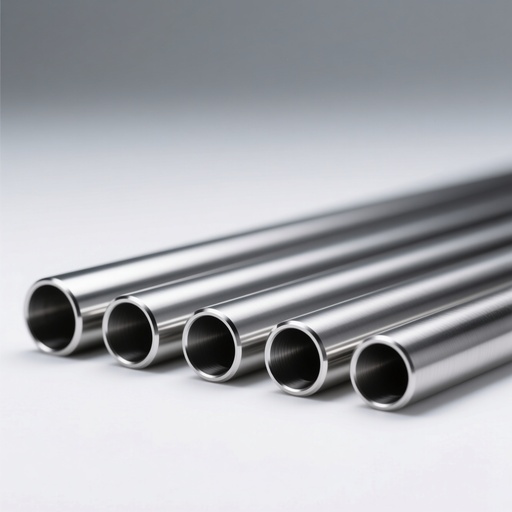
- Nitinol tubes: Used in guidewire sheaths, catheter shafts, delivery system shafts, and minimally invasive instrument bodies. Typical OD ranges from 0.3 mm to 5.0 mm.
- Laser-cut nitinol stents and scaffolds: Cardiovascular, peripheral vascular, and neurovascular stents require precision micro-cutting with minimal heat-affected zone.
- Nitinol wire components: Guidewires, retrieval baskets, stone extraction devices, and orthodontic archwires use nitinol wire from 0.05 mm to 1.0 mm diameter.
- Nitinol sheet/film parts: Bone staples, septal occluders, and valve frames are cut from nitinol sheet or thin plate material.
1.2 What makes nitinol harder to source than stainless steel?
Nitinol is a near-equiatomic nickel-titanium intermetallic compound. Unlike 304 or 316L stainless steel, which have well-defined international standards, nitinol’s properties are defined by the manufacturing process as much as by composition. The same ASTM F2063-compliant ingot can produce tubes with different Af temperatures, plateau stresses, and fatigue lives depending on cold work percentage, heat treatment profile, and final surface conditioning. A supplier who can document and control these processing variables adds significant value over one who simply resells raw stock.
2. Key Technical Considerations for Nitinol Component Sourcing
2.1 Austenite finish temperature (Af)
Af is the temperature above which nitinol is fully austenitic and exhibits superelastic behavior. For most medical implant and instrument applications, the target Af is 10–25°C, ensuring the component is fully superelastic at body temperature (37°C). Buyers should specify the acceptable Af range and test method (typically DSC per ASTM F2004 or bend-and-free-recovery per ASTM F2082). A deviation of even 5°C in Af can change mechanical behavior noticeably, so tight Af control is a key supplier screening criterion.
2.2 Upper and lower plateau stress
During tensile testing at body temperature, nitinol exhibits a characteristic stress plateau during the stress-induced martensitic transformation. The upper plateau stress (loading) and lower plateau stress (unloading) define the force the component exerts on surrounding tissue or vessel walls. Different stent designs and guidewire applications require different plateau stress values. Requesting plateau stress data from the supplier — and understanding whether their process can tune it — separates experienced nitinol manufacturers from general metal tube suppliers.
2.3 Dimensional tolerance capabilities
Nitinol tube and wire components for medical applications typically require tight tolerances. Common expectations:
- Tube OD tolerance: ±0.01 mm for sub-millimeter sizes, ±0.02 mm for 1–3 mm
- Wall thickness tolerance: ±0.005 mm to ±0.01 mm depending on wall-to-OD ratio
- Wire diameter tolerance: ±0.002 mm to ±0.005 mm
- Cut feature accuracy: ±0.01 mm to ±0.02 mm for laser-cut patterns
Whether a supplier can achieve these depends on their drawing, centerless grinding, and metrology equipment. A supplier’s capability statement should list their minimum achievable tolerances rather than generic ranges.
3. Supplier Verification Checklist for Nitinol Components
Before placing an order, confirm the following with any nitinol component supplier:
- Raw material traceability: Can the supplier trace each batch of nitinol back to the melt source? ASTM F2063-compliant starting material is the minimum requirement.
- Af certification: Does the supplier provide per-lot DSC or BFR test reports showing actual Af values, not just a pass/fail statement?
- Surface finish documentation: Nitinol surfaces range from as-drawn (dark oxide) to bright electropolished. Medical-grade components typically require a controlled oxide layer or electropolished finish.
- Dimensional inspection reports: Does the supplier provide first-article inspection (FAI) reports with actual measured vs. nominal dimensions?
- Laser cutting capability (if applicable): What is the minimum kerf width, achievable feature size, and HAZ control method? Is femtosecond laser available for heat-sensitive geometries?
- Cleanroom packaging: For implant-grade components, is final cleaning and packaging performed in a controlled environment?
4. Typical Application Scenarios
Nitinol components appear across a wide range of medical devices:
- Interventional cardiology: Self-expanding stents, transcatheter heart valve frames, and delivery system shafts use nitinol’s superelasticity for crimping and deployment.
- Peripheral vascular: Carotid and iliac artery stents, embolic protection filters, and atherectomy device components.
- Neurovascular: Flow diverters, stent retrievers, and microcatheter braid reinforcement rely on nitinol’s kink resistance and torque response.
- Orthopedics: Bone staples and compression devices use nitinol’s shape memory effect to apply constant compressive force across fracture sites.
- Endoscopy and urology: Retrieval baskets, stone extraction devices, and biopsy forceps components use superelastic nitinol wire for flexibility and shape recovery in tortuous anatomy.
5. HealsMed’s Nitinol Component Manufacturing
At HealsMed, we work with medical device OEMs to produce nitinol tube, wire, and laser-cut components. Our quality system starts with ASTM F2063-compliant raw material from established melt sources, and we control the full process from tube drawing and heat treatment through final surface conditioning. We provide per-batch Af documentation, dimensional inspection reports, and surface finish characterization.
Our production capabilities include tube drawing to sub-millimeter dimensions, precision centerless grinding for tight OD control, and wire processing from 0.05 mm to 1.5 mm diameter. For laser-cut components, we work with partner facilities offering both nanosecond and femtosecond laser processing — the choice depends on the thermal sensitivity of your geometry. Feasibility for any specific design depends on material, thickness, geometry, drawing quality, and your inspection requirements.
We do not hold FDA or CE certifications ourselves — we operate as a contract manufacturing partner supplying components to medical device companies that hold the regulatory approvals. This means we work to your specifications, your quality plan, and your documentation requirements. For more on the documentation side, see our guide on material certificates OEM buyers should request. If you are evaluating nitinol as a material option alongside other alloys, our earlier article on what buyers should check before sourcing nitinol covers the fundamentals. For components requiring additional secondary operations, our guide on burr-free cutting quality explains why end-finish matters. And if you are looking more broadly at supplier selection, review our framework on choosing a reliable component manufacturer.
6. Information to Include in Your Nitinol Component RFQ
To receive an accurate quote and feasibility assessment, include these details with your drawing or specification:
- Component geometry: Drawing showing all critical dimensions, tolerances, and reference datums
- Target Af temperature: Acceptable Af range and preferred test method (DSC, BFR)
- Mechanical requirements: Required plateau stress range at body temperature (loading and unloading)
- Surface finish specification: As-drawn, oxide (blue/black), mechanically polished, or electropolished
- Quantity and delivery schedule: Prototype, pilot, and production volumes with timeline
- Quality and inspection requirements: Sampling plan, inspection dimensions, and any special testing
- Packaging requirements: Cleanroom packaging level and any sterilization compatibility notes
Send your nitinol component drawing or specification to our engineering team for a feasibility review and quotation. Contact us at healsmed.com/contact or email your RFQ package directly.

Healsmed
Leading Stainless Steel Capillary Tube Factory. 1,400+ standard sizes IN STOCK & ready to ship worldwide! High precision, factory-direct price.