Inconel 600 Seamless Capillary Tubing: Material Properties, Manufacturing Tolerances, and Application Guide
Engineers sourcing Inconel 600 seamless capillary tubing are typically solving a specific corrosion-and-temperature problem that 304 or 316L stainless cannot handle. Whether the application involves high-purity gas sampling, thermocouple protection in a furnace, or a high-pressure fluid line in a chemical analyzer, the buyer needs tubing that maintains integrity at elevated temperatures while resisting chloride stress-corrosion cracking. This guide covers what to specify, how to verify it, and what to include in an RFQ.
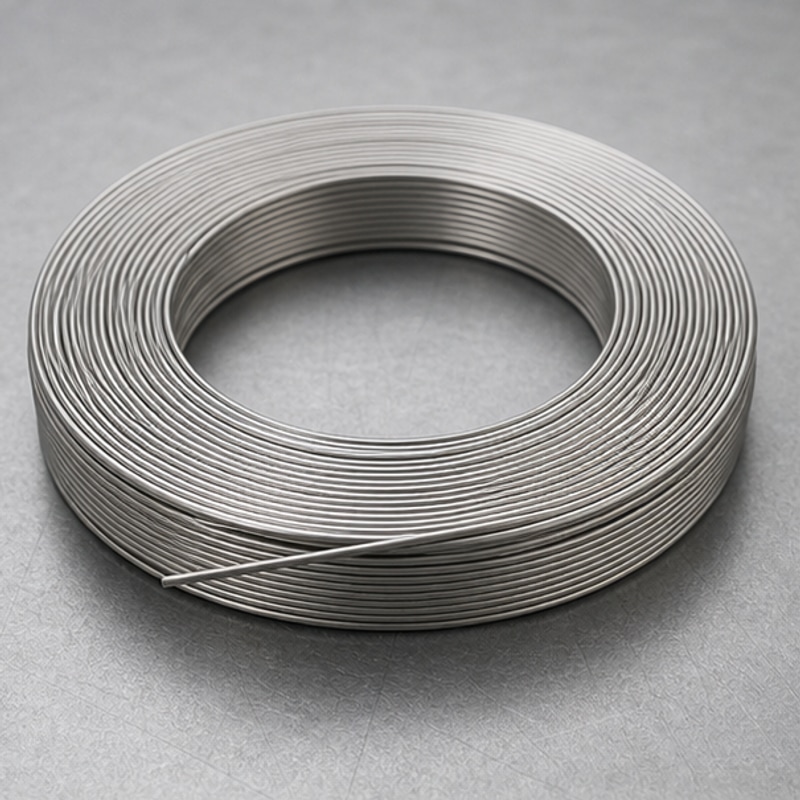
What Inconel 600 Seamless Capillary Tubing Is and When to Use It
Inconel 600 (UNS N06600) is a nickel-chromium-iron alloy with a nominal composition of approximately 72% nickel, 14–17% chromium, and 6–10% iron. It is not a stainless steel. The high nickel content provides resistance to chloride-ion stress-corrosion cracking, while the chromium content provides oxidation resistance at elevated temperatures. The alloy also resists reducing and oxidizing environments and maintains mechanical properties over a wide temperature range.
Seamless capillary tubing is produced by cold drawing a hollow tube shell over a mandrel or by sinking, without a longitudinal weld seam. The absence of a weld seam is important in applications where the tube will be pressurized, bent, or subjected to thermal cycling, because the weld zone can be a site for preferential corrosion or mechanical failure.
Typical industries and applications include:
- Medical device and analytical instrument fluid paths where halogenated or high-temperature fluids are present
- Thermocouple and RTD protection sheaths in furnaces, kilns, and exhaust systems
- High-purity gas sampling lines in semiconductor and specialty chemical processing
- Chemical injection and hydraulic control lines in oil and gas instrumentation
- Aerospace and defense fuel, hydraulic, and pneumatic sense lines
Material Grade and Standards
Inconel 600 is covered by several industry specifications. The most common for seamless tubing are:
- ASTM B167 — Standard Specification for Nickel-Chromium-Iron Alloys (UNS N06600) Seamless Pipe and Tube
- ASTM B163 — for seamless nickel and nickel alloy condenser and heat exchanger tubes (may apply depending on dimensions)
- AMS 5580 — for seamless tubing in aerospace applications
- DIN 17752 / 17753 — German standards for nickel-chromium-iron wrought alloys
Mechanical properties vary by condition. In the annealed condition, ASTM B167 specifies a minimum tensile strength of 550 MPa (80 ksi) and a minimum yield strength of 240 MPa (35 ksi) for tubing up to certain wall thicknesses. Actual values depend on the specific product form, size, and heat treatment. Always request the material test report (MTR) to confirm actual properties for the heat supplied.
Do not assume that Inconel 600 is a medical-grade material. It is a high-performance alloy that may be suitable for medical device components, but biocompatibility and implant suitability depend on the specific application, surface finish, cleaning process, and regulatory pathway. Those determinations are the responsibility of the device manufacturer.
OD, ID, Wall Thickness, and Length Considerations
Seamless capillary tubing is typically specified by outside diameter (OD), inside diameter (ID), and wall thickness. For small-diameter tubing, the OD is usually the primary controlled dimension, with the ID and wall derived from the OD and wall thickness. Common OD ranges for capillary tubing are roughly 0.5 mm to 12.7 mm (0.020 in. to 0.500 in.), though smaller and larger sizes are possible depending on the mill.
Wall thickness for capillary tubing typically ranges from about 0.05 mm to 2.0 mm (0.002 in. to 0.080 in.). The wall must be thick enough to withstand the internal or external pressure of the application, but thin enough to allow bending and to fit within the available space. For pressure-containing applications, the minimum wall is calculated using the applicable design code (e.g., ASME B31.3 or the relevant ASTM standard).
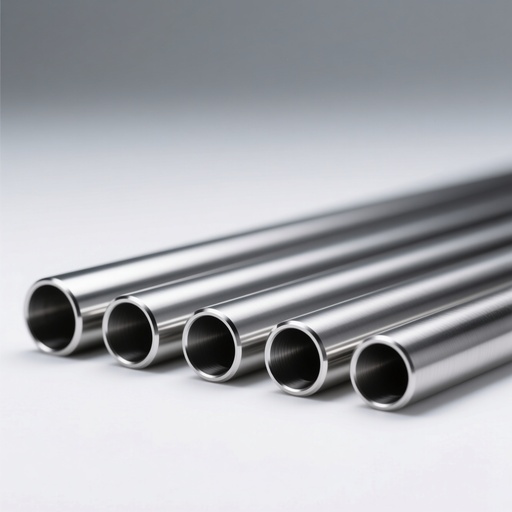
Length is usually specified as straight lengths or as coils. Straight lengths are commonly supplied in random lengths of 3 to 6 meters, or in cut-to-length pieces. Coils are supplied in lengths from a few meters up to several hundred meters, depending on OD and wall. The maximum coil length depends on the tube diameter, wall thickness, and the manufacturer’s equipment.
Tolerances for Inconel 600 Seamless Capillary Tubing
Tolerances for seamless capillary tubing are tighter than for standard pipe or tube. The exact tolerance depends on the manufacturing process, the size, and the agreement between buyer and supplier. Typical ranges for cold-drawn seamless tubing are shown below. These are general industry ranges, not a guarantee of any specific supplier’s capability.
| Dimension | Typical Tolerance Range | Notes |
|---|---|---|
| Outside Diameter (OD) | ±0.05 mm to ±0.15 mm | Tighter tolerances possible on smaller OD |
| Inside Diameter (ID) | ±0.05 mm to ±0.20 mm | Depends on wall thickness and drawing process |
| Wall Thickness | ±10% to ±15% of nominal | Minimum wall may be specified instead |
| Length | ±1 mm to ±5 mm for cut lengths | Coil lengths are typically not tolerance-critical |
| Straightness | 0.5 mm to 2 mm per meter | Depends on OD and wall |
| Concentricity | 10% to 15% of wall thickness | Critical for fluid flow and bending |
If a specific tolerance cannot be verified for a given size and process route, it must be agreed upon between the buyer and supplier before production. Do not assume that a standard tolerance applies to all sizes.
End Condition and Burr Control
End condition is a common source of quality issues in capillary tubing. The tube ends may be supplied as cut, deburred, chamfered, or with a specific end finish. For medical and analytical applications, burrs and loose particles inside the tube are unacceptable. Typical end conditions include:
- Clean cut with burr removal on OD and ID
- Chamfered ends for easy insertion into fittings
- Square cut for orbital welding
- Sealed or plugged ends for contamination control during shipping
Burr control is especially important for small ID tubing. A burr that reduces the effective ID can restrict flow or trap particles. Specify the maximum allowable burr height and the inspection method (e.g., visual, borescope, or flow test).
Surface Finish and Cleanliness Requirements
Surface finish for Inconel 600 capillary tubing is typically specified as Ra (arithmetic average roughness). Common values range from 0.4 µm to 1.6 µm Ra for as-drawn or annealed tubing. Electropolishing can achieve lower Ra values, but the actual finish depends on the starting surface and the polishing process. Do not assume that a specific Ra is achievable for all sizes.
Cleanliness is critical for medical, pharmaceutical, and high-purity gas applications. Tubing may be required to meet a specific cleanliness level, such as:
- Free of visible oil, grease, and particulate
- Cleaned to a specified particulate count (e.g., per ASTM F312 or customer specification)
- Passivated or pickled to remove free iron and heat scale
- Compatible with a specific sterilization method (e.g., autoclave, ethylene oxide, gamma irradiation)
Cleanliness requirements must be stated in the RFQ. If a specific standard is referenced, provide the standard number and acceptance criteria.
Inspection Documentation
For Inconel 600 seamless capillary tubing, the following documentation is commonly requested:
- Material Test Report (MTR) per EN 10204 3.1 or equivalent, showing chemical composition and mechanical properties
- Dimensional inspection report with actual OD, ID, wall, and length measurements
- Surface finish report (Ra) if specified
- Cleanliness certification if required
- Certificate of Conformance (CoC) to the purchase order
- Hydrostatic or pneumatic test report if pressure testing is required
Not all suppliers provide all documents by default. Specify the required documentation in the RFQ and confirm that the supplier can provide it before placing an order.
Packaging Considerations
Packaging for capillary tubing must protect the tube from mechanical damage, contamination, and corrosion during shipping and storage. Common packaging methods include:
- Straight lengths in plastic sleeves or wooden boxes with end caps
- Coils in plastic bags or on spools
- Nitrogen purge or desiccant for moisture-sensitive applications
- Cleanroom packaging for high-purity applications
Specify the packaging method and any labeling requirements in the RFQ. If the tubing will be stored for an extended period, ask about shelf life and recommended storage conditions.
RFQ Information Checklist
To receive an accurate quotation for Inconel 600 seamless capillary tubing, include the following in your request:
- Material grade and applicable standard (e.g., Inconel 600, ASTM B167)
- Dimensions: OD, ID, and wall thickness (or OD and wall)
- Length: straight lengths or coils, and quantity
- Tolerances: OD, ID, wall, concentricity, straightness
- End condition: cut, deburred, chamfered, etc.
- Surface finish: Ra value or reference standard
- Cleanliness requirements: standard, particulate count, etc.
- Inspection documentation: MTR, dimensional report, CoC, etc.
- Packaging requirements
- Any additional testing or certification required
To request a quotation for Inconel 600 seamless capillary tubing, submit your drawings, material grade, quantity, tolerance, surface finish, and inspection requirements through the Healsmed website. The engineering team will review and respond with a technical evaluation.

Healsmed
Leading Stainless Steel Capillary Tube Factory. 1,400+ standard sizes IN STOCK & ready to ship worldwide! High precision, factory-direct price.