Inconel 825 Miniature Tubing: Material Properties, Manufacturing Tolerances, and Application Guide
When sourcing Inconel 825 miniature tubing, engineers and procurement teams need a corrosion-resistant nickel-iron-chromium alloy tube with tightly controlled dimensions—typically under 6 mm OD—for critical fluid handling, instrumentation, and small-scale chemical or medical device assemblies. The challenge is balancing the alloy’s resistance to chloride-induced stress corrosion and oxidizing acids with the tight tolerances, clean surfaces, and documented traceability required for miniature tube applications. This guide covers the material properties, manufacturing tolerances, and application considerations that matter when specifying Inconel 825 tubing in small diameters.
What Is Inconel 825 and Why Use It in Miniature Tubing?
Inconel 825 (UNS N08825) is a nickel-iron-chromium alloy with additions of molybdenum and copper. Its chemistry is designed for resistance to both oxidizing and reducing acids, and it offers good resistance to chloride stress corrosion cracking compared with standard austenitic stainless steels. The alloy is specified under ASTM B423 for seamless and welded nickel-iron-chromium-molybdenum-copper alloy pipe and tube, and similar grades appear in EN and ISO standards under different designations.
In miniature tubing—where wall thickness may be as low as 0.1 mm and outside diameters range from 0.5 mm to 6 mm—the alloy’s combination of strength, ductility, and corrosion resistance makes it suitable for small-bore instrumentation lines, sampling systems, heat exchanger capillaries, and components exposed to aggressive chemical environments. However, the same properties that make Inconel 825 attractive also make it more challenging to draw and fabricate than 304 or 316L stainless steel, which directly affects achievable tolerances, surface finish, and cost.
Applicable Scenarios and Industries
Inconel 825 miniature tubing is typically considered in the following situations:
- Chemical processing and laboratory equipment: small-diameter lines for corrosive fluid transfer, sampling, and analytical instrumentation where 316L may not provide sufficient resistance to chlorides or reducing acids.
- Oil and gas instrumentation: downhole and surface sampling capillaries, pressure sensing lines, and small-bore tubing in sour or chloride-containing environments.
- Pollution control and marine systems: components exposed to seawater or flue gas desulfurization environments where pitting and stress corrosion cracking are concerns.
- Medical device and analytical instrument prototypes: small-bore fluid paths requiring corrosion resistance and clean internal surfaces, subject to verification of biocompatibility and cleaning validation by the device manufacturer.
- Heat exchangers and cooling circuits: capillary-scale tubing in compact heat transfer assemblies.
In many of these applications, the decision between Inconel 825 and a high-molybdenum stainless steel such as 904L or a super duplex grade depends on the specific corrosive species, temperature, and stress state. Material selection should be confirmed against corrosion data for the actual service environment.
Material Grades and Designations
For miniature tubing, the relevant designation is typically UNS N08825 under ASTM B423. Common trade and standard references include:
- UNS N08825 — the unified numbering system designation.
- ASTM B423 — standard specification for seamless and welded Ni-Fe-Cr-Mo-Cu alloy pipe and tube.
- DIN/EN equivalents — often referenced as 2.4858 or NiCr21Mo (verify against the current edition of the relevant EN standard).
- Common trade name: Inconel 825 (a registered trademark of a specialty alloy producer; other suppliers may offer equivalent chemistry under different names).
Chemical composition requirements under ASTM B423 include a nickel content of approximately 38–46%, chromium 19.5–23.5%, iron balance, molybdenum 2.5–3.5%, and copper 1.5–3.0%, with controlled carbon, manganese, and other elements. Mechanical property minimums for annealed tube typically include tensile strength and yield strength values specified in the standard; actual values depend on tube size, wall thickness, and thermal treatment. Always request the mill certificate and verify chemistry and mechanicals against the purchase specification.
OD, ID, Wall Thickness, and Length Considerations
Miniature tubing generally refers to outside diameters below about 6 mm, though the exact boundary depends on the supplier and application. For Inconel 825, common miniature sizes fall in the range of 0.5 mm to 6.35 mm OD, with wall thicknesses from roughly 0.1 mm to 1.0 mm. Inside diameter is determined by OD minus twice the wall thickness, and both dimensions must be specified with the required tolerance.
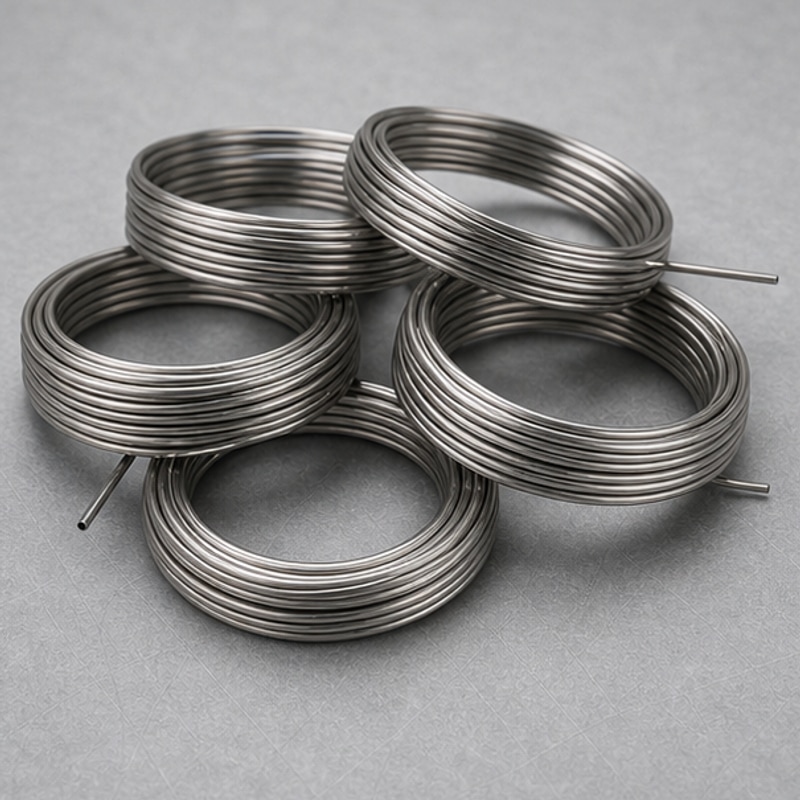
Length options include straight lengths (often 1 m to 6 m, depending on diameter and handling constraints) and coiled lengths for flexible routing. For very small diameters, coil lengths can be several meters or more, but coil weight and handling limits apply. The table below summarizes typical dimensional ranges; actual availability depends on the supplier’s drawing and process capabilities.
| Parameter | Typical Range for Inconel 825 Miniature Tubing | Notes |
|---|---|---|
| Outside diameter (OD) | 0.5 mm – 6.35 mm | Smaller or larger sizes by agreement |
| Wall thickness | 0.1 mm – 1.0 mm | Wall-to-OD ratio affects drawability |
| Inside diameter (ID) | Derived from OD and wall | Specify ID tolerance separately if critical |
| Length | Straight: 1–6 m; Coils: up to several meters | Depends on diameter and handling |
Tolerances for Capillary and Miniature Tubing
Tolerance capability for Inconel 825 miniature tubing depends on the manufacturing route (seamless drawing, welded-and-drawn, or welded without drawing), the size, and the wall thickness. Typical commercial tolerances for cold-drawn seamless tube are often in the range of ±0.05 mm to ±0.10 mm on OD for small sizes, with wall thickness tolerances of ±10% or ±0.02 mm, whichever is greater. Tighter tolerances—such as ±0.02 mm on OD—may be achievable by agreement but require specific process control and should be confirmed with the supplier before quoting.
For welded-and-drawn tubing, the weld seam is typically drawn to final size, and concentricity and wall uniformity are important quality characteristics. ID tolerances are usually derived from OD and wall tolerances, but if the ID is a functional requirement—for example, in flow control or sampling—it should be specified directly. Straightness, ovality, and length tolerances should also be stated on the drawing or purchase order.
End Condition and Burr Control
Miniature tubing is often supplied in one of several end conditions: plain cut, deburred, chamfered, or with specific end finishes for orbital welding or fitting connection. Burr control is critical in small-bore tubing because burrs can affect flow, particulate generation, and weld quality. Typical requirements include:
- Cut squareness: end face perpendicular to the tube axis within a specified angle or runout.
- Burr height: maximum allowable burr height, often specified in micrometers or as a visual acceptance criterion.
- Chamfer: specified angle and depth for weld preparation or fitting insertion.
- End sealing: capped or plugged ends for cleanliness and protection during shipping.
For medical or high-purity applications, additional requirements may include electropolishing, passivation, or specific cleaning procedures. These should be defined in the purchase specification and verified by the supplier.
Surface Finish and Cleanliness Requirements
Surface finish on Inconel 825 miniature tubing can range from as-drawn to bright annealed, with Ra values typically between 0.4 µm and 1.6 µm depending on the process route. For applications requiring low particulate generation or corrosion resistance, a smoother internal surface may be specified, but achievable Ra depends on the drawing and annealing process and should be confirmed by sample or capability study.
Cleanliness requirements vary by industry. For medical device components, the device manufacturer is responsible for validating cleaning and biocompatibility; the tubing supplier may provide cleanliness data such as particulate counts or residue limits by agreement. For chemical and analytical applications, internal cleanliness may be specified as oil-free, pickled, or passivated. Always state the cleanliness requirement clearly in the RFQ, as it affects processing and inspection costs.
Inspection Documentation
For Inconel 825 miniature tubing, typical inspection documentation includes:
- Mill certificate or material test report (MTR): chemical composition and mechanical properties traceable to the heat number.
- Dimensional inspection report: OD, ID, wall thickness, length, straightness, and other specified dimensions.
- Surface finish report: Ra or other roughness measurements if specified.
- Cleanliness or particulate report: if required by the application.
- Non-destructive testing: eddy current or hydrostatic testing may be specified for pressure-containing applications, depending on the standard and agreement.
The specific documentation package should be agreed upon before order placement. Not all suppliers provide the same level of documentation, and the cost may vary accordingly.
Packaging Considerations
Miniature tubing is susceptible to bending, surface damage, and contamination during shipping. Common packaging methods include:
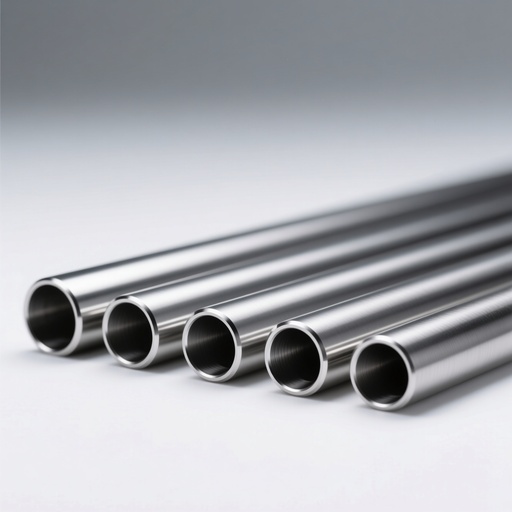
- Straight lengths: packed in rigid tubes or wooden crates with end protection and moisture barrier.
- Coils: wound on spools or in coil form with protective wrapping, secured to prevent movement.
- Cleanroom packaging: for medical or high-purity applications, double-bagged with cleanroom-compatible materials.
- Identification: each bundle or coil labeled with material grade, heat number, size, and quantity.
Packaging requirements should be specified in the purchase order, especially for tubing that will be used in cleanroom or medical device assembly.
RFQ Information Checklist
To receive an accurate quotation for Inconel 825 miniature tubing, include the following in your RFQ:
- Material grade and standard (e.g., UNS N08825, ASTM B423).
- Dimensions: OD, ID (if specified), wall thickness, and length.
- Tolerances for each dimension, including straightness and ovality.
- End condition: cut, deburred, chamfered, or other.
- Surface finish requirement (Ra or visual).
- Cleanliness requirement (e.g., oil-free, passivated, particulate limits).
- Inspection documentation required (MTR, dimensional report, etc.).
- Quantity and delivery schedule.
- Packaging requirements.
- Any additional testing or certification needs.
Providing complete information reduces back-and-forth and helps the supplier evaluate feasibility and cost accurately.
To request a quotation for Inconel 825 miniature tubing, submit your drawings, material grade, quantity, tolerance, surface finish, and inspection requirements through the Healsmed website. The engineering team will review and respond with a technical evaluation.

Healsmed
Leading Stainless Steel Capillary Tube Factory. 1,400+ standard sizes IN STOCK & ready to ship worldwide! High precision, factory-direct price.