Inconel 825 Stainless Steel Capillary Tubing: Material Properties, Manufacturing Tolerances, and Application Guide
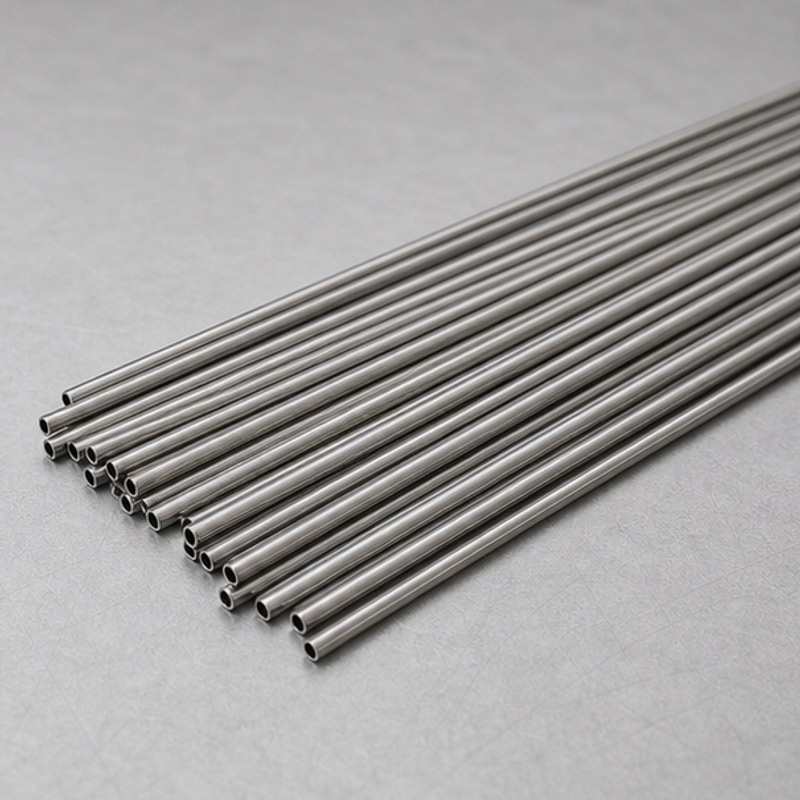
When engineers search for Inconel 825 stainless steel capillary tubing, they are typically trying to source small-diameter, corrosion-resistant tubing for instrumentation, sampling, or heat-transfer lines in aggressive chemical or high-temperature service. Inconel 825 (UNS N08825) is a nickel-iron-chromium alloy with additions of molybdenum, copper, and titanium. It is not a stainless steel in the strict metallurgical sense, but it is often grouped with corrosion-resistant tubing in procurement discussions. This article covers what buyers and designers need to specify: material condition, dimensions, tolerances, surface finish, end condition, and inspection documentation.
Applicable scenarios and industries
Inconel 825 capillary tubing is selected where carbon steel or standard austenitic stainless steels such as 304 or 316L would corrode too quickly. Typical applications include:
- Chemical process sampling lines handling sulfuric acid, phosphoric acid, or mixed acid streams
- Oil and gas downhole instrumentation and capillary injection lines
- Heat exchangers and cooling coils in marine or chloride-bearing environments
- Pollution control equipment and flue gas desulfurization systems
- Nuclear fuel reprocessing and radioactive waste handling (where material specification permits)
In medical device engineering, Inconel 825 is less common than 316L or nickel-titanium alloys, but it may appear in specialty analytical instruments or high-pressure fluid handling components where corrosion resistance to specific reagents is required.
Material grades and designations
Inconel 825 is covered by several international standards. The most common designations are:
- UNS N08825
- DIN 2.4858
- AFNOR NC 21 Fe
- BS NA 16
Applicable product specifications include ASTM B163 (seamless nickel alloy tube), ASTM B423 (nickel-iron-chromium-molybdenum-copper alloy pipe and tube), and ASTM B829 (general requirements for nickel and nickel alloys). For capillary tubing, ASTM B163 or B423 may be referenced depending on whether the tube is seamless or welded-and-drawn. Chemical composition limits per ASTM B423 for UNS N08825 include: nickel 38.0–46.0%, chromium 19.5–23.5%, iron balance, molybdenum 2.5–3.5%, copper 1.5–3.0%, titanium 0.6–1.2%, carbon 0.05% max, manganese 1.0% max, sulfur 0.03% max, silicon 0.5% max. Mechanical properties depend on temper and cold work; typical annealed tensile strength is around 85 ksi (586 MPa) and yield strength around 35 ksi (241 MPa), but actual values must be confirmed on the mill certificate for the specific lot.
OD, ID, wall thickness, and length considerations
Capillary tubing typically ranges from 0.010 in (0.25 mm) to 0.125 in (3.18 mm) outside diameter. For Inconel 825, common capillary sizes include 1/16 in, 1/8 in, and 3/16 in OD. Wall thickness may be specified as a gauge number or as a decimal. Because Inconel 825 is a high-nickel alloy, it work-hardens rapidly during cold drawing, which can affect achievable wall thickness and concentricity in very small sizes. Lengths are usually supplied in straight lengths up to 20 ft (6 m) or in coils. For coiled capillary tubing, the coil inner diameter and weight must be agreed upon, as they affect handling and installation.
Tolerances for capillary tubing
Tolerances for Inconel 825 capillary tubing are not universal. They depend on drawing, material condition, process route, and mutual agreement between parties. Typical industry ranges for small-diameter tubing are shown below. These are not Healsmed-specific capabilities and must be confirmed for each order.
| Parameter | Typical range (to be agreed) |
|---|---|
| OD tolerance | ±0.001 in to ±0.005 in (±0.025 mm to ±0.127 mm) |
| Wall thickness tolerance | ±10% of nominal wall |
| ID tolerance | Derived from OD and wall; typically ±0.002 in to ±0.005 in |
| Concentricity | Depends on drawing and process; often 10% of wall max |
| Straightness | 0.010 in per 3 ft for straight lengths (typical) |
| Length tolerance | +/- 0.125 in for cut lengths |
For critical applications, tighter tolerances may be achievable through additional drawing passes or centerless grinding, but this must be evaluated by the supplier based on the specific size and quantity.
End condition and burr control
Capillary tubing is often supplied with cut ends. Burrs can affect flow, sealing, and assembly. Common end conditions include:
- As-cut (deburring not specified)
- Deburred (mechanical or thermal)
- Square cut to within a specified angle
- Chamfered ID/OD
For Inconel 825, thermal deburring or abrasive flow deburring may be used, but the process must not alter surface chemistry or leave residue. Burr height acceptance criteria should be stated on the drawing, for example, max 0.002 in (0.05 mm).
Surface finish and cleanliness requirements
Surface finish for capillary tubing is typically specified as Ra or RMS. Common ranges for cold-drawn tubing are 16 to 32 µin Ra (0.4 to 0.8 µm Ra). For analytical or medical applications, electropolishing may be requested to improve corrosion resistance and reduce particle adhesion. Cleanliness specifications may include limits on residual lubricants, oxides, and particulate matter. If the tube is intended for oxygen service or high-purity gas, additional cleaning and passivation may be required. These requirements must be defined by the customer and agreed upon with the supplier.
Inspection documentation
For Inconel 825 capillary tubing, typical inspection documentation includes:
- Material test certificate (mill certificate) per EN 10204 3.1 or equivalent
- Dimensional inspection report (OD, ID, wall, length)
- Surface finish report (if specified)
- Burr inspection report (if specified)
- Cleanliness certificate (if specified)
- Hydrostatic or pneumatic test report (if specified)
Third-party inspection or witness testing may be required for nuclear or oil and gas applications. The scope of documentation must be stated in the purchase order.
Packaging considerations
Inconel 825 capillary tubing is susceptible to mechanical damage and surface contamination. Packaging should prevent bending, abrasion, and exposure to moisture or chlorides. Common packaging methods include:
- Straight lengths in rigid tubes or wooden boxes with end caps
- Coils wrapped in neutral paper or plastic film, then in cardboard or wooden reels
- Individual tubes capped or plugged to protect ends
- Desiccant added for humid environments
Packaging specifications should be agreed upon to match the cleanliness and handling requirements of the end use.
RFQ information checklist
To receive an accurate quotation for Inconel 825 capillary tubing, provide the following:
- Material grade: UNS N08825 or equivalent
- Dimensions: OD, ID, wall thickness, length
- Tolerances: OD, ID, wall, concentricity, straightness, length
- End condition: as-cut, deburred, chamfered, etc.
- Surface finish: Ra or RMS value, electropolishing requirement
- Cleanliness: specification or standard
- Inspection documentation: mill cert, dimensional report, etc.
- Quantity: total length or number of pieces
- Packaging: straight lengths or coils, special requirements
- Applicable standards: ASTM B163, B423, or other
To request a quotation for Inconel 825 stainless steel capillary tubing, submit your drawings, material grade, quantity, tolerance, surface finish, and inspection requirements through the Healsmed website. The engineering team will review and respond with a technical evaluation.

Healsmed
Leading Stainless Steel Capillary Tube Factory. 1,400+ standard sizes IN STOCK & ready to ship worldwide! High precision, factory-direct price.