Inconel 825 Stainless Steel Capillary Tube: Material Properties, Manufacturing Tolerances, and Application Guide
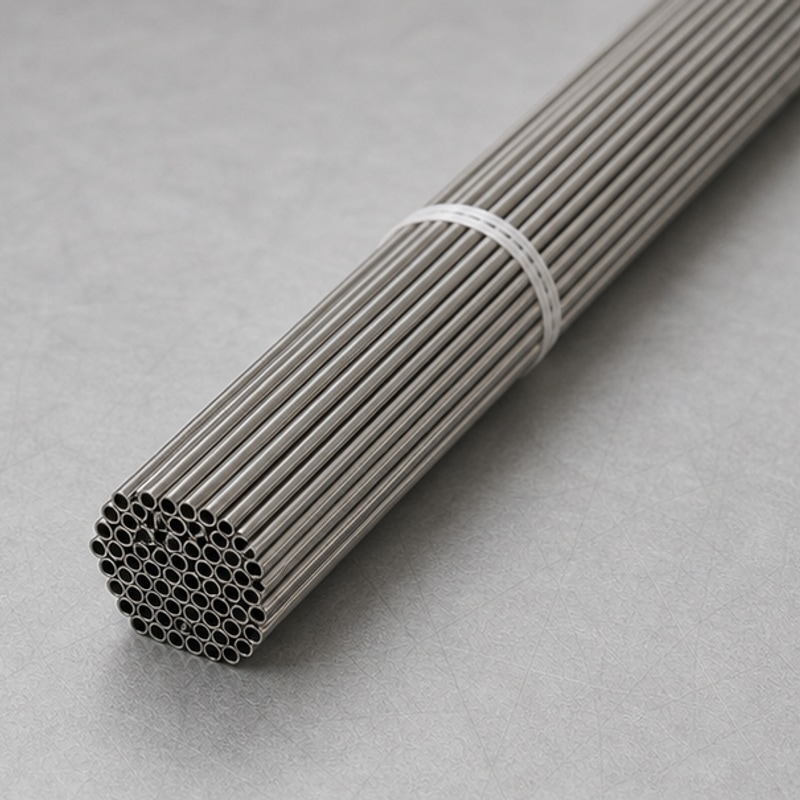
When engineers search for an Inconel 825 stainless steel capillary tube, they are usually trying to solve a specific corrosion or high-temperature problem that standard 316L tubing cannot handle. Inconel 825 (UNS N08825) is a nickel-iron-chromium alloy with additions of molybdenum and copper, designed for aggressive environments such as sulfuric acid, phosphoric acid, and seawater. The challenge is sourcing this material in capillary dimensions—typically OD below 6 mm—with the tight tolerances, burr-free ends, and documented inspection that medical and instrumentation applications require. This guide covers what you need to specify when requesting a quote.
Why Inconel 825 for Capillary Tubing?
Inconel 825 is not a stainless steel in the strict metallurgical sense—it is a nickel-iron-chromium alloy. However, it is often grouped with high-performance stainless steels in sourcing discussions because it offers a combination of properties that bridge the gap between austenitic stainless steels (like 316L) and higher-nickel alloys (like Inconel 625).
Key characteristics that drive its use in capillary tube:
- Corrosion resistance: Resistant to reducing and oxidizing acids, stress corrosion cracking, and pitting in chloride environments. The molybdenum and copper content specifically target sulfuric and phosphoric acid service.
- High-temperature stability: Maintains mechanical properties at elevated temperatures (up to approximately 540°C / 1000°F for continuous service, depending on environment).
- Fabricability: Can be cold drawn into capillary dimensions and bent or flared without cracking, unlike some higher-strength nickel alloys.
If your application involves aggressive chemical exposure, high-purity fluid handling, or thermal cycling, Inconel 825 capillary may be the correct material choice. If you are simply looking for general corrosion resistance in a medical device, 316L may be more cost-effective. The material selection should always be validated against the specific fluid, temperature, and pressure conditions.
Applicable Scenarios and Industries
Inconel 825 capillary tube is not a high-volume commodity item. It is typically specified for niche, high-value applications where failure is not an option:
- Chemical analysis and instrumentation: Sample transfer lines, probe sheaths, and capillary columns in gas chromatography or mass spectrometry where corrosion would skew results.
- Medical device components: High-pressure liquid chromatography (HPLC) tubing, drug delivery pathways for aggressive formulations, and sensor housings. Note: Material suitability for a specific medical application must be evaluated by the device manufacturer; Healsmed does not claim implant suitability or biocompatibility without specific testing.
- Aerospace and defense: Fuel lines, hydraulic sensing lines, and temperature probes in engine environments.
- Oil and gas: Downhole instrumentation capillary tubes for pressure and temperature monitoring in sour wells.
- Semiconductor and high-purity processing: Gas delivery lines where metallic contamination must be minimized.
In all cases, the buyer should provide the specific fluid, concentration, temperature, and pressure to allow proper material review.
Material Grades and Designations
Inconel 825 is a trademark of Special Metals Corporation. Equivalent designations include:
| Standard | Designation |
|---|---|
| UNS | N08825 |
| DIN | 2.4858 |
| EN | NiCr21Mo |
| AFNOR | NC21FeDu |
| Other common | Alloy 825, Incoloy 825 |
Typical chemical composition (ASTM B423 / B163, weight %):
- Nickel: 38.0–46.0
- Chromium: 19.5–23.5
- Iron: Balance (≥22.0)
- Molybdenum: 2.5–3.5
- Copper: 1.5–3.0
- Titanium: 0.6–1.2
- Carbon: ≤0.05
- Manganese: ≤1.0
- Sulfur: ≤0.03
- Silicon: ≤0.5
- Aluminum: ≤0.2
These ranges are specified in ASTM B423 (seamless nickel-iron-chromium-molybdenum-copper alloy pipe and tube) and ASTM B163 (seamless nickel alloy condenser and heat exchanger tubes). Capillary tube is typically cold drawn from seamless hollows or from welded-and-drawn stock, depending on the diameter and wall thickness. The applicable standard for capillary dimensions may fall under ASTM B751 or a customer-specific drawing.
OD, ID, Wall Thickness, and Length Considerations
Capillary tube is generally defined by outside diameter (OD), inside diameter (ID), and wall thickness. For Inconel 825, common capillary size ranges include:
- OD: 0.5 mm to 6.35 mm (0.020″ to 0.250″)
- Wall thickness: 0.05 mm to 1.0 mm (0.002″ to 0.040″)
- Length: Straight lengths up to 3 meters, or coiled lengths depending on OD and wall
These ranges are indicative and depend on the supplier’s drawing capabilities, material availability, and the specific tolerance requirements. Very thin walls (below 0.1 mm) in Inconel 825 may be difficult to draw without defects and should be reviewed with the tubing manufacturer.
When specifying, provide both OD and ID (or OD and wall) with tolerances. The relationship between OD, ID, and wall is critical for flow rate, pressure rating, and fit with fittings.
Tolerances for Capillary Tube
Tolerances for Inconel 825 capillary tube are not universal. They depend on the manufacturing route (cold drawn, welded and drawn), the size, and the final application. Typical industry capabilities for small-diameter tubing are shown below, but these must be confirmed for each order:
| Parameter | Typical Range (may vary) |
|---|---|
| OD tolerance | ±0.025 mm to ±0.10 mm |
| ID tolerance | ±0.025 mm to ±0.10 mm |
| Wall thickness tolerance | ±10% of nominal |
| Length tolerance | ±0.5 mm to ±2.0 mm (cut lengths) |
| Straightness | 0.5 mm per meter (typical) |
| Concentricity | 10% of wall thickness (typical) |
These values are not guarantees. The actual tolerance achievable depends on the drawing equipment, mandrel condition, lubrication, and annealing cycles. For critical applications, specify tolerances that are no tighter than necessary—over-specifying increases cost and lead time.
End Condition and Burr Control
Capillary tube ends can be supplied in several conditions:
- As-cut: Saw or shear cut, with burrs present. Suitable for further processing by the customer.
- Deburred: Mechanically or electrochemically deburred to remove sharp edges. Recommended for handling and assembly.
- Square cut: Ends cut perpendicular to the axis within a specified angle (e.g., ±1°).
- Chamfered: Internal or external chamfer for fitting insertion or flow transition.
Burr control is critical in medical and instrumentation applications where loose particles can contaminate the fluid path. Specify the maximum allowable burr height and the inspection method (visual, microscopic, or functional gauge).
Surface Finish and Cleanliness
Inconel 825 capillary tube can be supplied with various surface finishes:
- As-drawn: Typical surface roughness Ra 0.8–1.6 µm, with drawing lubricant residue.
- Cleaned: Degreased and pickled or passivated to remove lubricants and oxide scale. Passivation of nickel alloys is not the same as for stainless steel; refer to ASTM B912 or customer specification.
- Electropolished: Ra can be reduced to below 0.4 µm, improving corrosion resistance and cleanliness. Electropolishing may not be suitable for all Inconel 825 capillary sizes.
For medical or high-purity applications, specify cleanliness requirements such as:
- Maximum allowable particle count (e.g., per ISO 14644 or customer protocol)
- Maximum residual lubricant (e.g., gravimetric or FTIR)
- Freedom from visible oxides or discoloration
These requirements must be agreed upon between buyer and supplier, as they affect cleaning process, packaging, and cost.
Inspection Documentation
Typical documentation for Inconel 825 capillary tube orders includes:
- Material certification: Certificate of conformance to ASTM B423 or B163, with heat number and chemical composition.
- Dimensional report: Measured OD, ID, wall thickness, and length for each lot or sample.
- Surface finish report: Ra measurement if specified.
- Cleanliness report: If specified, results of particle count or lubricant residue testing.
- Mechanical properties: Tensile strength, yield strength, and elongation if required. Typical values for annealed Inconel 825: tensile strength 586–758 MPa, yield strength 241–448 MPa, elongation 30–45% (ASTM B423).
Additional inspection such as eddy current testing, hydrostatic testing, or ultrasonic testing can be specified but may not be applicable to all capillary sizes. Discuss with the supplier before quoting.
Packaging Considerations
Inconel 825 capillary tube is susceptible to mechanical damage and contamination during shipping. Packaging options include:
- Straight lengths in rigid tubes or channels with end caps.
- Coils in protective wrapping or on spools.
- Individual protective sleeves for critical surface finishes.
- Cleanroom packaging (e.g., double-bagged in nitrogen) for high-purity applications.
Specify the packaging method, labeling requirements (material grade, heat number, size, quantity), and any restrictions on packaging materials (e.g., no silicone, no paper).
RFQ Information Checklist
To receive an accurate quotation for Inconel 825 capillary tube, provide the following:
- Material grade: Inconel 825 (UNS N08825) or equivalent.
- Dimensions: OD, ID, and wall thickness with tolerances.
- Length: Straight or coiled, with tolerance.
- Quantity: Total length or number of pieces.
- End condition: As-cut, deburred, chamfered, etc.
- Surface finish: As-drawn, cleaned, electropolished, with Ra requirement.
- Cleanliness: Any particle or residue limits.
- Inspection: Required documents and tests.
- Packaging: Method and labeling.
- Standards: Applicable ASTM or customer specification.
- Application details: Fluid, temperature, pressure (for material review).
Missing information will delay the quote or result in assumptions that may not match your needs.
To request a quotation for Inconel 825 stainless steel capillary tube, submit your drawings, material grade, quantity, tolerance, surface finish, and inspection requirements through the Healsmed website. The engineering team will review and respond with a technical evaluation.

Healsmed
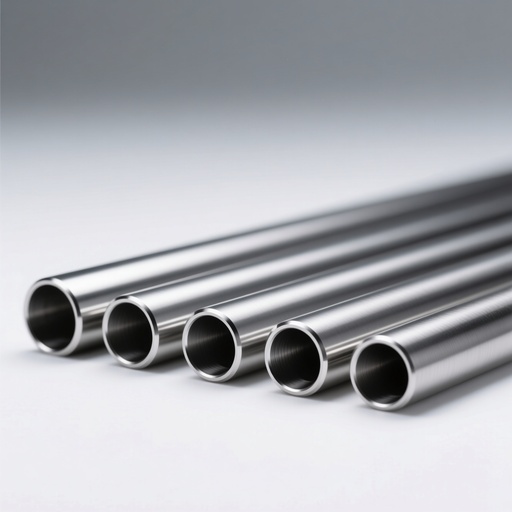
Leading Stainless Steel Capillary Tube Factory. 1,400+ standard sizes IN STOCK & ready to ship worldwide! High precision, factory-direct price.