Inconel 625 Miniature Tubing: Material Properties, Manufacturing Tolerances, and Application Guide
Engineers sourcing Inconel 625 miniature tubing are typically trying to solve a high-temperature, high-pressure, or corrosive-environment design problem where 316L stainless steel or titanium has already been ruled out. This nickel-chromium-molybdenum alloy — UNS N06625, covered by ASTM B444 and B704 for seamless and welded tubing respectively — is specified for small-diameter capillary and precision tube applications in aerospace sensors, oil and gas downhole instrumentation, chemical processing probes, and high-temperature medical or analytical equipment. The sourcing challenge is not finding the alloy; it is finding a supplier who can hold tight OD, ID, and wall tolerances on a hard, work-hardening material while controlling burrs, cleanliness, and documentation. This guide covers what matters when specifying and procuring Inconel 625 miniature tubing.
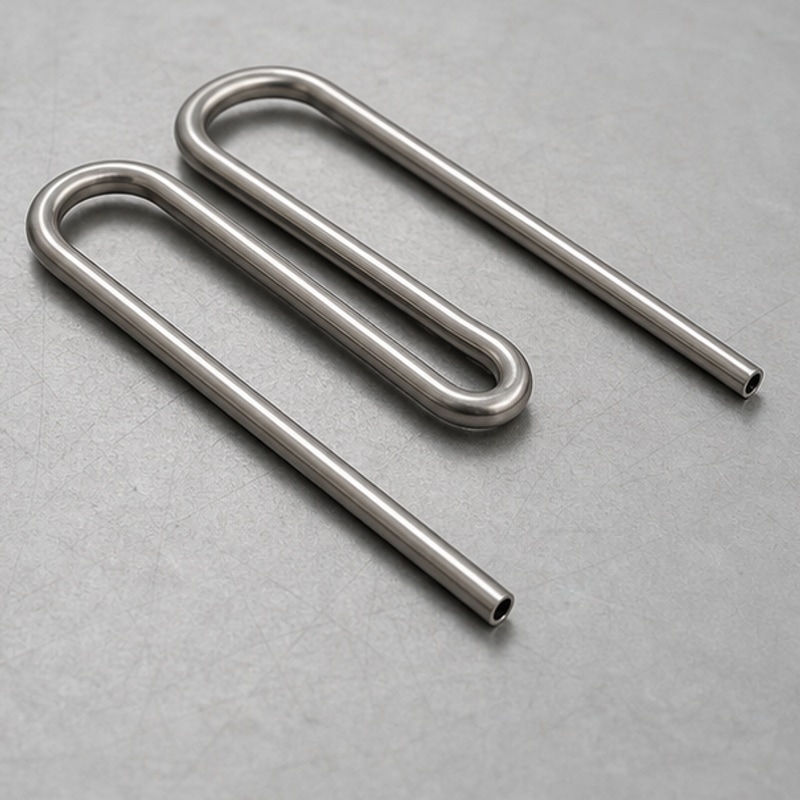
What Inconel 625 Miniature Tubing Is Used For
Inconel 625 (UNS N06625) is a solid-solution-strengthened nickel-based superalloy. Its combination of molybdenum and niobium gives it resistance to pitting, crevice corrosion, and chloride stress-corrosion cracking, while maintaining useful mechanical strength at elevated temperatures. That property set drives its use in miniature tubing where the tube itself is a functional component, not just a conduit.
- Aerospace and defense: pressure sensing lines, hydraulic control tubing, and instrument capillaries exposed to high temperature and vibration.
- Oil and gas: downhole gauge tubing, chemical injection lines, and capillary tubes for permanent monitoring systems in sour or high-pressure wells.
- Chemical and petrochemical: sampling probes, thermowell capillaries, and analytical instrument lines handling aggressive media.
- Power generation: steam and gas turbine instrumentation tubing, heat-exchanger capillary elements.
- Medical and analytical equipment: high-temperature or corrosion-resistant fluid paths in analytical instrumentation, where the alloy is selected for media compatibility rather than implant use.
If your application is ambient-temperature, low-pressure, and non-corrosive, 316L is usually the more economical choice. Inconel 625 miniature tubing is specified when the service environment exceeds what stainless steel can reliably handle.
Material Grades and Designations
Inconel 625 is a trade name; the underlying material is specified by alloy designation, not by a single “medical grade.” Relevant designations include:
| Designation | Description |
|---|---|
| UNS N06625 | Unified Numbering System identifier for the alloy |
| ASTM B444 | Standard specification for nickel-chromium-molybdenum-columbium alloys (seamless tube and pipe) |
| ASTM B704 | Standard specification for welded nickel-chromium-molybdenum-columbium alloy tube |
| ASTM B705 | Welded nickel-chromium-molybdenum-columbium alloy pipe |
| AMS 5581 / AMS 5599 | Aerospace material specifications for 625 tubing and sheet |
| DIN 17752 / 17753 | German wrought nickel alloy specifications |
Grade 1 and Grade 2 variants exist under ASTM B444, differing in annealing temperature and resulting grain size and mechanical properties. The appropriate grade depends on your drawing, required mechanical condition, and the process route agreed between buyer and supplier.
OD, ID, Wall Thickness, and Length Considerations
Miniature tubing generally refers to small-diameter capillary tube, commonly in the OD range of roughly 0.5 mm to 6 mm (0.020 in to 0.250 in), though definitions vary by supplier and application. Because 625 is a work-hardening alloy, the achievable OD/ID/wall combination is constrained by drawing practice, mandrel availability, and the required mechanical condition.
- OD: specify nominal OD and tolerance band. Tighter bands drive cost and may require centerless grinding or additional drawing passes.
- ID: often the critical dimension for flow control or wire/pin insertion. ID tolerance is influenced by wall thickness uniformity.
- Wall thickness: thin walls increase risk of ovality and collapse during drawing; thicker walls improve dimensional stability but reduce ID for a given OD.
- Length: random lengths, fixed lengths, or cut-to-length per drawing. Long straight lengths require straightening and may need special packaging to prevent bending.
Exact achievable ranges depend on drawing, material condition, process route, and mutual agreement between parties. Provide a drawing with nominal dimensions and tolerance class so the supplier can confirm feasibility.
Tolerances for Inconel 625 Miniature Tubing
Tolerance capability is process-dependent and should be confirmed against your specific drawing. Typical commercial capillary tube tolerances fall into ranges such as those below, but these are indicative only and must be verified with the supplier for the specific OD, wall, and condition.
| Parameter | Indicative tolerance range |
|---|---|
| OD | ±0.025 mm to ±0.10 mm depending on size and process |
| ID | ±0.025 mm to ±0.10 mm, or specified by minimum ID |
| Wall thickness | ±10% nominal, or tighter by agreement |
| Concentricity / wall uniformity | Typically 10% or less of wall thickness |
| Straightness | Depends on length and temper; often specified as maximum bow per unit length |
| Length | ±0.5 mm to ±3 mm on cut lengths, depending on cut method |
Do not assume a tolerance is achievable because it appears on a similar stainless steel drawing. Inconel 625 behaves differently during drawing, annealing, and straightening.
End Condition and Burr Control
For miniature tubing used in fluidic or sensor assemblies, the end condition often matters as much as the body dimensions. Specify one of the following clearly on the drawing:
- As-cut: saw or abrasive cut, with defined burr allowance.
- Deburred: internal and/or external burr removed to a stated maximum.
- Chamfered: specified angle and depth, typically for fitting or weld preparation.
- Square-cut: end face perpendicular to axis within a stated tolerance.
- Polished or electropolished ends: where cleanliness or flow characteristics require it.
Burr control is a common failure point in miniature tubing procurement. Define acceptance criteria — for example, maximum burr height or a visual standard — rather than relying on “deburred” alone.
Surface Finish and Cleanliness
Surface requirements vary widely by application. For analytical or high-purity fluid paths, internal surface roughness and residual contamination may be critical. For structural or pressure applications, external finish may be cosmetic or corrosion-related.
- Specify Ra or RMS values with the measurement method and location (ID, OD, or both).
- State cleanliness requirements: degreased, pickled, passivated where applicable, or cleaned to a defined standard.
- For oxygen or high-purity service, specify the cleaning and packaging standard explicitly; do not assume default cleaning is adequate.
Achievable surface finish depends on the manufacturing route — bright annealed, pickled, ground, or polished — and must be agreed between buyer and supplier.
Inspection Documentation
For Inconel 625 miniature tubing, typical documentation packages include:
- Material certification: mill test report or certificate of conformance showing heat number, chemistry, and mechanical properties against the applicable ASTM or AMS specification.
- Dimensional inspection report: OD, ID, wall, length, and straightness measurements against drawing tolerances.
- Surface finish report: where specified.
- Cleanliness or particle count data: where specified.
- Traceability: heat number traceable from raw material to finished tube.
Define the documentation package in the RFQ. “Mill cert only” and “full dimensional report with SPC data” are very different scopes and should be priced accordingly.
Packaging Considerations
Miniature tubing is easily bent or scratched in transit. Packaging should protect both dimensions and surface condition. Common approaches include:
- Rigid tubes or sleeves for straight lengths.
- Coiled packaging for flexible or long lengths, with coil diameter controlled to avoid exceeding minimum bend radius.
- Individual wrapping or interleaving to prevent surface contact.
- Moisture barrier and desiccant where corrosion or contamination during storage is a concern.
- Labeling with heat number, dimensions, quantity, and specification for traceability.
RFQ Information Checklist
To get an accurate quotation for Inconel 625 miniature tubing, include the following in your request:
- Material designation and applicable specification (e.g., UNS N06625, ASTM B444 Grade 1).
- Drawing with nominal OD, ID, wall thickness, and length.
- Tolerance class for each dimension, including straightness and concentricity.
- Quantity, including any expected annual volume.
- End condition and burr acceptance criteria.
- Surface finish requirement and measurement method.
- Cleanliness requirement.
- Inspection documentation package.
- Packaging requirements.
- Any special processing, such as annealing condition, straightening, or testing.
To request a quotation for Inconel 625 miniature tubing, submit your drawings, material grade, quantity, tolerance, surface finish, and inspection requirements through the Healsmed website. The engineering team will review and respond with a technical evaluation.

Healsmed
Leading Stainless Steel Capillary Tube Factory. 1,400+ standard sizes IN STOCK & ready to ship worldwide! High precision, factory-direct price.