Nitinol Shape Memory Alloy in Medical Devices: Common Sourcing Questions
What Buyers Should Know Before Sourcing Nitinol Parts
Nitinol’s shape memory and superelasticity make it uniquely valuable in medical devices, but these same properties create sourcing challenges that commodity metal buyers rarely encounter. This article addresses the most common questions engineering, quality, and procurement teams ask when evaluating nitinol suppliers — covering material specification, processing limits, verification methods, and what to include in a first inquiry.
Start with Af Temperature, Not Just “Memory”
The single most important parameter in nitinol sourcing is the austenite finish temperature (Af). Af determines at what temperature the alloy transforms to its austenite phase, which dictates whether the component exhibits shape memory or superelasticity at body temperature (37°C). For superelastic applications — guidewires, orthodontic archwires, retrieval baskets — the supplier must deliver an Af below approximately 15–25°C so the material remains fully austenitic at room temperature and at 37°C. For shape memory devices that deploy upon heating, Af is typically set 5–15°C above body temperature, often in the range of 40–55°C depending on the thermal activation mechanism.
When requesting a quote, specify your target Af with a tolerance — ±5°C is common practice, though ±3°C is achievable with precise heat treatment. Avoid “Af: body temperature” as a specification; it is ambiguous and will generate clarification loops.
Superelastic Plateau Stress and What It Means for Performance
Superelastic nitinol exhibits a characteristic loading plateau where strain increases with minimal stress change — typically 6–8% recoverable strain for medical-grade binary NiTi. The upper plateau stress (loading) and lower plateau stress (unloading) are measurable values tied to Af and thermomechanical processing history. For implantable devices that must exert consistent force, buyers should request plateau stress data from the supplier’s certificate of test, not generic datasheet values.
Key specification questions to ask:
- What is the reported upper plateau stress at 37°C for the target Af?
- What is the residual strain after 6% elongation (should be below 0.5% for well-processed material)?
- How many load-unload cycles before plateau stress shifts by more than 5%?
Binary NiTi vs. Ternary Alloys: When to Change Composition
Most medical nitinol is binary NiTi with near-equiatomic composition (approximately 55.8 wt% Ni, balance Ti per ASTM F2063). Ternary additions — chromium, copper, cobalt, or iron — are less common but solve specific problems. Nickel-titanium-copper (NiTiCu) narrows the transformation hysteresis, useful for actuator applications requiring rapid cycling. Chromium additions can raise Af for higher-temperature shape memory needs. However, ternary alloys often have lower ductility and more sensitive heat treatment windows; their use should be justified by a clear functional need that binary NiTi cannot meet.
For initial sourcing, confirm whether the supplier works with binary NiTi (ASTM F2063-compliant ingot) or can also process ternary grades. Most medical nitinol component suppliers focus on binary NiTi from established melt sources.
Tube, Wire, Sheet, or Custom Form: What Processing Capabilities Matter
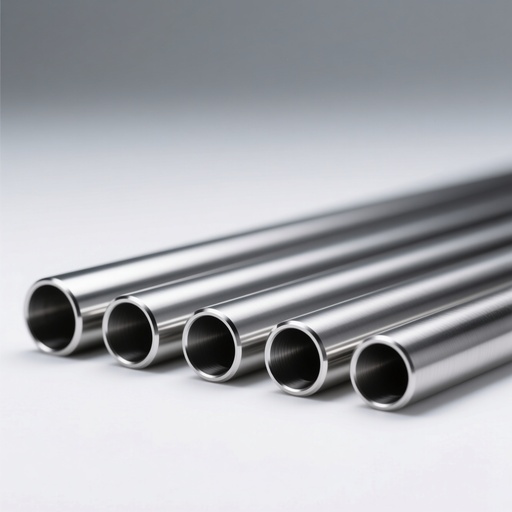
The form factor determines which suppliers can serve your project. Drawn nitinol tube — used for stent precursors, hypotubes, and catheter components — requires specialized drawing equipment, controlled annealing, and mandrel removal. Wall thickness below 0.1 mm on OD under 2 mm pushes toward the capability edge for many shops. Wire drawing is more widely available, but consistent surface finish at diameters below 0.05 mm remains demanding.
When inquiring about nitinol components, state:
- Form: tube, wire, strip, sheet, or finished machined part
- Key dimensions with tolerances
- Desired Af or transformation temperature range
- Whether the part must be shape-set to a specific geometry (mandrel-shaped, free recovery, or constrained recovery)
Shape Setting and Heat Treatment: The Real Capability Differentiator
Shape setting transforms straight nitinol material into a memorized geometry — a curve, coil, basket, or hook — by constraining it in a fixture and heat treating at 400–550°C, followed by quenching. The exact temperature-time profile directly affects Af, plateau stress, and fatigue life. Two suppliers running the same furnace setpoint can produce meaningfully different results because thermal uniformity, loading density, quench speed, and fixture material all matter.
Critical supplier questions:
- Do you document the shape-setting recipe (temperature, time, fixture material, quench method) per lot?
- What is the typical Af shift from pre- to post-shape-setting for the article geometry?
- Can you provide shape-set test coupons from each batch for independent verification?
Surface Quality, Oxide Layer, and Post-Processing
As-drawn or as-heat-treated nitinol carries an oxide layer — typically dark grey to black — that varies with the thermal cycle. This oxide may need removal (pickling, electropolishing, or chemical etching) or controlled growth (blue oxide for reduced nickel release). Buyers should discuss surface finishing with both the nitinol supplier and the contract manufacturer handling final cleaning and passivation.
Electropolishing produces a bright finish but removes material (typically 5–15 μm per surface), which must be accounted for in dimensioning. Confirm with the supplier whether they perform electropolishing in-house and whether they can provide surface roughness data (Ra) before and after finishing.
Material Certification: ASTM F2063 and Beyond
ASTM F2063 is the standard specification for wrought nickel-titanium shape memory alloys for medical devices. It defines composition limits (54.5–57.0 wt% nickel), maximum impurity levels, and transformation temperature measurement methods by DSC. A raw material certificate to F2063 is the baseline requirement. It does not cover the finished component’s properties after cold work and heat treatment — those must be verified separately.
Ask the supplier for:
- Full chemical analysis per heat with nickel, titanium, carbon, oxygen, and hydrogen levels
- DSC curve showing transformation temperatures (As, Af, Ms, Mf) for the finished article or representative heat-treated sample
- Upper and lower plateau stress from tensile testing at 37°C
- Surface condition report or microscopy images at agreed-upon magnification
Nickel Release and Biocompatibility: Clarifying Responsibility
Nitinol inherently contains approximately 55% nickel by weight. Surface treatment — particularly electropolishing and controlled oxidation — can reduce nickel ion release rates by forming a titanium-rich oxide barrier. ASTM F2129 covers cyclic potentiodynamic polarization testing for small medical devices, and ISO 10993 provides the evaluation framework.
It is the device manufacturer’s responsibility to assess nickel release and biocompatibility for the specific finished device, sterilization method, and intended use. The nitinol component supplier’s role is to provide material with consistent surface condition, documented processing history, and test data to support that evaluation. Do not expect a nitinol supplier to certify biocompatibility; expect them to provide the material traceability and processing transparency that make assessment possible.
Sourcing Checklist for Your First Inquiry
Before contacting a nitinol component supplier, prepare:
- Product form and dimensions: Tube (OD × ID × length), wire (diameter), or sheet/strip with tolerances
- Target Af temperature with tolerance (e.g., Af 20°C ±5°C)
- Application type: Superelastic (Af below body temperature) or shape memory (Af above body temperature)
- Shape-setting requirement: Final component geometry and whether you supply the fixture or need supplier input
- Surface finish: As-drawn, oxide, pickled, electropolished; Ra target if known
- Testing and documentation: ASTM F2063 cert, DSC curve, tensile plateau stress, surface inspection report
- Estimated annual quantity and project phase (prototype, pilot, or production)
- Drawings or 3D models showing critical dimensions and reference datums
Working with Nitinol: The Practical Trade-offs
Nitinol delivers capabilities no other engineering metal can match — recoverable strains far beyond stainless steel or titanium, constant-force superelastic behavior, and biocompatibility when properly processed. These benefits come with real complexity: transformation temperatures must be specified and verified, heat treatment recipes are proprietary, surface condition affects both performance and ion release, and batch-to-batch consistency requires disciplined process control from melt to finished article.
For OEM buyers and engineers, the most effective approach is to select a supplier who demonstrates understanding of these variables — not one who promises that nitinol is “just another alloy.” Ask for data, not assurances. Verify with test coupons before committing to production volumes. And treat the first order as a joint qualification exercise where supplier and buyer refine specifications together.
For a deeper look at supplier evaluation, see our guide on what makes a nitinol manufacturer reliable. If comparing material options, our nitinol vs stainless steel tube comparison covers selection criteria for different medical applications. When planning procurement, the guide on reducing risk with overseas tube suppliers covers practical steps from inquiry through first shipment.
If you are preparing an RFQ for nitinol components, contact us with your drawings and target transformation temperatures. We can help translate application requirements into a sourcing specification.

Healsmed
Leading Stainless Steel Capillary Tube Factory. 1,400+ standard sizes IN STOCK & ready to ship worldwide! High precision, factory-direct price.