316L Stainless Steel Capillary Tubing: Material Properties, Manufacturing Tolerances, and Application Guide
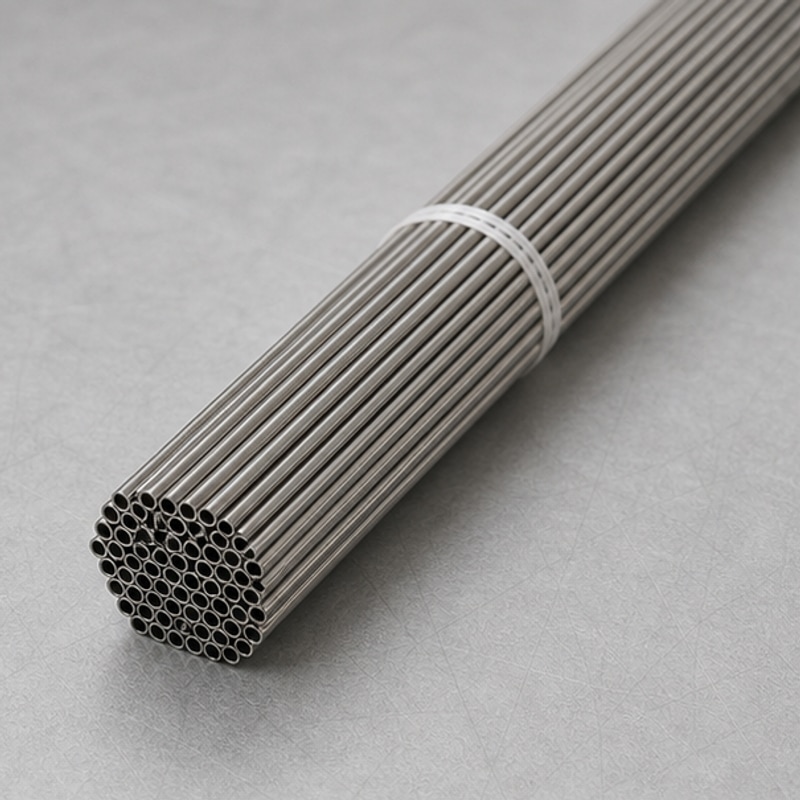
When specifying 316L stainless steel capillary tubing for medical devices, analytical instruments, or industrial systems, engineers must evaluate material chemistry, dimensional tolerances, and manufacturing consistency. 316L capillary tubing offers superior corrosion resistance and low carbon content, making it suitable for welded or drawn applications where intergranular corrosion is a concern. This article provides technical data on composition, mechanical properties, manufacturing tolerances, and practical guidance for procurement.
Chemical Composition and Mechanical Properties of 316L Stainless Steel Capillary Tubing
The “L” in 316L denotes low carbon (≤0.03% max), which minimizes carbide precipitation during welding or annealing. The typical composition per ASTM A269 and ASTM A213 includes: chromium 16.0–18.0%, nickel 10.0–14.0%, molybdenum 2.0–3.0%, manganese ≤2.0%, silicon ≤0.75%, phosphorus ≤0.045%, sulfur ≤0.030%, and carbon ≤0.030%. Molybdenum enhances pitting resistance in chloride environments, while the low carbon content improves weldability without sensitization.
Mechanical properties for annealed 316L capillary tubing typically show tensile strength ≥485 MPa (70 ksi), yield strength (0.2% offset) ≥170 MPa (25 ksi), and elongation in 50 mm ≥35%. Hardness is typically ≤95 HRB. These values can shift slightly with cold drawing reduction; for example, hard-drawn capillary may exhibit tensile strength up to 620 MPa but reduced elongation. Engineers should specify the temper condition (annealed, quarter-hard, or full-hard) based on application bending or forming requirements.
Dimensional Specifications and Tolerance Classes for Capillary Tubing
316L stainless steel capillary tubing is commonly available in outside diameters (OD) ranging from 0.5 mm to 12.7 mm, with wall thicknesses from 0.05 mm to 2.0 mm. Standard manufacturing tolerances depend on the drawing process and final application. For medical or analytical use, tighter tolerances are typical.
| Parameter | Standard Tolerance | Precision Tolerance |
|---|---|---|
| Outside Diameter (OD) | ±0.05 mm | ±0.025 mm |
| Wall Thickness | ±10% of nominal | ±5% of nominal |
| Length (cut-to-length) | ±1.0 mm | ±0.5 mm |
| Straightness | 1 mm/m | 0.5 mm/m |
These tolerances are achievable through multi-pass cold drawing with intermediate annealing. For high-volume production, statistical process control (SPC) is used to maintain consistency. Buyers should specify tolerance class in their drawings, as tighter tolerances increase manufacturing cost and lead time.
Seamless vs Welded: Which Manufacturing Route to Choose for 316L Capillary Tubing
Seamless 316L capillary tubing is produced by piercing a solid billet followed by cold drawing. It offers uniform wall structure and no weld seam, which is critical for high-pressure or high-purity applications such as chromatography columns or hydraulic lines. Seamless tubing is preferred when burst pressure integrity or absence of weld defects is mandatory.
Welded 316L capillary tubing starts from strip formed into a tube and longitudinally welded using TIG or laser. After welding, the tube is cold drawn to reduce dimensions and refine the weld zone. Welded and drawn tubing can achieve equivalent mechanical properties to seamless for many applications, but the weld area may exhibit slightly different corrosion behavior in aggressive media. For most analytical instrumentation and general industrial use, welded and drawn 316L capillary is cost-effective and acceptable, provided post-weld annealing is performed to restore corrosion resistance.
The choice depends on operating pressure, fluid compatibility, and budget. Seamless is typically specified for pressures exceeding 200 bar or for medical implantable devices.
Manufacturing Process: Cold Drawing, Annealing, Straightening, and Cutting
Cold drawing is the core process for producing 316L capillary tubing. A tube blank (either seamless or welded) is pulled through a die to reduce its diameter and wall thickness. Each pass reduces cross-sectional area by 10–30%. Between passes, the tubing is annealed at 1040–1120°C in a protective atmosphere (hydrogen or argon) to restore ductility and remove work hardening. Annealing also ensures the low carbon structure remains stable.
After final drawing, the tubing is straightened using rotary straighteners or roller levels to achieve the specified straightness tolerance. Cutting is performed by abrasive saw, laser, or mechanical cut-off. For medical applications, cut ends must be deburred and free of burrs or internal chips. Some suppliers offer ultrasonic cleaning and passivation to improve surface cleanliness and corrosion resistance.
Inspection includes dimensional gauging, eddy current testing for surface defects, and hydrostatic or pneumatic pressure testing when required.
Corrosion Resistance of 316L Capillary Tubing in Service Environments
316L stainless steel capillary tubing offers excellent resistance to pitting and crevice corrosion due to molybdenum content. It performs well in chloride-bearing environments up to approximately 1000 ppm chlorides at ambient temperature, though higher temperatures or higher chloride concentrations may require higher alloys (e.g., 904L or Hastelloy). The low carbon content prevents sensitization during welding, so the heat-affected zone retains corrosion resistance.
In medical applications, 316L is often used for fluid delivery systems, biopsy needles, and catheter components where exposure to bodily fluids or saline is common. For analytical instrumentation, 316L capillary resists attack from dilute acids, bases, and organic solvents. Maximum service temperature in air is approximately 870°C for intermittent use and 650°C for continuous service, though strength decreases above 400°C. Engineers should avoid using 316L in reducing sulfur environments or concentrated hydrochloric acid.
Industry-Specific Applications for 316L Stainless Steel Capillary Tubing
In medical devices, 316L capillary tubing is used for hypodermic needles, endoscope channels, drug delivery catheters, and surgical instruments. The material’s biocompatibility, corrosion resistance, and ability to be drawn to very small ODs (down to 0.5 mm or less) make it a standard choice.
In analytical instrumentation, 316L capillary is found in gas chromatography columns, liquid chromatography systems, mass spectrometry interfaces, and sample loops. Cleanliness and precise ID tolerances are critical for reproducible flow rates and separation.
Industrial applications include pneumatic controls, hydraulic lines, heat exchanger tubes, sensors, and capillary tubes for chemical injection. The combination of mechanical strength, corrosion resistance, and dimensional stability suits high-cycle or high-pressure environments.
For more information about 316L stainless steel capillary tubing, contact Healsmed’s engineering team with your material grade, drawing, tolerance requirements, and quantity. Submit inquiries through the Healsmed website for prompt technical review and quotation.
Conclusion
Selecting 316L stainless steel capillary tubing requires understanding the interplay between chemical composition, mechanical properties, and manufacturing tolerances. The low carbon content and molybdenum addition provide reliable corrosion resistance for medical, analytical, and industrial applications. Dimensional tolerances of ±0.025 mm to ±0.05 mm on OD are achievable with cold drawing, but buyers must specify the required tolerance class and temper condition.
Seamless tubing is preferred for high-pressure or high-purity applications, while welded and drawn tubing offers a cost-effective alternative for less demanding environments. Proper specification of annealing, straightness, and end finish ensures that the delivered capillary tubing meets functional requirements. Engineers should always verify supplier process controls, inspection certifications, and traceability for critical applications.

Healsmed
Leading Stainless Steel Capillary Tube Factory. 1,400+ standard sizes IN STOCK & ready to ship worldwide! High precision, factory-direct price.