316L SS Capillary Tube: Material Properties, Manufacturing Tolerances, and Application Guide
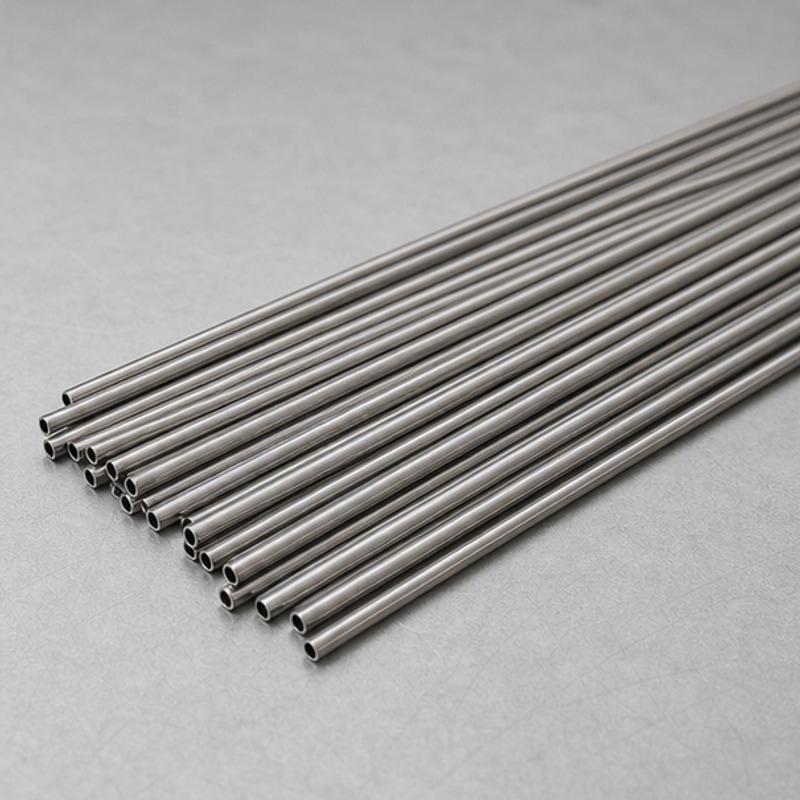
When engineering teams specify 316L SS capillary tube for precision fluid handling or gas chromatography systems, they are selecting a material that balances corrosion resistance with mechanical formability. This article examines the defining characteristics of 316L stainless steel capillary tubing, including its metallurgical composition, achievable tolerances, manufacturing methods, and the inspection criteria that matter in regulated industries. The content is intended for procurement engineers and design engineers who need factual data to support material selection decisions.
Chemical Composition and Mechanical Properties of 316L SS Capillary Tube
316L is the low-carbon variant of Type 316 austenitic stainless steel. The reduced carbon content (maximum 0.03%) minimizes carbide precipitation during welding or heat treatment, preserving corrosion resistance in the heat-affected zone. The nominal composition per ASTM A269 includes 16-18% chromium, 10-14% nickel, and 2-3% molybdenum. Molybdenum is the key alloying element that improves pitting resistance in chloride-containing environments.
| Element | Composition Range (wt%) |
|---|---|
| Carbon | 0.03 max |
| Chromium | 16.0 – 18.0 |
| Nickel | 10.0 – 14.0 |
| Molybdenum | 2.0 – 3.0 |
| Manganese | 2.0 max |
| Silicon | 0.75 max |
| Phosphorus | 0.045 max |
| Sulfur | 0.030 max |
| Iron | Balance |
Typical mechanical properties for annealed 316L SS capillary tube: tensile strength 485 MPa minimum, yield strength (0.2% offset) 170 MPa minimum, elongation in 50 mm at 40% minimum. Hardness is typically below 90 HRB. These values allow the tubing to be cold drawn to precise dimensions while maintaining ductility for bending and flaring operations.
Dimensional Specifications and Tolerance Classes for Capillary Tubing
Capillary tube dimensions are defined by outer diameter (OD) and wall thickness. Healsmed supplies 316L SS capillary tube in OD ranges from 0.5 mm to 12.7 mm and wall thicknesses from 0.05 mm to 2.0 mm. Tolerances depend on the drawing reduction sequence and final annealing condition. Standard commercial tolerances for drawn capillary are ±0.05 mm on OD. For applications requiring tighter control—such as HPLC columns or medical catheters—tolerances down to ±0.025 mm can be achieved with multiple cold drawing passes and precision dies.
| OD Range (mm) | Standard Tolerance (mm) | Precision Tolerance (mm) |
|---|---|---|
| 0.5 – 2.0 | ±0.05 | ±0.025 |
| 2.0 – 6.0 | ±0.05 | ±0.025 |
| 6.0 – 12.7 | ±0.05 | ±0.038 |
Wall thickness tolerance is typically ±10% of nominal wall for standard tubing. Concentricity (eccentricity) is held to 80% minimum wall thickness at any cross-section unless otherwise specified. Surface roughness for as-drawn capillary is generally 0.8–1.6 µm Ra; for polished or electropolished finishes, 0.2–0.4 µm Ra is achievable.
Seamless vs Welded: Which Manufacturing Route to Choose
316L SS capillary tube is available in both seamless and welded-and-drawn constructions. Seamless tubing starts with a solid billet that is pierced and extruded, then cold drawn to final dimensions. This route eliminates any longitudinal weld seam, making it preferred for high-pressure applications (e.g., hydraulic lines, injector components) where weld integrity cannot be guaranteed. Welded tubing is formed from strip and longitudinally fused, then cold drawn to reduce the weld bead and improve dimensional consistency. For capillary sizes under 6 mm OD, welded-and-drawn tube can meet similar mechanical and corrosion performance as seamless, provided the weld zone is fully recrystallized during annealing. Cost considerations: seamless typically commands a 15-25% premium over welded for equivalent dimensions.
Cold Drawing, Annealing, Straightening, and Cutting Processes
The manufacturing sequence for 316L SS capillary tube begins with cold drawing through a series of carbide or diamond dies. Each drawing pass reduces the cross-section by 15-30%, with intermediate annealing at 1050-1120°C followed by rapid quenching to restore austenitic structure and remove work hardening. After final drawing, the tube is straightened using roller straighteners to achieve a camber of less than 1 mm per meter. Cutting is performed with abrasive saws or orbital cutters; for medical-grade tubing, laser cutting is used to produce burr-free, square ends with length tolerances of ±0.5 mm. All processing is done in clean, dry conditions to avoid surface contamination that could compromise corrosion resistance.
Corrosion Resistance and Service Temperature Limits
316L SS capillary tube offers good resistance to pitting and crevice corrosion in chloride environments due to its molybdenum content. The pitting resistance equivalent number (PREN) is typically 24–26. In immersion tests per ASTM G48, 316L shows no pitting at 22°C in 6% ferric chloride. However, in environments above 60°C with chloride concentrations exceeding 1000 ppm, localized corrosion may initiate. Maximum continuous service temperature in air is approximately 870°C, with intermittent service up to 925°C. At temperatures above 800°C, sensitization is not a concern due to the low carbon content. For cryogenic applications, 316L retains impact toughness down to -196°C.
Industry-Specific Applications for 316L SS Capillary Tube
In medical devices, 316L SS capillary tube is used for drug delivery catheters, biopsy needles, and endoscopic instruments where biocompatibility and corrosion resistance to bodily fluids are required. Analytical instrumentation applications include gas chromatography columns, sample loops, and transfer lines for HPLC systems. Industrial OEMs use 316L capillary for pneumatic controls, lubricant feed lines, and pressure sensing ports. The material is also specified in pharmaceutical processing for sampling ports and low-volume fluid transfer where cleanability and resistance to CIP (clean-in-place) chemicals are necessary.
Quality Control and Inspection Protocol
Incoming material is verified against mill test certificates per EN 10204 Type 3.1 or 3.2. Dimensional inspection uses laser micrometers and air gauges with automated data logging. Surface defects are detected by eddy current testing (ASTM E309) or dye penetrant inspection for critical applications. Mechanical testing per ASTM A370 is performed on each production lot. For medical-grade tubing, additional cleanliness testing (carbon residue, particulate count) and 100% visual inspection under magnification are standard. Healsmed maintains traceability from melt to final shipment.
For more information about 316L SS capillary tube, contact Healsmed’s engineering team with your material grade, drawing, tolerance requirements, and quantity. Submit inquiries through the Healsmed website for prompt technical review and quotation.
Conclusion
316L SS capillary tube provides a reliable combination of corrosion resistance, mechanical strength, and dimensional precision for demanding applications in medical, analytical, and industrial sectors. Understanding the relationship between composition, manufacturing process, and achievable tolerances allows engineers to specify tubing that meets functional requirements without over-specifying cost. The low carbon grade ensures weldability and resistance to sensitization, while the molybdenum addition extends service life in mildly corrosive environments.
When evaluating suppliers, verify that the manufacturer can provide traceable material certifications, consistent dimensional control, and appropriate surface finish for your application. Whether seamless or welded-and-drawn construction is selected, proper specification of tolerances and testing requirements at the procurement stage will reduce risk and improve final product performance.

Healsmed
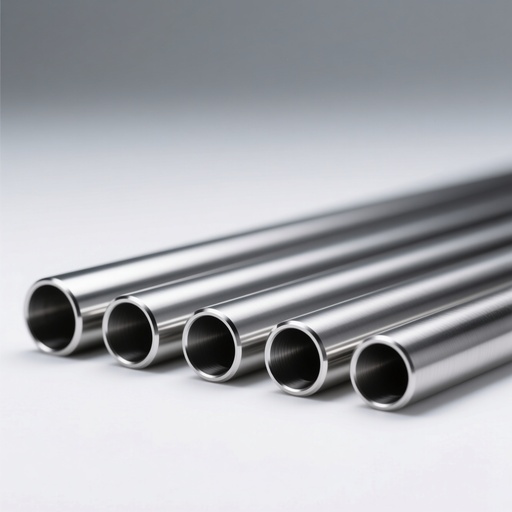
Leading Stainless Steel Capillary Tube Factory. 1,400+ standard sizes IN STOCK & ready to ship worldwide! High precision, factory-direct price.