316L SS Capillary Tubing: Material Properties, Manufacturing Tolerances, and Application Guide
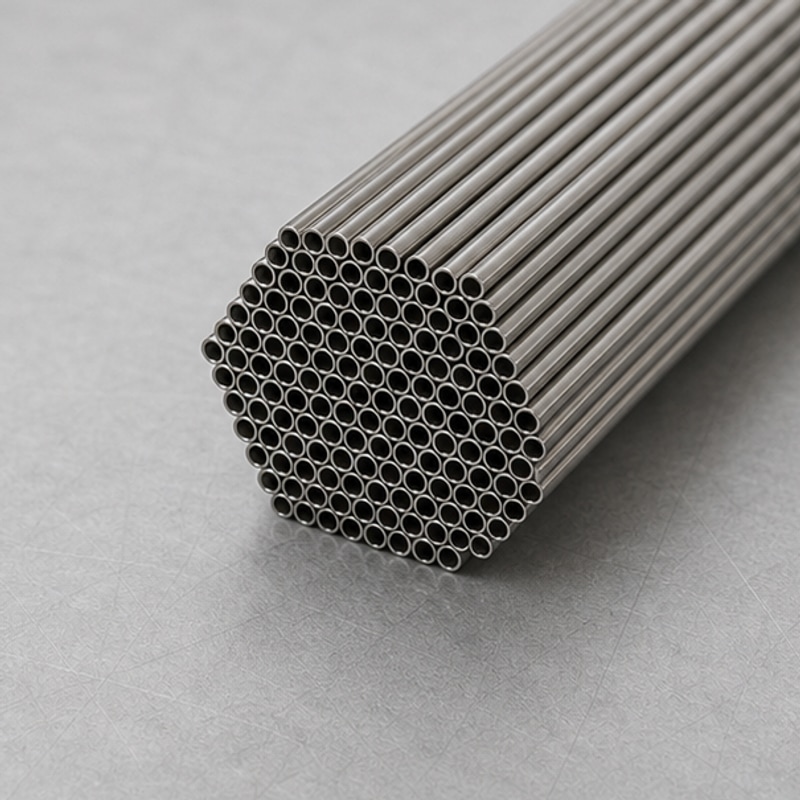
316L SS capillary tubing is a low-carbon austenitic stainless steel product used in medical devices, analytical instruments, and industrial fluid systems where corrosion resistance, dimensional precision, and weldability are required. The “L” designation indicates a maximum carbon content of 0.03%, which reduces the risk of sensitization and intergranular corrosion during welding or high-temperature exposure. This article provides a technical overview of material properties, manufacturing tolerances, and application considerations for engineers and procurement professionals evaluating 316L SS capillary tubing for OEM projects.
Chemical Composition and Mechanical Properties of 316L SS Capillary Tubing
The chemical composition of 316L stainless steel is specified by ASTM A269, ASTM A213, and equivalent standards. The low carbon content distinguishes 316L from standard 316, making it the preferred grade for welded assemblies and service temperatures up to 450°C (842°F). Typical composition ranges are as follows:
| Element | Composition (wt%) |
|---|---|
| Carbon (C) | 0.030 max |
| Manganese (Mn) | 2.00 max |
| Phosphorus (P) | 0.045 max |
| Sulfur (S) | 0.030 max |
| Silicon (Si) | 0.75 max |
| Chromium (Cr) | 16.0 – 18.0 |
| Nickel (Ni) | 10.0 – 14.0 |
| Molybdenum (Mo) | 2.00 – 3.00 |
| Iron (Fe) | Balance |
Typical mechanical properties for annealed 316L SS capillary tubing include a tensile strength of 485 MPa (70 ksi) minimum, yield strength of 170 MPa (25 ksi) minimum, and elongation of 40% in 50 mm. These values provide adequate ductility for bending, flaring, and swaging operations common in capillary tube assemblies.
Corrosion Resistance Profile for 316L SS Capillary Tubing
The addition of molybdenum (2.0–3.0%) gives 316L significantly better pitting and crevice corrosion resistance compared to 304 stainless steel in chloride-containing environments. For capillary tubing used in biomedical implants, HPLC systems, or chemical injection lines, the low carbon content ensures that welded joints maintain corrosion resistance without post-weld heat treatment. In immersion tests per ASTM G48, 316L typically exhibits a critical pitting temperature (CPT) of 20–25°C in 6% FeCl3 solution, depending on surface finish. For aggressive chloride environments above 50°C, higher-alloy grades such as 317L or 904L may be required.
Dimensional Specifications and Tolerance Classes for Capillary Tubing
316L SS capillary tubing is commonly supplied in outside diameters (OD) from 0.5 mm to 12.7 mm, with wall thicknesses from 0.05 mm to 2.0 mm. Standard manufacturing tolerances for drawn tubing follow ASTM A269 or ASTM A213, with typical OD tolerances of ±0.025 mm for sizes under 3.0 mm OD, and ±0.05 mm for larger diameters. Wall thickness tolerances are generally ±10% of nominal. For applications requiring tighter control, such as hypodermic needle tubing or precision flow restrictors, manufacturers can hold ±0.0125 mm on OD through multiple cold drawing passes and dedicated die sets. Length tolerances for cut pieces are typically ±0.5 mm for lengths under 500 mm, with tighter tolerances available by agreement.
Seamless vs Welded 316L SS Capillary Tubing: Manufacturing Route Selection
Seamless 316L SS capillary tubing is produced by hot piercing a billet followed by cold drawing through dies over a mandrel. This process yields a uniform wall structure with no longitudinal weld seam, making it suitable for high-pressure applications above 20 MPa (2900 psi) and for fluid systems where weld integrity is a concern. Welded and drawn tubing starts from strip or plate formed into a tube and longitudinally welded using TIG or laser, then cold drawn to final dimensions. Welded tubing is generally more economical for thin walls and long lengths. For capillary applications below 6.0 mm OD, seamless is the dominant choice due to the difficulty of producing consistent welds at small diameters. Both routes require full annealing and passivation to restore corrosion resistance after drawing.
Cold Drawing, Annealing, Straightening, and Cutting Process
The manufacturing of 316L SS capillary tubing involves a sequence of cold drawing operations where the tube is pulled through a carbide or diamond die to reduce OD and wall thickness. Intermediate annealing at 1040–1120°C in a controlled atmosphere or vacuum furnace relieves work hardening and restores ductility. After final drawing, tubing is straightened using rotary straighteners with adjustable roll sets to achieve a typical straightness of 0.5 mm per meter. Cutting is performed by abrasive cut-off wheels, tube cutters, or laser cutting for burr-free ends. For medical-grade tubing, electropolishing or chemical passivation is often specified to remove surface contaminants and reduce micro-roughness below 0.4 µm Ra.
Inspection and Quality Control for 316L SS Capillary Tubing
Standard inspection for 316L SS capillary tubing includes dimensional verification using laser micrometers and air gauging, eddy current testing for surface defects, and hydrostatic or pneumatic pressure testing per ASTM A1016. For critical applications, manufacturers may perform ferrite content measurement (typically <0.5% for fully austenitic structure), intergranular corrosion testing per ASTM A262 Practice E, and tensile testing on representative samples. Dimensional reports should include OD, ID, wall thickness, ovality, and straightness measurements. A material test certificate (EN 10204 Type 3.1 or 3.2) confirming chemical composition and mechanical properties is standard for OEM procurement.
Industry-Specific Applications for 316L SS Capillary Tubing
In medical devices, 316L SS capillary tubing is used for hypodermic needles, catheter shafts, drug delivery systems, and minimally invasive surgical instruments. The low carbon content ensures biocompatibility per ISO 10993 and resistance to bodily fluids. In analytical instrumentation, 316L capillary tubing serves as transfer lines for gas chromatography (GC), liquid chromatography (HPLC), and mass spectrometry, where internal surface smoothness and chemical inertness are critical. Industrial applications include pneumatic control lines, refrigerant metering tubes, hydraulic pressure sensing lines, and chemical injection probes in oil and gas processing. The combination of corrosion resistance, mechanical strength, and dimensional precision makes 316L a baseline material for these sectors.
Procurement Checklist for 316L SS Capillary Tubing
When specifying 316L SS capillary tubing, confirm the following: material certification to ASTM A269 or A213 with mill test reports; exact OD, wall thickness, and length with tolerance class; surface finish requirement (e.g., as-drawn, annealed, electropolished); end condition (cut, deburred, chamfered); and any secondary operations such as bending, coiling, or passivation. For welded tubing, verify that the weld seam has been removed or that the tubing is welded and drawn to achieve seam-free ID. Request a sample for dimensional and corrosion testing before full production.
For more information about 316L SS capillary tubing, contact Healsmed’s engineering team with your material grade, drawing, tolerance requirements, and quantity. Submit inquiries through the Healsmed website for prompt technical review and quotation.
Conclusion
316L SS capillary tubing offers a balance of corrosion resistance, mechanical properties, and manufacturability that suits a wide range of precision fluid handling and medical applications. Understanding the material’s composition limits, dimensional tolerance classes, and the differences between seamless and welded manufacturing routes allows engineers to specify the correct product for their design requirements.
For OEM procurement, verifying supplier capabilities in cold drawing, annealing, straightening, and inspection is essential to ensure consistent quality across production lots. By aligning material selection with application conditions—such as chloride exposure, pressure, and weld requirements—engineers can avoid premature failure and reduce total system cost.
As capillary tubing dimensions decrease and tolerance demands tighten, working with a manufacturer that understands the interplay between drawing reduction ratios, annealing parameters, and final mechanical properties becomes critical. 316L SS capillary tubing remains a reliable choice when specified correctly.

Healsmed
Leading Stainless Steel Capillary Tube Factory. 1,400+ standard sizes IN STOCK & ready to ship worldwide! High precision, factory-direct price.