316L Seamless Capillary Tube: Material Properties, Manufacturing Tolerances, and Application Guide
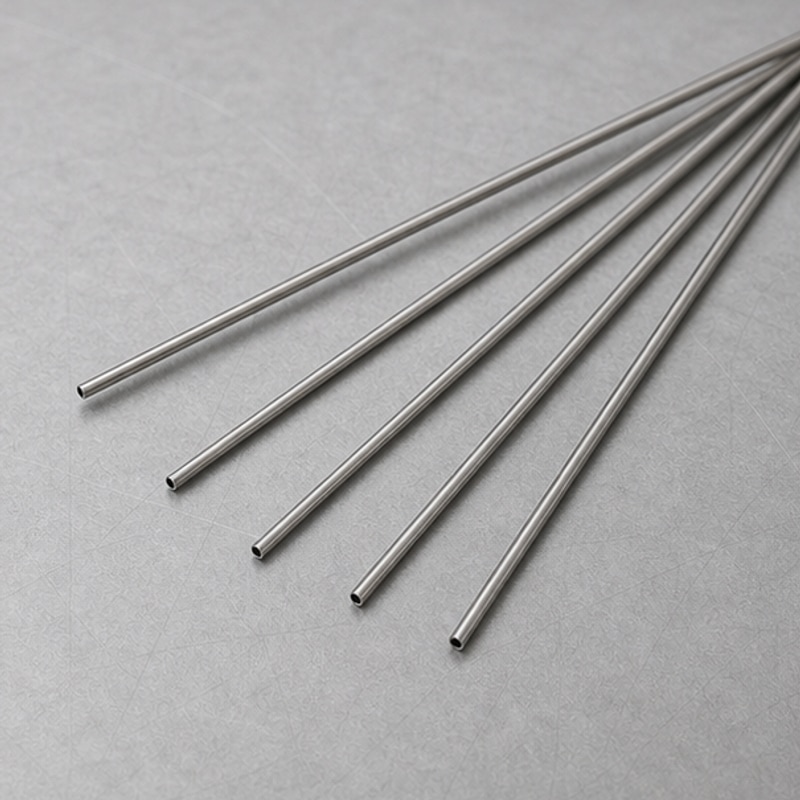
When specifying small-diameter tubing for medical devices, analytical instruments, or industrial fluid systems, the 316L seamless capillary tube is often the default choice for engineers who prioritize corrosion resistance and mechanical reliability. This article provides a technical overview of 316L seamless capillary tube, covering its material composition, dimensional tolerances, manufacturing route, and application-specific considerations. The information is intended to support procurement and design engineers in making informed decisions based on real performance data rather than marketing claims.
Chemical Composition and Mechanical Properties of 316L
The “L” in 316L denotes a low-carbon variant of Type 316 stainless steel, with a maximum carbon content of 0.030%. This reduction minimizes sensitization during welding or high-temperature exposure, preserving corrosion resistance in aggressive environments. The typical chemical composition for 316L seamless capillary tube, per ASTM A269 and ASTM A213, is as follows:
| Element | Composition Range (wt%) |
|---|---|
| Carbon | 0.030 max |
| Manganese | 2.00 max |
| Phosphorus | 0.045 max |
| Sulfur | 0.030 max |
| Silicon | 0.75 max |
| Chromium | 16.0 – 18.0 |
| Nickel | 10.0 – 14.0 |
| Molybdenum | 2.00 – 3.00 |
| Iron | Balance |
Mechanical properties for annealed 316L seamless capillary tube typically include a tensile strength of 485 MPa minimum, yield strength of 170 MPa minimum, and elongation of 35% minimum in 50 mm. These values provide sufficient ductility for bending and flaring during assembly while maintaining structural integrity under pressure.
Why Seamless Construction Matters for 316L Capillary Tubes
Seamless capillary tubing is produced by cold drawing a solid billet through a series of dies without any longitudinal weld seam. For 316L, this manufacturing route offers three distinct advantages. First, the absence of a weld zone eliminates the risk of preferential corrosion along the joint, which is critical in chloride-containing environments. Second, the uniform grain structure achieved through cold drawing and annealing results in consistent mechanical properties along the entire tube length. Third, seamless tubing provides better pressure integrity because there is no weaker fusion line to fail under cyclic or static loads. For applications such as high-pressure liquid chromatography (HPLC) or medical gas delivery, these factors make seamless 316L capillary tube a more predictable choice than welded-and-drawn alternatives.
Dimensional Specifications and Tolerance Classes
316L seamless capillary tubes are typically available in outside diameters (OD) ranging from 0.5 mm to 12.7 mm, with wall thicknesses from 0.05 mm to 2.0 mm. The dimensional tolerances depend on the drawing process and the final anneal condition. Standard tolerances for cold-drawn seamless tubing, as defined in ASTM A269, are ±0.05 mm on OD for sizes up to 12.7 mm. For tighter requirements, precision drawing can achieve ±0.025 mm on OD, though this may increase lead time and cost. Wall thickness tolerances are typically ±10% of nominal wall, with tighter control available on request. Engineers should specify the required tolerance class early in the design phase to avoid mismatches with fittings or ferrule systems.
| OD Range (mm) | Standard OD Tolerance (mm) | Precision OD Tolerance (mm) |
|---|---|---|
| 0.5 – 3.0 | ±0.05 | ±0.025 |
| 3.1 – 6.0 | ±0.05 | ±0.025 |
| 6.1 – 12.7 | ±0.05 | ±0.038 |
Corrosion Resistance and Service Temperature Limits
316L offers improved resistance to pitting and crevice corrosion compared to 304 or standard 316, primarily due to its molybdenum content (2.0–3.0%). The Pitting Resistance Equivalent Number (PREN) for 316L is approximately 24–26, making it suitable for environments with moderate chloride concentrations, such as saline solutions, bleach, and many pharmaceutical intermediates. The maximum continuous service temperature for 316L in oxidizing atmospheres is about 870°C, but for corrosion resistance in aqueous environments, the upper limit is typically 400°C. Above this temperature, the material may form chromium carbides at grain boundaries, reducing corrosion resistance. For high-temperature applications above 500°C, other grades such as 310S or 321 may be more appropriate.
Manufacturing Process: From Billet to Capillary Tube
The production of 316L seamless capillary tube begins with a solid round billet that is heated and pierced to create a hollow shell. This shell is then cold drawn through a series of dies and over a mandrel to reduce the OD and wall thickness incrementally. Between drawing passes, the tube is annealed in a controlled atmosphere furnace to restore ductility and remove residual stresses. Final annealing at 1040–1120°C followed by rapid quenching ensures the low-carbon structure is maintained. After drawing, the tube undergoes straightening, cutting, and surface finishing. The entire process is monitored for dimensional consistency, wall concentricity, and surface defects. For capillary tubes with OD below 3 mm, multiple drawing passes are required, and the final dimensions are verified using laser micrometers and air gauges.
Quality Control and Inspection Protocol
Inspection of 316L seamless capillary tube typically follows ASTM A269 or customer-specific standards. Common tests include hydrostatic pressure testing, eddy current testing for surface and near-surface defects, and ultrasonic testing for wall thickness verification. Dimensional inspection is performed on a statistical sampling basis using calibrated micrometers and pin gauges. Surface cleanliness is assessed via visual inspection and, for medical or analytical applications, by measuring residual carbon or particulate levels. For tubes intended for oxygen service, grease and oil removal is verified through water break tests. Each coil or straight length is traceable to the original heat number, allowing full material pedigree verification.
Industry-Specific Applications for 316L Seamless Capillary Tube
In the medical device sector, 316L seamless capillary tube is used for catheter shafts, biopsy needles, and drug delivery systems where biocompatibility and corrosion resistance are required. For analytical instrumentation, it serves as transfer lines in gas chromatographs, HPLC systems, and mass spectrometers, where internal cleanliness and dimensional consistency affect measurement accuracy. Industrial applications include pneumatic controls, hydraulic sensing lines, and sampling systems in chemical processing plants. The combination of molybdenum-enhanced pitting resistance and seamless construction makes 316L a practical choice for systems that cannot tolerate leakage or contamination.
Common Specification Mistakes to Avoid
One frequent error is specifying a welded tube when the application involves high-pressure cyclic loading or exposure to chlorides. Welded tubing, even after drawing, retains a heat-affected zone that may corrode preferentially. Another mistake is assuming that all 316L seamless capillary tubes meet the same surface finish standards. For medical implant applications, electropolished surfaces are often required, while for industrial fluid transfer, a bright annealed finish may be sufficient. Engineers should also verify that the tube meets the appropriate ASTM standard — ASTM A269 for general service, ASTM A213 for boiler and heat exchanger service, or ASTM F138 for surgical implant applications. Finally, specifying tolerances tighter than necessary increases cost without functional benefit; standard ±0.05 mm OD tolerance is adequate for most ferrule-based connections.
For more information about 316L seamless capillary tube, contact Healsmed’s engineering team with your material grade, drawing, tolerance requirements, and quantity. Submit inquiries through the Healsmed website for prompt technical review and quotation.
Conclusion
316L seamless capillary tube offers a balanced combination of corrosion resistance, mechanical strength, and dimensional precision for demanding applications in medical, analytical, and industrial environments. The seamless manufacturing route eliminates weld-related failure modes and provides uniform grain structure that supports consistent performance under pressure. Engineers specifying this material should pay attention to the required tolerance class, surface finish, and applicable ASTM standard to ensure the tube meets the functional demands of the system.
By understanding the material properties and manufacturing limitations of 316L seamless capillary tube, procurement and design teams can avoid costly specification errors and select a product that delivers reliable service over its intended life. For applications where chloride resistance and pressure integrity are non-negotiable, this grade remains a practical and well-documented choice.

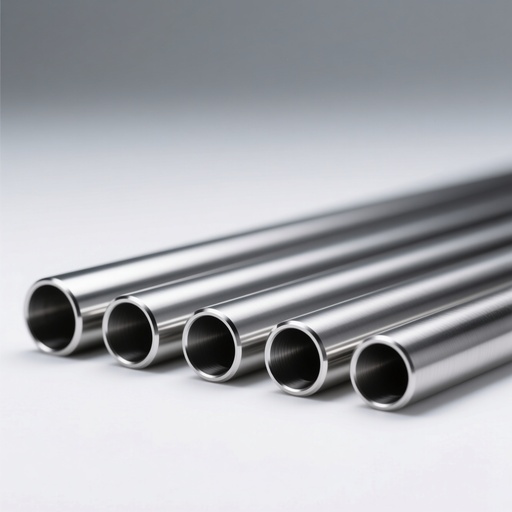
Healsmed
Leading Stainless Steel Capillary Tube Factory. 1,400+ standard sizes IN STOCK & ready to ship worldwide! High precision, factory-direct price.