SS Capillary Tube: Technical Guide for Precision Medical and Industrial Applications
Introduction
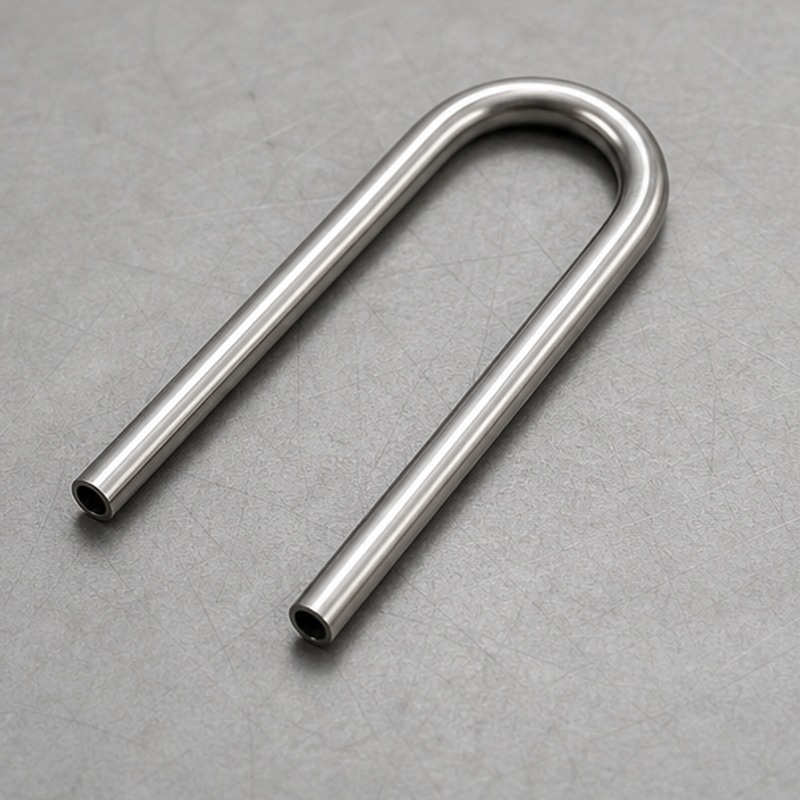
SS capillary tube represents a professional search intent for precision stainless steel capillary tubing. Although buyers may describe the same product with different wording, dimensions, grades, gauge sizes, standards, or even other languages, the engineering requirement is usually consistent: a miniature stainless steel tube must deliver stable dimensional accuracy, reliable corrosion resistance, clean surfaces, and repeatable performance in a demanding assembly or fluid-control environment.
This article explains SS capillary tube from an engineering and procurement perspective. The discussion focuses on core product definition, engineering selection, dimensional tolerance, and application fit. The goal is to help OEM engineers, purchasing teams, and product developers translate a keyword into a complete technical specification that can be manufactured, inspected, and used with confidence.
Keyword Meaning and Engineering Context
The keyword should not be treated as a simple product label. In precision tubing projects, it normally contains information about the expected material, size range, application, standard, or purchasing purpose. When buyers search in a non-English language, the article interprets the underlying need and presents the technical specification in English terms, helping international buyers connect local terminology with global engineering standards.
For general engineering use, stainless steel capillary tube selection should consider the complete working condition: fluid type, temperature, pressure, cleaning method, assembly process, and tolerance requirements. The best tube specification is the one that supports the final device function reliably and economically.
| Keyword Element | Technical Interpretation | Specification Impact |
|---|---|---|
| Material | Usually 304, 304L, 316, 316L, or a regional equivalent such as SUS or AISI naming | Controls corrosion resistance, weldability, biocompatibility expectations, and cost |
| Geometry | OD, ID, wall thickness, gauge size, or inch/mm dimension | Determines fit, flow, stiffness, pressure capability, and assembly compatibility |
| Application | Medical, HPLC, industrial sensor, oil and gas, dosing, or general precision use | Defines cleanliness, documentation, tolerance, and test requirements |
| Process | Seamless, welded and drawn, annealed, passivated, electropolished, cut-to-length | Affects surface finish, mechanical behavior, lead time, and inspection scope |
Material Selection
Stainless steel capillary tubes are often produced from austenitic stainless steel because this family provides a strong balance of corrosion resistance, formability, weldability, and dimensional stability. 304 and 304L are common for general applications, while 316 and 316L are preferred when the environment contains chlorides, cleaning chemicals, body-contact requirements, or higher corrosion risk. For many medical and laboratory applications, 316L is the conservative starting point because its low carbon content reduces sensitization risk and its molybdenum content improves pitting resistance.
| Grade | Typical Use | Key Advantage | Selection Note |
|---|---|---|---|
| 304 | General precision tubing and instrumentation | Good corrosion resistance and economical availability | Suitable when chloride exposure is limited |
| 304L | Welded miniature assemblies | Lower carbon improves weld-related corrosion behavior | Useful for welded or thermally processed components |
| 316 | Chemical, laboratory, and higher corrosion environments | Molybdenum improves pitting resistance | Better than 304 in many chloride-containing conditions |
| 316L | Medical, analytical, and corrosion-sensitive precision parts | Low carbon plus molybdenum for reliable performance | Often the preferred grade for medical capillary tubing |
Dimensional Design and Tolerance Control
Capillary tubing performance depends strongly on geometry. Outside diameter controls mechanical fit with housings, ferrules, connectors, and fixtures. Internal diameter controls flow rate, pressure drop, clearance for wires or instruments, and cleaning behavior. Wall thickness influences pressure resistance, stiffness, bendability, and the risk of deformation during cutting or assembly. A small difference in ID can create a significant difference in flow behavior, especially in micro-fluidic or analytical systems.
For this reason, a professional drawing should specify OD, ID or wall thickness, length, straightness, end condition, tolerance, and inspection method. If the tube will be bent, welded, flared, ground, laser cut, or assembled into a device, the downstream operation should be declared before production. This prevents a tube that looks correct on paper from failing during assembly.
| Parameter | Why It Matters | Typical Inspection Method |
|---|---|---|
| Outside Diameter | Controls fit with mechanical interfaces and automated assembly equipment | Micrometer, laser measurement, optical inspection |
| Internal Diameter | Controls fluid flow, guide-wire clearance, and functional passage | Pin gauge, air gauge, optical or section inspection |
| Wall Thickness | Controls strength, pressure capability, and forming behavior | Calculated from OD/ID, microscopy, or ultrasonic methods where practical |
| Length | Determines assembly position and final device geometry | Caliper, fixture gauge, automated vision inspection |
| End Quality | Burrs or deformation may block flow or damage mating components | Microscope inspection and burr-control sampling |
Manufacturing and Surface Finish
The manufacturing route for stainless steel capillary tubing usually includes tube forming or sourcing, cold drawing, annealing when required, straightening, precision cutting, cleaning, and final inspection. Cold drawing improves dimensional accuracy and surface finish, but it also increases work hardening. Annealing restores ductility when the tube must be bent, flared, or further formed. For medical, laboratory, and high-cleanliness systems, internal surface condition can be as important as the external appearance.
Surface treatment options include passivation, electropolishing, ultrasonic cleaning, and controlled packaging. Passivation improves the chromium-rich oxide layer. Electropolishing can reduce micro peaks and improve cleanability. Cutting methods should be selected according to burr tolerance, volume, and end-face requirements. In high-precision projects, the end condition should be specified instead of assumed.
| Process | Purpose | Risk If Poorly Controlled |
|---|---|---|
| Cold Drawing | Improve size accuracy and reduce diameter | Ovality, surface scratches, or excessive work hardening |
| Annealing | Restore ductility and relieve stress | Insufficient formability or cracking during bending |
| Precision Cutting | Create finished component length | Burrs, blocked bore, angled end face, or particle contamination |
| Cleaning | Remove oil, metal particles, and residues | Contamination in fluid path or device assembly |
| Passivation / Electropolishing | Enhance corrosion resistance and cleanability | Surface instability, staining, or premature corrosion |
Quality Control Checklist
A reliable supplier should provide inspection beyond basic visual checking. For precision stainless steel capillary tubes, quality control normally includes dimensional verification, surface inspection, material certificate review, and documentation of batch traceability. When the tube is used in medical or analytical equipment, the inspection plan may also include cleanliness controls, packaging requirements, and tighter sampling rules.
| Quality Item | Recommended Check | Buyer Benefit |
|---|---|---|
| Material Certificate | Confirm grade, heat number, and chemical composition | Improves traceability and reduces wrong-material risk |
| Dimensional Report | Measure OD, ID, wall, and length according to drawing | Supports assembly yield and functional consistency |
| Microscope Inspection | Check end burrs, cracks, deformation, and surface defects | Reduces blockage, leakage, and component damage |
| Cleanliness Review | Confirm cleaning route and packaging condition | Important for fluid path and medical device applications |
| Process Traceability | Record batch, drawing, inspection, and packaging details | Helps long-term supply stability and quality investigation |
Procurement Recommendations
When requesting a quotation for SS capillary tube, buyers should provide more than a keyword. A complete inquiry should include material grade, OD, ID or wall thickness, tolerance, length, quantity, end condition, surface finish, cleaning requirement, packaging method, and target application. If the part is used in a regulated device, buyers should also clarify documentation expectations before production begins.
The most effective procurement strategy is to match technical risk with inspection depth. A general industrial sleeve may not need the same documentation as a medical tube or HPLC fluid line. However, even simple projects benefit from clear drawings and agreed inspection standards. This reduces misunderstanding, avoids unnecessary tolerance cost, and helps the supplier manufacture the correct tube consistently.
Conclusion
SS Capillary Tube: Technical Guide for Precision Medical and Industrial Applications is best understood as an engineering specification topic rather than a generic product phrase. The correct selection depends on stainless steel grade, dimensional tolerance, internal surface quality, end condition, and application environment. By converting the keyword into a complete technical requirement, buyers can improve assembly reliability, reduce sourcing risk, and obtain stainless steel capillary tubing that performs consistently in medical, analytical, and industrial systems.
Stainless steel capillary tubing technical articles focus on specification development, material selection, and supplier communication for medical, analytical, and industrial applications.

Healsmed
Leading Stainless Steel Capillary Tube Factory. 1,400+ standard sizes IN STOCK & ready to ship worldwide! High precision, factory-direct price.