347 Precision Capillary Tubing: Material Properties, Manufacturing Tolerances, and Application Guide
When designing a component that must maintain corrosion resistance and mechanical integrity at elevated temperatures—especially after welding or prolonged heat exposure—347 precision capillary tubing is often the material of choice. Engineers sourcing small-diameter tubing for applications such as thermocouple sheaths, sensor probes, or fluidic systems in demanding environments need to understand how the stabilized niobium content distinguishes 347 from other austenitic grades. This guide covers the material properties, manufacturing tolerances, and practical considerations for specifying 347 precision capillary tubing.
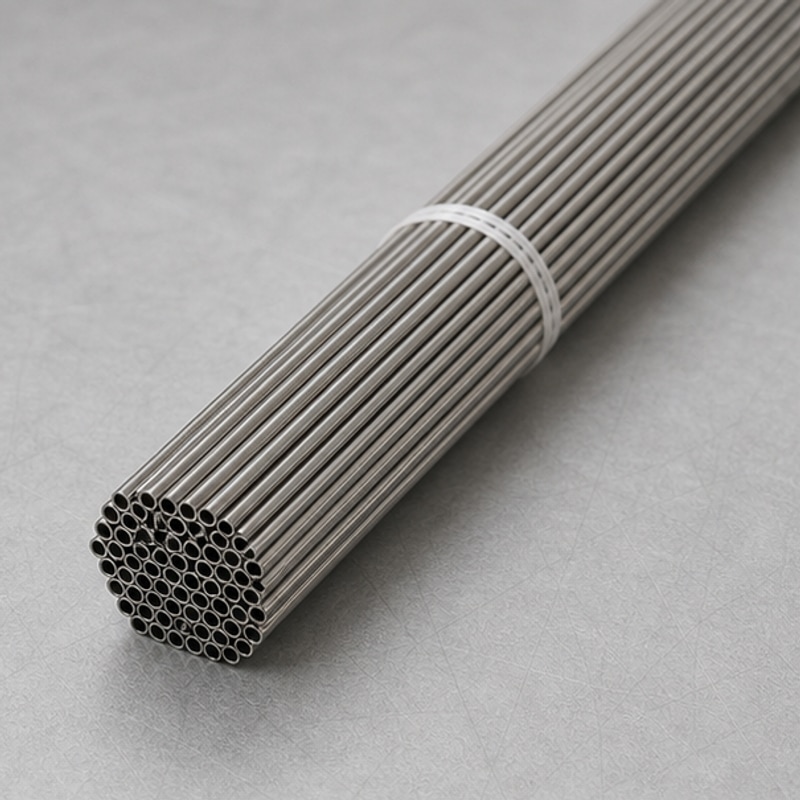
Applicable Scenarios and Industries
347 stainless steel is selected where intergranular corrosion resistance is required after welding or exposure to temperatures in the 800–1500 °F (427–816 °C) range. The niobium stabilization prevents chromium carbide precipitation, making 347 suitable for:
- Thermocouple sheaths and temperature probes in power generation and chemical processing
- Capillary lines for instrumentation and pressure sensing in high-temperature environments
- Fluidic systems in aerospace (hydraulic, fuel, pneumatic) where thermal cycling is present
- Sensor housings in exhaust gas analysis or furnace monitoring
- Heat exchanger tubing where small diameters are needed for compact design
Although 347 is occasionally selected for medical device components requiring high-temperature sterilization, it is not a standard medical-grade material. Engineers should evaluate biocompatibility requirements separately.
Material Grades and Designations
347 precision capillary tubing is typically produced to the following specifications:
- ASTM A269 – Standard specification for seamless and welded austenitic stainless steel tubing for general service (includes 347)
- ASTM A213 – Standard specification for seamless ferritic and austenitic alloy-steel boiler, superheater, and heat-exchanger tubes
- EN 10216-5 – European standard for seamless stainless steel tubes (TC1/TC2 grades for 347)
The chemical composition (by weight %) for 347 per ASTM A269 is as follows:
| Element | Range |
|---|---|
| Carbon | 0.08 max |
| Manganese | 2.00 max |
| Phosphorus | 0.045 max |
| Sulfur | 0.030 max |
| Silicon | 1.00 max |
| Chromium | 17.00 – 20.00 |
| Nickel | 9.00 – 13.00 |
| Niobium + Tantalum | 10 × C min, 1.10 max |
| Iron | Balance |
Mechanical properties for 347 tubing in the annealed condition (per ASTM A269) are: tensile strength 75 ksi (515 MPa) min, yield strength 30 ksi (205 MPa) min, elongation 35% min. For precision capillary tubing, intermediate or full-hard tempers may be specified in the order drawing; properties then depend on the cold reduction and thermal treatment.
OD / ID / Wall Thickness / Length Considerations
Precision capillary tubing is defined by very small outer diameters and controlled internal bores. Typical OD ranges for 347 capillary are 0.5 mm to 6.0 mm (0.020″ to 0.236″), with wall thicknesses as thin as 0.1 mm (0.004″). The inner diameter is the critical dimension for flow or probe insertion and is governed by the OD and wall thickness.
Lengths can be supplied as straight cut pieces (common from 300 mm to 3000 mm) or in coils (500 m or more) for continuous runs, depending on drawing capability of the supplier. When ordering, specify whether the tubing is to be used in straight sections or coiled to avoid bending stress issues.
Tolerances
Tolerances for 347 precision capillary tubing are defined by the applicable standard and any customer-specific drawing requirements.
- Outer diameter tolerance: For cold-drawn tubing under ASTM A269, OD tolerance is typically ±0.005″ (±0.13 mm) for diameters above 0.500″. For capillary sizes (≤0.500″), common commercial tolerance is ±0.002″ (±0.05 mm). Precision-drawn capillary can achieve ±0.0005″ (±0.013 mm) depending on the drawing process and mutual agreement.
- Inner diameter tolerance: Not directly specified in ASTM A269; it is derived from OD and wall thickness. For precision applications, the supplier should measure ID directly or calculate from OD and wall. Tighter ID control often requires a separate gaging step and negotiated tolerances.
- Wall thickness tolerance: ASTM A269 calls for ±10% of nominal wall for annealed tubing. For thin-wall capillary, this may be relaxed or tightened depending on drawing reduction.
- Length tolerance: Cut lengths are typically supplied to ±0.062″ (±1.6 mm) or as agreed; coiled lengths are continuous with no tolerance beyond spool capacity.
All tight tolerances are possible but must be specified; they affect process yield and cost. For extremely tight tolerances (<±0.001" on OD or ID), the achievable range depends on drawing, material condition, process route, and mutual agreement between parties.
End Condition and Burr Control
Capillary tubing ends must be cleanly cut, square (perpendicular to the tube axis), and free of internal or external burrs. Burrs can disrupt fluid flow, interfere with sensor assemblies, or create particulate contamination. Standard end preparation includes:
- Cutting to length via abrasive, saw, or laser (laser minimizes burr)
- Deburring by mechanical or thermal methods
- Chamfering if specified (for ease of insertion into fittings)
Specifications such as ASTM A1016 (general requirements for steel tubing) address end finish. For critical applications, request that ends be inspected with a borescope or optical comparator.
Surface Finish and Cleanliness Requirements
The internal surface finish of 347 capillary tubing is important for flow control and contamination resistance. As-drawn surfaces typically have an Ra of 32–64 microinches (0.8–1.6 µm). If a smoother finish is needed (for example, Ra ≤ 16 µin or ≤ 0.4 µm), specify “bright annealed” or “electropolished” finish. Note that electropolishing may alter the inner diameter slightly and should be accounted for in the tolerance budget.
External surface finish is usually as-drawn or pickled/annealed. Cleanliness for precision applications often requires degreasing and packaging in controlled environments. Standard cleaning removes oil, lubricants, and particulate. For oxygen service or ultra-clean applications, request “clean and bag” or “oxygen service cleaning” (per ASTM G93).
Inspection Documentation
Every shipment of 347 precision capillary tubing should be accompanied by traceable documentation. Typical documents include:
- Material Test Report (MTR) or Certificate of Conformance – confirming chemical composition and mechanical properties per ASTM A269 or A213
- Dimensional Inspection Report – showing measured OD, ID, wall thickness, and length for each lot or per agreed sampling plan
- Surface finish measurement (if specified)
- Hydrostatic test or eddy current test report – required for pressure-service tubing under ASTM A269
Third-party inspection (e.g., by a customer representative or independent lab) can be arranged at additional cost. Ensure the supplier’s quality system can provide these documents in a timely manner.
Packaging Considerations
Precision capillary tubing requires protection against mechanical damage, moisture, and contamination during transit. Typical packaging options:
- Straight lengths – bundled in tubes or boxes with internal spacers; ends capped to prevent ingress
- Coils – wound onto plastic or metal spools, secured with banding, and shrink-wrapped
- Individually sleeved – for high-value or critical cleanliness applications
If the tubing is passivated or cleaned for immediate use, specify “clean and package in clean-room conditions” to avoid recontamination. Marked labels should include material grade, heat number, lot number, and dimensions.
RFQ Information Checklist
To obtain an accurate quotation and ensure the tubing meets your design requirements, provide the following information in your request:
- Drawing or detailed specification (including OD, ID, wall, length, tolerances)
- Material grade: 347 (UNS S34700) and reference standard (e.g., ASTM A269)
- Condition/temper: annealed, half-hard, or as-drawn
- Quantity: number of pieces or coils, total length
- Tolerance requirements: OD, ID, wall, length, squareness
- End condition: deburred, chamfered, no-burr
- Surface finish: internal and external Ra target
- Cleanliness level: standard industrial, oxygen-service, or ultra-clean
- Inspection requirements: MTR, dimensional report, third-party inspection
- Packaging: spooled, straight boxed, individual sleeving
- Delivery schedule and destination
To request a quotation for 347 precision capillary tubing, submit your drawings, material grade, quantity, tolerance, surface finish, and inspection requirements through the Healsmed website. The engineering team will review and respond with a technical evaluation.

Healsmed
Leading Stainless Steel Capillary Tube Factory. 1,400+ standard sizes IN STOCK & ready to ship worldwide! High precision, factory-direct price.