347H Stainless Steel Capillary Tube: Material Properties, Manufacturing Tolerances, and Application Guide
When your design requires a stainless steel capillary tube that can withstand sustained elevated temperatures, corrosive media, or cyclic thermal stress, standard 304 or 316L grades may fall short. The 347H stainless steel capillary tube addresses this exact engineering problem: it combines the corrosion resistance of austenitic stainless steel with enhanced creep strength and intergranular corrosion resistance up to 800°C (1472°F), thanks to a controlled higher carbon content and niobium stabilization. Engineers and procurement teams sourcing capillary tubes for high-temperature fluid handling, thermocouple sheaths, or process instrumentation need to understand the specific material properties, achievable tolerances, and quality documentation that distinguish 347H from other grades.
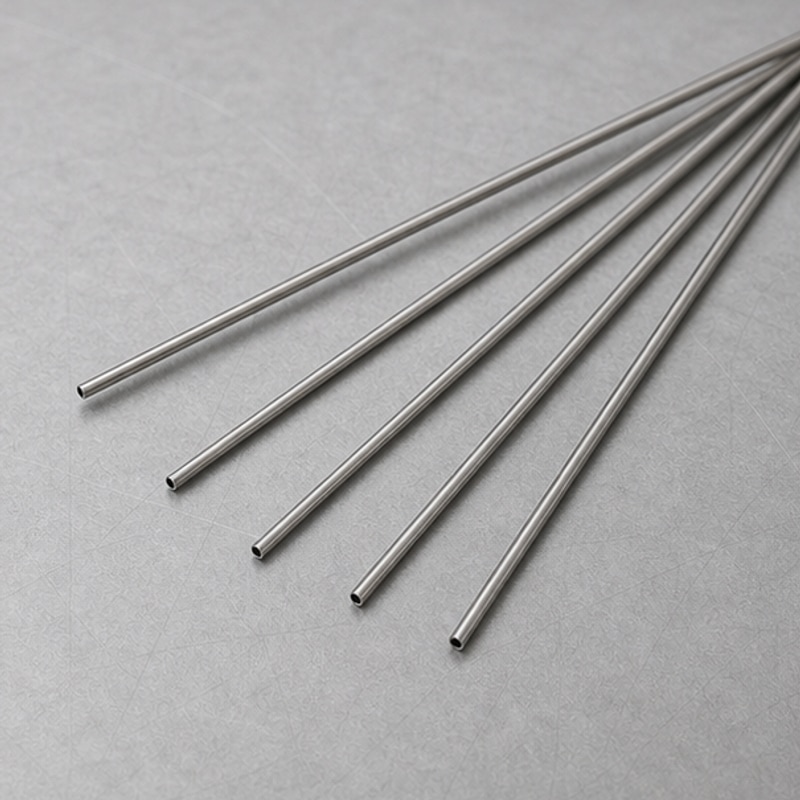
Applicable Scenarios and Industries
347H capillary tubing is primarily specified in applications where components are exposed to repeated heating cycles or continuous service above 500°C. Typical uses include:
- Thermocouple and temperature sensor sheaths in industrial furnaces or exhaust systems
- Instrumentation tubing for chemical and petrochemical processes involving sulphur-bearing or oxidizing media
- Heat exchanger tubes and sample lines in power generation (nuclear and fossil fuel)
- Pneumatic or hydraulic control lines in high-temperature environments
- Capillary columns or transfer lines in analytical equipment that operates at elevated temperatures
While 347H is not typically selected for implantable medical devices, it is used in medical device manufacturing equipment (e.g., sterilization chambers, autoclaves, or fluid transfer systems) where thermal stability is critical.
Material Grades and Designations
347H is the higher-carbon variant of Type 347 stainless steel. Key designations include:
- UNS S34709
- ASTM A269 (seamless and welded tubing for general service)
- ASTM A213 / ASME SA213 (seamless ferritic and austenitic alloy-steel boiler, superheater, and heat-exchanger tubes)
- EN 1.4961 (European designation)
Compared to other stabilized grades:
| Grade | Stabilizer | Carbon Content | Max Service Temp (approx.) |
|---|---|---|---|
| 321 (UNS S32100) | Titanium | ≤0.08% | ~540°C intermittent |
| 321H (UNS S32109) | Titanium | 0.04–0.10% | ~800°C |
| 347 (UNS S34700) | Niobium + Tantalum | ≤0.08% | ~540°C intermittent |
| 347H (UNS S34709) | Niobium + Tantalum | 0.04–0.10% | ~800°C |
347H offers better creep and rupture strength than 321H above 800°F (427°C) due to niobium carbide precipitation. However, it is not inherently “medical grade”; biocompatibility claims require specific testing and are not assumed.
Chemical Composition (ASTM A213 / A269)
- Carbon: 0.04–0.10%
- Manganese: ≤2.00%
- Silicon: ≤0.75%
- Chromium: 17.00–20.00%
- Nickel: 9.00–13.00%
- Niobium + Tantalum: 8 x C min to 1.00% max
Mechanical Properties (Typical, per ASTM A269)
- Tensile strength: ≥515 MPa (75 ksi)
- Yield strength (0.2% offset): ≥205 MPa (30 ksi)
- Elongation in 2 in.: ≥30%
OD / ID / Wall Thickness / Length Considerations
Capillary tubes are typically defined by outside diameter (OD) and wall thickness, which determine the inside diameter (ID). For 347H, common capillary sizes range from 0.5 mm (0.020″) OD up to 6.35 mm (0.250″) OD, with wall thicknesses from 0.10 mm to 1.0 mm as available. Length can be provided in random mill lengths, cut-to-length tolerances, or coiled forms depending on the drawing and process route.
Tolerances
Standard tolerances for capillary tubing depend on drawing, material condition, process route, and mutual agreement between parties. Typical ranges for cold-drawn 347H capillary tubes include:
| Parameter | Typical Tolerance | Note |
|---|---|---|
| OD | ±0.05 mm (±0.002″) | May be tighter for precision applications |
| Wall thickness | ±10% of nominal | Tighter wall tolerance possible on request |
| ID | Derived from OD and wall; tolerance dependent | Calculated; not directly controlled unless specified |
| Straightness | 1 part in 600 (or better) | Per ASTM A269, unless otherwise agreed |
End Condition and Burr Control
For capillary tubes used in instrument assemblies, cut ends must be free of burrs to prevent flow disruption or contamination. Typical requirements:
- Deburred ends with burr height ≤0.13 mm (0.005″) or as specified on drawing
- Square cut or chamfered ends per customer specification
- No loose debris or metal fines after cutting
Surface Finish and Cleanliness Requirements
347H capillary tubes are often supplied in a bright annealed or pickled surface condition. Unless otherwise specified, the standard surface finish is:
- Ra (arithmetic average) ≤ 32 μin (0.8 μm) for OD, attainable in cold-drawn condition
- ID finish depends on the manufacturing method; for most capillary tubes, the ID is as-drawn and not mechanically polished
- Cleanliness: tubes must be free of scale, oil, and particulate. For medical device equipment applications, a degreased and clean condition is typical, but no specific FDA or ISO certification is implied without verifiable evidence
Inspection Documentation
The following documentation is commonly provided with 347H capillary tube orders:
- Material test report (MTR) per ASTM A269 or A213, including heat number, chemical analysis, and mechanical property results
- Dimensional inspection report (OD, wall, length, out-of-roundness) – sample or full-inspection based on agreement
- Certificate of conformance (C of C) to specified standard
- Optionally: hydrostatic test report, eddy current or ultrasonic NDE report (when specified)
Packaging Considerations
Because 347H capillary tubes are often used in sensitive environments, packaging must prevent mechanical damage and contamination:
- Individual cardboard sleeves or foam-lined bundles for cut tubes
- Spooled or coiled packaging for long lengths (if available)
- End caps or plastic bags for each piece to protect from dust
- Export-grade wooden crates or cardboard boxes for international shipment
RFQ Information Checklist
To ensure accurate quoting and manufacture of 347H stainless steel capillary tube, provide the following information with your inquiry:
- Material grade: 347H (UNS S34709) with applicable standard (ASTM A269, A213)
- Dimensions: OD, wall thickness (or ID), length, and tolerances
- Quantity: total pieces or total meters/feet
- Surface finish requirement (if other than standard annealed/drawn)
- End condition (e.g., square cut, deburred, chamfered)
- Inspection requirements (MTR, dimensional report, NDE)
- Packaging instructions (cut lengths vs. coil, individual wrapping)
- Any special cleaning or certification requirements
To request a quotation for 347H stainless steel capillary tube, submit your drawings, material grade, quantity, tolerance, surface finish, and inspection requirements through the Healsmed website. The engineering team will review and respond with a technical evaluation.

Healsmed
Leading Stainless Steel Capillary Tube Factory. 1,400+ standard sizes IN STOCK & ready to ship worldwide! High precision, factory-direct price.