347H Stainless Steel Capillary Tubing: Material Properties, Manufacturing Tolerances, and Application Guide
When designing high-temperature or corrosion-resistant fluidic systems that require small-diameter precision tubing, engineers often encounter a gap between standard 304/316L stainless steel grades and the need for creep resistance or carbide precipitation resistance above 800°F (427°C). If you are sourcing or specifying capillary tubing for exhaust gas sampling, heat exchangers, chemical injection, or sensor probes in elevated-temperature environments, the solution may lie in 347H stainless steel capillary tubing — a stabilized austenitic grade with controlled carbon content that delivers improved high-temperature strength and intergranular corrosion resistance.
Applicable Scenarios and Industries
347H capillary tubing is primarily specified where the service temperature exceeds the sensitization range of standard 304 or 316L (800°F–1500°F / 427°C–816°C) and where weldments or long-term thermal exposure must resist grain-boundary attack. Typical applications include:
- Exhaust gas recirculation (EGR) systems in automotive and heavy-duty engines
- Thermocouple and sensor probe sheaths for petrochemical and power generation
- Heat exchanger capillary bundles in chemical processing
- Sample loops and injection tubing in high-temperature chromatography
- Hydraulic lines in turbine and aerospace fuel systems
- High-pressure boilers and superheater tubes where creep strength is critical
Industries such as oil & gas, power generation, aerospace, automotive testing, and industrial process instrumentation commonly utilize 347H for its combination of oxidation resistance and mechanical stability at elevated temperatures.
Material Grades and Designations
347H is the high-carbon version (0.04–0.10% C) of Type 347 stainless steel, stabilized with niobium (Nb) plus tantalum (Ta). Key designations include:
| Standard | Grade / Designation |
|---|---|
| ASTM A213 | TP347H (seamless tubes) |
| ASTM A269 | 347H (welded & seamless, general service) |
| EN 10028-7 / EN 10216-5 | 1.4961 (X6CrNiNb18-10) |
| UNS | S34709 |
The “H” designation indicates controlled carbon content for improved creep and rupture strength. Compared to 321H (stabilized with titanium), 347H offers better weldability and similar high-temperature performance. For lower-temperature or chloride-containing environments, 316L may be preferred; for extreme corrosion plus high temperature, 904L or duplex grades may be considered, but 347H remains a cost-effective choice for moderate-corrosion, high-temperature service.
OD / ID / Wall Thickness / Length Considerations
As capillary tubing, 347H is typically supplied in outside diameters (OD) ranging from 0.020 in. (0.508 mm) up to 0.250 in. (6.35 mm). Wall thicknesses can be as thin as 0.005 in. (0.127 mm) for fine-bore applications, or heavier-wall when pressure rating is required. Inside diameter (ID) is determined by OD minus twice the wall thickness and is often the critical parameter for fluid flow or sensor clearance.
Length options include:
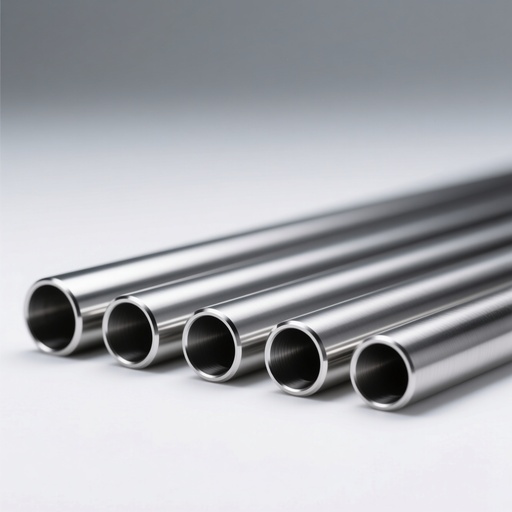
- Straight cut lengths: commonly 1 ft to 12 ft (0.3 m to 3.6 m), depending on furnace or delivery constraints.
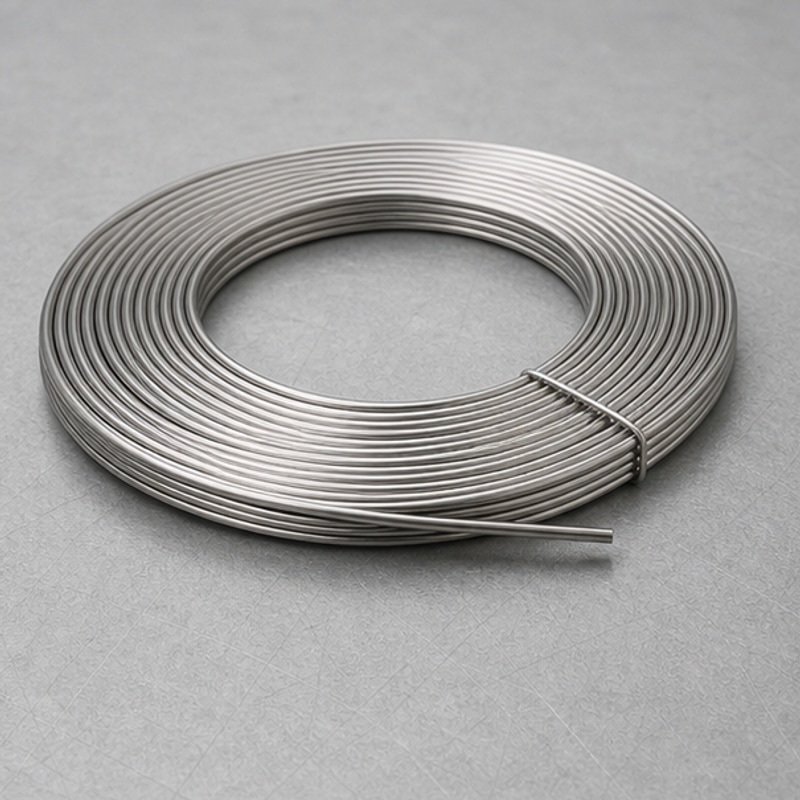
- Coils: for long, continuous runs in instrumentation or hydraulic lines — coil ID and weight depend on material temper and thickness.
When specifying, note that 347H has lower work-hardening than 316L but can still be challenging to draw to extremely thin walls. Always confirm the minimum wall achievable for the selected OD with the supplier.
Tolerances
Tolerances for 347H stainless steel capillary tubing depend on the manufacturing process (seamless cold-drawn vs. welded-and-drawn), material condition (annealed or temper), and the specific customer drawing. Typical tolerance ranges requested for capillary tubing include:
| Parameter | Common Tolerance Range (per ASTM A269 or customer spec) |
|---|---|
| Outside diameter (OD) | ±0.003 in. to ±0.005 in. (for OD < 0.125 in.) |
| Inside diameter (ID) | ±0.002 in. to ±0.004 in. (or equivalent to wall variation) |
| Wall thickness | ±10% of nominal (or ±0.001 in. minimum on thin walls) |
| Length (cut pieces) | +0.000 in. / -0.015 in. for fine cuts; typical +1/8 in. for standard |
Precision-tolerance requirements (e.g., ±0.0005 in. on OD) may require centerless grinding or special process controls — these are subject to drawing review and mutual agreement. Tighter tolerances typically increase cost and lead time.
End Condition and Burr Control
Capillary tubing often requires clean, deburred ends to prevent flow obstruction, particle generation, or seal damage. Common end conditions include:
- Square-cut and deburred: standard for most applications, with burr height ≤ 0.005 in. per end.
- Chamfered or beveled ends: for welding or ferrule-seat connectors.
- End-formed features: flared, swaged, or reduced ends — these must be specified on the drawing.
Burr control is especially critical in medical device or clean fluid systems. Specify burr limits (e.g., “burr free” or “maximum burr 0.003 in.”) and whether secondary processes like electropolishing or passivation are required after cutting.
Surface Finish and Cleanliness Requirements
For 347H capillary tubing, surface finish is typically supplied as cold-drawn (as-drawn) with an RA (roughness average) in the range of 16–32 μin. (0.4–0.8 μm) for the outer surface. Inner surface finish can be rougher depending on drawing dies and lubrication:
- Outer surface: 16–32 μin. RA standard; finer finishes (8 μin. or better) possible via centerless grinding or polishing.
- Inner surface (ID): as-drawn typically 32–64 μin. RA; for low-friction or clean service, mechanical honing or electropolishing may be specified.
Cleanliness requirements vary by application. For analytical instruments or oxygen service, tubes should be degreased and free of oil, lubricants, and particulate. Specify in the RFQ if the tubing must meet a cleanliness standard such as SAE AS4059, ISO 4406, or customer-specific particulate count limits.
Inspection Documentation
ASTM A213/A269 compliant 347H capillary tubing can be supplied with the following inspection documentation (when requested):
- Material test certificate (MTC) per EN 10204 Type 3.1 or 3.2, including heat analysis, mechanical properties (tensile, yield, elongation), and stabilization element content (Nb+Ta).
- Dimensional inspection report — includes OD, ID, ovality, wall thickness variation, and length measurements per sampling plan or 100% inspection.
- Positive material identification (PMI) — often performed via optical emission spectroscopy (OES) or X-ray fluorescence (XRF) to confirm grade.
- Hydrostatic or eddy current testing — as required by the applicable standard or customer specification.
- Certified chemical composition showing C, Mn, Si, Cr, Ni, Nb+Ta, and residuals.
All documentation must reference the purchase order, heat number, and revision of the applicable standard.
Packaging Considerations
Packaging must protect the capillary tube surface and end conditions from damage during transit. Typical packaging methods for 347H capillary tubing include:
- Individual poly-bags or plastic tubes for small OD / thin wall to prevent scratching.
- Bundle wrapping with foam or paper interleaving for multiple pieces.
- Wooden crates or steel stillages for heavy or long-length coils.
- Desiccant and VCI (vapor corrosion inhibitor) for overseas shipments or long-term storage.
Specify packaging requirements (e.g., “individual tubes sleeved with foam end caps”) in the RFQ to match your downstream handling and cleanliness protocols.
RFQ Information Checklist
To receive an accurate evaluation for 347H stainless steel capillary tubing, provide the following in your request:
- Drawing or sketch with OD, ID, wall thickness, and length tolerances
- Material grade (347H) and applicable standard (ASTM A213, A269, or equivalent)
- Quantity (number of pieces or total length in meters/feet)
- Required tolerances (OD, ID, wall, length, ovality)
- Surface finish specification (outer and inner if critical)
- End condition (square, deburred, chamfered, etc.)
- Cleanliness requirements (degreased, particulate limits, etc.)
- Inspection documentation needed (MTC, dimensional report, PMI, etc.)
- Packaging and shipping requirements
To request a quotation for 347H stainless steel capillary tubing, submit your drawings, material grade, quantity, tolerance, surface finish, and inspection requirements through the Healsmed website. The engineering team will review and respond with a technical evaluation.

Healsmed
Leading Stainless Steel Capillary Tube Factory. 1,400+ standard sizes IN STOCK & ready to ship worldwide! High precision, factory-direct price.