Nitinol Medical Devices: What Buyers Should Check Before Sourcing
When sourcing nitinol medical devices, buyers should verify the supplier’s material certification, phase transformation temperature (Af), surface finish quality, dimensional tolerance, and proven experience with Nitinol processing — including shape setting, laser cutting, and electropolishing. Nitinol (NiTi) is not like conventional stainless steel. Its superelasticity and shape memory effect depend entirely on precise thermomechanical processing. Without dedicated Nitinol capabilities, a supplier cannot deliver consistent, repeatable results for components that must function inside the human body. This guide walks through the specific checks every medical device procurement professional should make before sending drawings to a Nitinol supplier.
Key Questions Buyers Should Ask When Sourcing Nitinol Medical Devices
The following questions go beyond generic supplier evaluation and focus specifically on the unique properties and processing requirements of nickel-titanium alloys used in medical applications.
What Nitinol grades do you work with? Most medical applications use standard binary Nitinol (approximately 55-56% nickel by weight), but certain stent designs and catheter components require ternary alloys such as NiTiCu or NiTiNb for modified transformation behaviour. A supplier experienced with multiple grades can advise on material selection for your specific design requirements.
Do you perform incoming material inspection including DSC for Af verification? The austenite finish temperature (Af) determines the temperature at which the material fully transforms to its austenite phase. Without DSC testing per ASTM F2004, there is no reliable way to confirm transformation behaviour. This is one of the most critical quality gates in Nitinol component procurement.
What is your process for shape setting and heat treatment? Shape setting requires precise temperature control within a narrow window, custom fixturing specific to each component geometry, and carefully controlled quench timing. A supplier that outsources this step introduces significant variability in final part performance across production batches.
Can you provide material traceability from ingot to finished part? Medical device regulations increasingly require full material traceability. The supplier should maintain documented records linking each finished component back to its original melt batch, including all intermediate processing steps.
Technical Parameters That Define Nitinol Medical Component Quality
Nitinol medical device quality is defined by a set of tightly controlled parameters that differ significantly from conventional metal component inspection.
1. Transformation Temperatures (As, Af, Ms, Mf). For self-expanding peripheral stents, the Af is typically set a few degrees below body temperature (34-37 °C) to ensure complete expansion at implantation. For guidewires, the Af should be at or slightly below room temperature for superelastic behaviour. Confirm that the supplier can test and certify these values per ASTM F2082.
2. Surface Finish and Oxide Layer Quality. Nitinol’s surface oxide layer (primarily TiO₂) directly affects corrosion resistance, biocompatibility, nickel ion release, and fatigue life. Mechanical polishing, electropolishing, and chemical etching each produce distinctly different surface characteristics. For implantable devices, ask for surface roughness (Ra) measurements and oxide layer data.
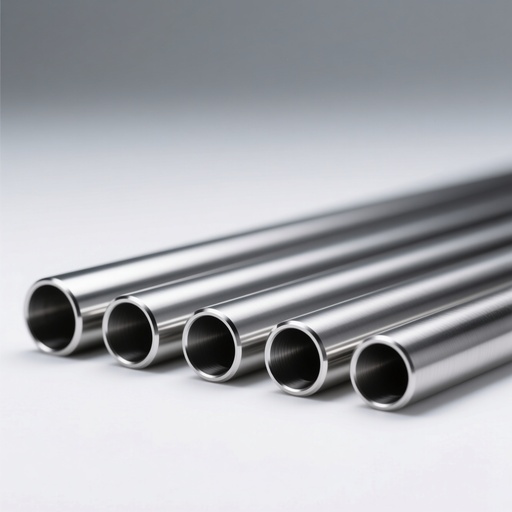
3. Dimensional Tolerance at Small Diameters. Nitinol tubing for medical devices commonly ranges from 0.5 mm to 6 mm OD with wall thicknesses as low as 0.05 mm. Expect achievable tolerances of approximately ±0.025 mm on OD and ±0.010 mm on wall thickness from experienced suppliers. Tighter tolerances should be discussed during quoting.
4. Fatigue Performance. Nitinol exhibits strain-controlled fatigue behaviour, which differs fundamentally from stress-controlled fatigue in conventional metals. The material’s ability to recover up to 8% strain makes it ideal for applications requiring repeated deformation. Suppliers should demonstrate understanding of strain-life fatigue testing. For implantable devices, accelerated fatigue testing per ASTM F2516 is standard.
5. Cleanliness and Packaging. Medical-grade Nitinol components require cleanroom processing and appropriate packaging to prevent contamination. Verify that the supplier has established written procedures for cleaning, inspection, and packaging aligned with ISO 13485 quality management requirements.
Nitinol Supplier Verification Checklist
Use this practical checklist when evaluating and comparing Nitinol medical device suppliers:
- ✅ Material certification. Does the supplier provide mill certificates from recognised Nitinol ingot producers such as NDC, SAES Getters, or Furukawa?
- ✅ DSC testing capability. Can the supplier perform and report DSC results per ASTM F2004 using properly calibrated equipment?
- ✅ Processing equipment. Does the supplier have dedicated Nitinol processing lines on-site, including laser cutting, electropolishing, and programmable heat treatment furnaces?
- ✅ Quality management system. Is the supplier ISO 13485 certified for medical device component manufacturing?
- ✅ Relevant experience. Has the supplier manufactured similar Nitinol components for medical device OEMs? Ask for capability statements rather than specific customer names due to confidentiality.
- ✅ Communication of limitations. A reliable supplier will clearly state what they can and cannot achieve rather than claiming universal capability. Transparency about limitations is a positive indicator of experience.
For more detailed guidance on evaluating medical component manufacturers, see our article on precision medical tubing OEM manufacturing capabilities which discusses quality criteria applicable across material types.
Common Applications of Nitinol in Medical Devices
Nitinol’s unique properties — superelasticity, shape memory effect, and up to 8% recoverable strain — make it the material of choice for several established medical device categories.
Self-expanding Stents. Peripheral vascular stents, biliary stents, esophageal stents, and iliac vein stents rely on Nitinol’s ability to be crimped into a low-profile delivery catheter and self-expand at body temperature. Stent pattern design, strut thickness, Af selection, and surface finish vary significantly by application.
Guidewires. Nitinol guidewires offer superior kink resistance, torqueability, and steerability compared to stainless steel alternatives. Core diameters typically range from 0.010 to 0.038 inches, with ground tapers tailored to specific procedural requirements.
Orthodontic Archwires. Copper NiTi and standard Nitinol archwires apply continuous, gentle forces during tooth movement. The superelastic plateau provides more consistent force delivery across a wider activation range compared to stainless steel archwires.
Basket Retrieval and Capture Devices. Nitinol’s shape memory allows basket-style retrieval devices to be compressed for delivery, expanded for capture, then withdrawn through the delivery catheter.
Anchors and Closure Devices. Septal occluders, PFO closure devices, and suture anchors frequently use Nitinol for its self-expanding and fatigue-resistant properties.
For a broader overview, see our guide on Nitinol (NiTi) Shape Memory Alloy in Medical Applications and our article on Nitinol Shape Memory Alloy: Transforming Minimally Invasive Medical Devices.
HealsMed’s Experience with Nitinol Medical Component Processing
At HealsMed, we have extensive hands-on experience processing Nitinol components for the medical device industry. Our capabilities include precision laser cutting of Nitinol tubing, electropolishing for controlled surface finish, programmable heat treatment for shape setting, and mechanical testing per customer specifications. We routinely process both binary Nitinol and ternary alloys, and our quality team performs DSC testing, tensile testing, and dimensional inspection on every production batch.
Our quality management system is aligned with ISO 13485 requirements, and we maintain full material traceability throughout the manufacturing process. We provide honest feasibility assessments and collaborate with customers to find appropriate solutions for their specific Nitinol requirements.
What to Prepare Before Requesting a Nitinol Quote
To receive an accurate quotation for Nitinol medical device components, please prepare the following:
- 3D model or engineering drawing with critical dimensions, tolerances, and surface finish specifications
- Nitinol grade specification — binary NiTi, ternary alloy, or R-phase material
- Transformation temperature requirements — target Af and acceptable range
- Estimated quantity and timeline — prototype, pilot run, or production volume
- Post-processing requirements — electropolishing, passivation, sterilisation compatibility
- Inspection and documentation needs — certificates, test reports, traceability level
Send your Nitinol component specifications and engineering drawings to our team for a detailed feasibility assessment and quotation. We review each inquiry individually and provide transparent feedback on manufacturability, lead time, and cost based on your specific requirements.

Healsmed
Leading Stainless Steel Capillary Tube Factory. 1,400+ standard sizes IN STOCK & ready to ship worldwide! High precision, factory-direct price.