Medical Alloy Supplier Guide: How to Review Materials Before Requesting a Quote
To review a medical alloy supplier before sending an RFQ, start by verifying their material grade capabilities, quality system certification (ISO 13485 or ISO 9001), manufacturing process experience with your required alloys, and inspection documentation practices. These five areas—material sourcing, process capability, quality system, inspection tools, and communication quality—form a practical review framework that does not require a full on-site audit and can be completed through documentation exchange and sample evaluation.
This guide is written for OEM engineers, procurement professionals, and medical device developers who need to evaluate potential medical alloy suppliers before committing to a production order. The focus is on practical review steps that can be completed before the first quote is requested.
Why Buyers Ask About Supplier Review Before RFQ
Medical device procurement involves high requirements for material consistency, surface quality, dimensional repeatability, and regulatory documentation. A supplier that looks competitive on price may not have the capability to deliver tubes, wires, or small components that meet medical-grade expectations consistently. Buyers ask about supplier review because the cost of a wrong supplier decision includes not only scrap and rework but also delayed product launches, compliance gaps, and potential device reliability issues.
The review stage is the most cost-effective risk reduction step in the procurement cycle. By verifying a few key areas before requesting a quote, buyers eliminate suppliers that cannot meet basic requirements, which saves time for both parties.
Key Areas to Review Before RFQ
Supplier review for medical alloy components can be organized into five practical areas. Each area requires specific information that a competent supplier should be able to provide upon request.
| Review Area | What to Check | Why It Matters |
|---|---|---|
| Material Sourcing | Mill sources, material grades available, certificate types (EN 10204 3.1 / ASTM) | Determines traceability and batch consistency for medical applications |
| Manufacturing Process | Cold drawing, annealing, cutting, cleaning, and finishing capabilities | Affects dimensional accuracy, surface finish, and mechanical properties |
| Quality System | ISO 13485 or ISO 9001 certification, inspection equipment, sampling plan | Indicates whether the supplier follows documented procedures |
| Inspection Capability | Measurement tools, optical inspection, cleanliness testing | Confirms whether the supplier can verify its own output |
| Communication & Lead Time | Response quality, technical understanding, typical lead times | Reveals how the supplier handles technical inquiries and schedule expectations |
Material Sourcing and Grade Verification
Medical alloy suppliers should be able to identify the specific grades they work with regularly. Common medical-grade alloys include:
- Stainless steel grades: 304, 304L, 316, 316L (most common for capillary tubes and surgical instruments)
- Cobalt-chromium alloys: L-605, MP35N (for high-strength, corrosion-resistant implants and delivery systems)
- Nitinol (nickel-titanium): Superelastic and shape-memory grades (for guidewires, catheters, stents)
- Titanium alloys: Grade 5 (Ti-6Al-4V), Grade 23 (Ti-6Al-4V ELI) (for implantable and surgical devices)
- Other specialty alloys: 17-7 PH, 321, 347 stainless steels, Inconel, Hastelloy
Before sending an RFQ, ask the supplier which material grades they have experience processing. A supplier that primarily works with 304 stainless steel may not have the manufacturing parameters for Nitinol or cobalt-chromium alloys. Similarly, verify whether the supplier can provide material certificates with mill traceability. For medical devices, the ability to trace material from the original mill heat to the finished component is often a baseline requirement.
Manufacturing Process Review
The manufacturing route determines whether the supplier can produce the geometry, tolerance, and surface condition your design requires. Key process questions include:
- Can they cold draw to your specified OD/ID/wall thickness combination? Not all sizes are equally practical. Custom dimensions may require tooling development.
- Do they perform in-house annealing? After cold drawing or forming, annealing restores ductility and removes work hardening. This is critical for components that will be bent, flared, or assembled.
- What cutting method do they use? Precision cutting (laser, abrasive, or mechanical) affects end-face quality, burr formation, and bore integrity. For small-diameter tubes, burr-free end cutting is a common medical requirement.
- Is cleaning performed after cutting? Metal fines, oil residue, and particles on the surface or inside the lumen can cause contamination in medical devices. The cleaning process should match the application cleanliness level.
For medical tubing, surface finish matters both externally and internally. Bright annealing produces a clean, oxide-free surface. Electropolishing further improves corrosion resistance and reduces surface roughness. If the component requires a specific surface finish (Ra ≤ 0.4 μm, for example), confirm that the supplier has the equipment and experience to achieve it consistently.
Quality System and Certification
ISO 13485 is the quality management standard for medical device manufacturers. Suppliers that hold ISO 13485 certification have implemented a documented system for design, production, installation, and servicing of medical devices and related components. ISO 9001 is a broader standard and may be acceptable for non-implantable or less critical components, but it is not a direct substitute for ISO 13485 when the application requires medical-grade quality controls.
When reviewing certification, check the scope of the certificate. Some suppliers are certified for general manufacturing but not specifically for medical component production. The scope should list medical tubing, precision-cut components, or similar terminology.
Documentation expectations should be clarified before the RFQ. Typical medical-grade documentation includes:
- Material certificate with heat number and chemical composition (EN 10204 3.1 or similar)
- Dimensional inspection report for each batch
- Surface finish measurement (if specified)
- Cleanliness or particulate count report (if required)
- Certificate of conformance
Inspection Capability
Inspection capability is a reliable indicator of overall quality level. A medical alloy supplier should have in-house measurement tools that can verify the dimensions and tolerances they offer. Common inspection equipment includes laser micrometers, pin gauges, air gauges, optical comparators, profilometers, and microscopes.
Ask how inspection is performed—by sampling or 100% inspection—and what the inspection criteria are. For critical dimensions such as inner diameter, 100% inspection may be required for medical components. For less critical parameters, AQL-based sampling may be acceptable.
If the supplier cannot inspect their own output, or cannot provide inspection documentation, this is a significant risk factor. In such cases, third-party inspection may be needed, which adds cost and lead time.
Supplier Communication and Response Quality
How a supplier responds to a technical inquiry before an order often predicts how they will handle production issues later. Indicators of a responsive and technically capable supplier include:
- Asking clarifying questions about the application, tolerance requirements, and end use
- Providing specific answers rather than generic statements
- Sharing relevant examples of similar work they have produced
- Being transparent about lead times, minimum quantities, and technical limitations
A supplier that immediately quotes a price without asking about tolerance, quantity, or application details may not be evaluating your requirements carefully, which increases the risk of quality issues during production.
Application-Specific Considerations
Different medical applications place different demands on the alloy and the supplier:
| Application | Common Alloys | Critical Supplier Capability |
|---|---|---|
| Surgical instruments | 304, 316L, 17-7 PH | Burr-free cutting, passivation |
| Catheters and delivery systems | Nitinol, 316L | Clean ID, tight tolerance, electropolishing |
| Implantable components | Ti Grade 5/23, MP35N, L-605 | Material traceability, lot control, inspection documentation |
| Laboratory and analytical systems | 316L, 304L | Clean surface, smooth bore, cut-to-length consistency |
| Orthopedic and dental devices | Cobalt-chrome, Nitinol, 316L | Flexibility, fatigue resistance, surface quality |
HealsMed’s Position on Medical Alloy Supply
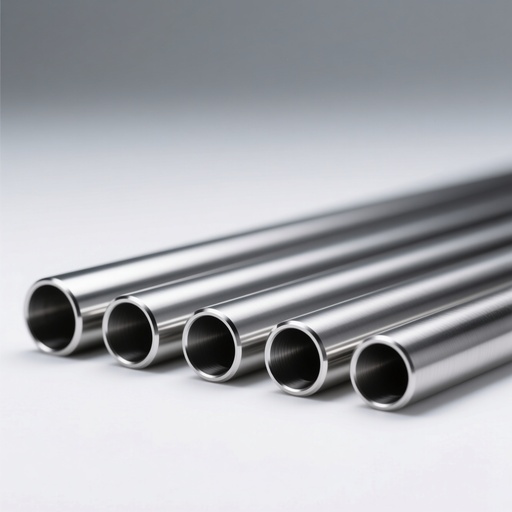
HealsMed specializes in the precision manufacturing of stainless steel capillary tubing, medical-grade tubing, and custom-cut components for OEM medical device projects. We work with stainless steel grades including 304, 304L, 316, and 316L, and can support Nitinol and other specialty alloy components through our qualified supply partners. Our manufacturing facility operates under documented quality procedures and provides material traceability, dimensional inspection reports, and surface finish verification as part of standard production.
For more information about our medical-grade tubing capabilities, read our Stainless Steel Capillary Tube Procurement Guide and our Medical Tubing Material Certificates guide. For inquiries about Nitinol medical device sourcing, our engineering team can review your application and provide a capability assessment.
Preparing Your RFQ: Information Checklist
To help the supplier provide an accurate and useful quotation, prepare the following information before contacting them:
- Component description and medical application type
- Material grade specification
- Complete dimensions: OD, ID, wall thickness, length, tolerance for each
- Quantity: prototype, pilot, or production volume
- Surface finish requirement
- End condition: cut, beveled, chamfered, or assembled
- Documentation requirements: material cert, inspection report, CoC
- Target delivery schedule
- Relevant regulatory or quality standards (ISO 13485, etc.)
Providing complete information reduces the number of clarification rounds and helps the supplier identify any capability gaps before quoting. It also shows the supplier that you are a serious buyer with clear requirements, which typically results in a more careful and competitive quote.
Final Thoughts
Reviewing a medical alloy supplier before requesting a quote is a practical step that reduces procurement risk and improves communication efficiency. By checking material sourcing, manufacturing process, quality system, inspection capability, and communication quality, buyers can identify suppliers that match their technical requirements early in the process. The key is to verify, not assume—especially when the components will be used in medical devices, surgical instruments, or laboratory equipment where material consistency and dimensional accuracy directly affect device performance.
For OEM medical device projects requiring precision stainless steel capillary tubing or custom-cut medical components, send your drawings and specifications to HealsMed for a detailed capability review and quotation.

Healsmed
Leading Stainless Steel Capillary Tube Factory. 1,400+ standard sizes IN STOCK & ready to ship worldwide! High precision, factory-direct price.