Inconel 600 Miniature Tubing: Material Properties, Manufacturing Tolerances, and Application Guide
Engineers searching for Inconel 600 miniature tubing are typically trying to source small-diameter, high-temperature alloy tube for sensor probes, thermocouple sheaths, medical device components, or analytical instrument flow paths where 304 or 316L stainless steel cannot survive the operating environment. The challenge is not simply finding Inconel 600 in small sizes — it is finding a supplier who can hold tight OD, ID, and wall tolerances on a nickel-chromium alloy that work-hardens rapidly during drawing, while delivering clean, burr-free ends and full traceability. This guide covers what design and procurement teams need to specify before requesting a quote.
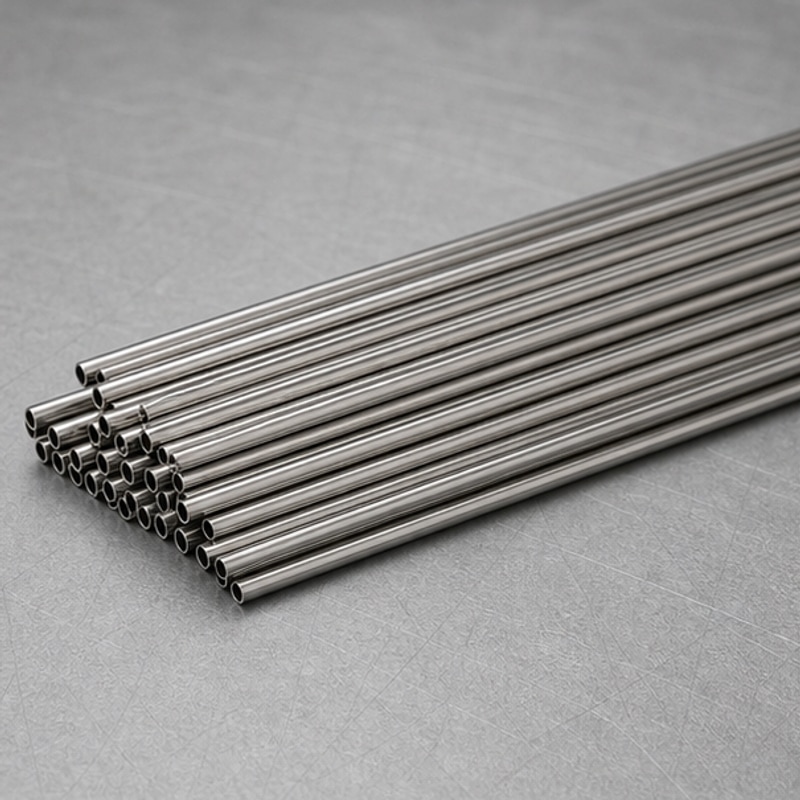
What Inconel 600 Miniature Tubing Is and Where It Is Used
Inconel 600 is a nickel-chromium-iron alloy (UNS N06600) known for resistance to oxidation at elevated temperatures, resistance to chloride-ion stress-corrosion cracking, and useful strength across a wide temperature range. In miniature tubing form — typically defined as tube with an outside diameter under roughly 3 mm — it is specified where small cross-sections must survive conditions that would degrade austenitic stainless steels.
Typical application scenarios include:
- Thermocouple and RTD protection sheaths in furnaces, kilns, and heat-treat equipment
- Sensor and probe bodies for analytical and process instrumentation
- Sampling and transfer lines in chromatography and mass spectrometry
- High-temperature fluid or gas handling in aerospace and industrial test rigs
- Components in medical and laboratory equipment where repeated sterilization or aggressive cleaning agents are present
Note that suitability for any specific medical, implant, or clinical application depends on the finished device design, regulatory pathway, and end-user validation — not on the tubing material alone.
Material Grades and Designations
Inconel 600 is the common trade name. Equivalent or related designations you may see on drawings and purchase orders include:
| Designation | Notes |
|---|---|
| UNS N06600 | Standard unified numbering system designation |
| Werkstoff 2.4816 | Common European designation |
| NiCr15Fe | DIN/EN-style short name |
| Alloy 600 | Generic alloy family name |
Inconel 601 (UNS N06601) and Inconel 625 (UNS N06625) are sometimes considered where higher oxidation resistance or higher strength is required. Inconel 600 remains the more common starting point for miniature tube because it balances formability during cold drawing with service performance.
Typical chemical composition for N06600, per ASTM B167 / ASME SB167, is approximately: Ni 72% min, Cr 14–17%, Fe 6–10%, C 0.15% max, Mn 1.0% max, S 0.015% max, Si 0.5% max, Cu 0.5% max. Always confirm against the applicable specification revision and the mill certificate for the specific heat.
OD, ID, Wall Thickness, and Length Considerations
Miniature Inconel 600 tube is normally supplied in the cold-drawn, annealed condition. Common dimensional ranges for capillary and small-diameter tube include:
- OD: approximately 0.25 mm to 3.0 mm for miniature classifications; larger diameters are available as small-diameter tube
- Wall thickness: approximately 0.05 mm to 0.5 mm, depending on OD and drawing route
- Length: random coils, straight lengths, or cut-to-length per drawing
The achievable OD/wall ratio is limited by the alloy’s work-hardening behavior. Very thin walls on very small ODs require multiple draw-and-anneal passes and careful mandrel selection; feasibility should be confirmed against the specific drawing rather than assumed from a catalog range.
Tolerances for Miniature Inconel 600 Tubing
Tolerance capability depends on drawing, material condition, process route, and mutual agreement between parties. As a general reference for cold-drawn capillary tube, typical commercial tolerances fall in these ranges:
| Parameter | Typical range (reference only) |
|---|---|
| OD tolerance | ±0.010 mm to ±0.050 mm, tighter on smaller OD |
| ID tolerance | ±0.010 mm to ±0.050 mm, or defined by wall tolerance |
| Wall thickness tolerance | ±10% nominal, or per agreed specification |
| Concentricity | Typically 10% or less of wall thickness; confirm per drawing |
| Straightness | Depends on length and temper; specify if critical |
For sensor sheaths and precision flow paths, OD and ID are usually the controlling dimensions. For pressure-containing applications, minimum wall and concentricity are the controlling characteristics. State which dimensions are critical on the drawing.
End Condition and Burr Control
Miniature tube ends matter more than they do on larger tube because a small burr can obstruct flow, damage a seal, or interfere with assembly. Specify the required end condition:
- Clean cut, deburred ID and OD
- Square cut to a stated perpendicularity
- Chamfered or radiused ends
- Sealed, plugged, or open ends
Burr acceptance criteria should be stated numerically where possible (for example, maximum burr height) rather than described qualitatively.
Surface Finish and Cleanliness
Cold-drawn Inconel 600 tube typically has a bright, smooth surface from the drawing process. For medical, analytical, or high-purity flow applications, additional requirements may include:
- Maximum surface roughness (Ra) value
- Freedom from drawing lubricant residue, oxides, or embedded particles
- Passivation or cleaning per an agreed procedure
- Compatibility with the sterilization method used downstream
Cleanliness specifications should be written into the purchase order, because standard mill finish is not the same as a cleaned, ready-to-use component.
Inspection Documentation
For regulated and high-reliability programs, the documentation package is often as important as the tube itself. Commonly requested items include:
- Material certificate of conformance with heat number and chemical composition
- Mechanical property data (tensile, yield, elongation) where applicable
- Dimensional inspection report covering OD, ID, wall, and length
- Concentricity and straightness data if specified
- Surface finish or cleanliness verification if specified
- Traceability from raw material heat to finished lot
Specify which documents are required at quote stage — adding them later can affect price and lead time.
Packaging Considerations
Miniature Inconel 600 tube is easily bent and surface-damaged in transit. Packaging should protect both geometry and surface:
- Rigid tubes or sleeves for straight lengths
- Coils supported to prevent kinking
- End protection to preserve deburred or chamfered ends
- Cleanroom-compatible bagging if cleanliness is specified
- Labeling with heat number, lot, dimensions, and quantity
RFQ Information Checklist
To get an accurate quote and a feasible manufacturing response, include the following in your request:
- Material grade and specification (for example, Inconel 600, UNS N06600, ASTM B167)
- OD, ID, and wall thickness with tolerances
- Length and form (straight, coil, cut-to-length)
- End condition and burr criteria
- Surface finish and cleanliness requirements
- Quantity and any annual usage forecast
- Inspection documentation required
- Packaging and labeling requirements
- Any downstream process the tube must survive (bending, welding, sterilization)
To request a quotation for Inconel 600 miniature tubing, submit your drawings, material grade, quantity, tolerance, surface finish, and inspection requirements through the Healsmed website. The engineering team will review and respond with a technical evaluation.

Healsmed
Leading Stainless Steel Capillary Tube Factory. 1,400+ standard sizes IN STOCK & ready to ship worldwide! High precision, factory-direct price.