310S Seamless Capillary Tube: Material Properties, Manufacturing Tolerances, and Application Guide
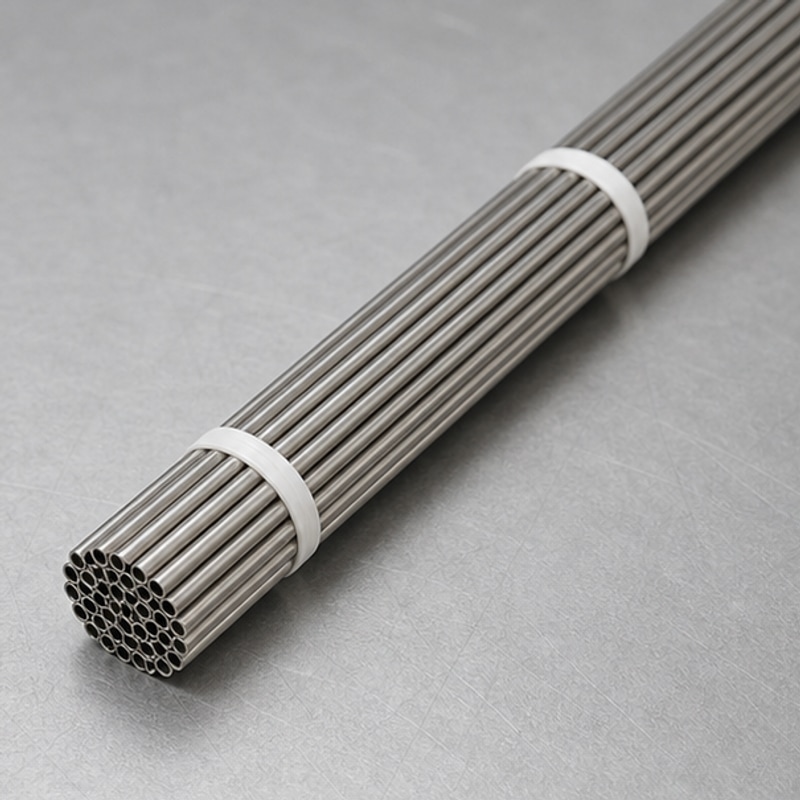
When specifying capillary tubing for high-temperature or corrosive environments, the 310S seamless capillary tube offers a distinct combination of oxidation resistance and mechanical stability. This article covers the material properties, manufacturing tolerances, and application considerations for engineers evaluating 310S for precision fluid handling, thermocouple sheathing, or analytical instrumentation. We focus on seamless drawn construction and why it matters for this specific alloy.
Understanding 310S Seamless Capillary Tube: What Engineers Should Know
310S is a low-carbon version of type 310 stainless steel, designed for service where sensitization and intergranular corrosion are concerns. As a capillary tube, it is typically supplied in the cold-drawn, seamless condition. The tube is characterized by its high chromium and nickel content, which provides superior scaling resistance at elevated temperatures compared to 304 or 316L grades. For procurement purposes, buyers should specify “seamless drawn” to ensure the tube has no longitudinal weld seam, as this affects both pressure integrity and corrosion performance.
Chemical Composition and Mechanical Properties of 310S
The chemical composition of 310S is defined by ASTM A213 and ASTM A269. Typical ranges are shown below. The low carbon content (max 0.08%) distinguishes 310S from standard 310 (max 0.25% C).
| Element | Composition Range (wt%) |
|---|---|
| Carbon | 0.08 max |
| Manganese | 2.00 max |
| Phosphorus | 0.045 max |
| Sulfur | 0.030 max |
| Silicon | 1.50 max |
| Chromium | 24.0 – 26.0 |
| Nickel | 19.0 – 22.0 |
Typical mechanical properties at room temperature for 310S seamless capillary tube in the annealed condition:
| Property | Value |
|---|---|
| Tensile Strength (MPa) | 515 min |
| Yield Strength, 0.2% offset (MPa) | 205 min |
| Elongation in 50 mm (%) | 40 min |
| Hardness (Rockwell B) | 95 max |
310S vs 310: Key Differences for High-Temperature Applications
The primary difference between 310 and 310S is carbon content. Standard 310 (UNS S31000) allows up to 0.25% carbon, which improves high-temperature creep strength but increases the risk of carbide precipitation during welding or service in the 425–815°C range. 310S (UNS S31008) limits carbon to 0.08%, reducing sensitization and improving corrosion resistance in welded assemblies. For capillary tubing used in thermocouple probes or heat exchangers where welding is required, 310S is the preferred grade. Both grades offer similar oxidation resistance up to 1035°C in continuous service, but 310S provides better resistance to intergranular attack.
Seamless vs Welded Construction: Why Seamless Matters for 310S
Seamless 310S capillary tube is manufactured by hot extrusion or rotary piercing followed by cold drawing. This process produces a tube with no longitudinal weld seam. The advantages for this alloy are threefold:
- No weld zone: Welded tubes have a heat-affected zone (HAZ) where chromium carbides can precipitate, reducing local corrosion resistance. Seamless construction eliminates this concern.
- Uniform grain structure: Cold drawing refines the grain structure uniformly along the tube length. This is critical for capillary tubes that must maintain consistent mechanical properties and surface finish over long lengths.
- Better pressure integrity: Seamless tubes have no weld joint that could act as a stress riser. For high-pressure applications or thermal cycling, seamless 310S provides more predictable burst strength.
Dimensional Specifications and Tolerance Classes
310S seamless capillary tube is available in standard dimensional ranges. Typical outside diameters (OD) range from 0.5 mm to 12.7 mm, with wall thicknesses from 0.05 mm to 2.0 mm. Tolerances depend on the drawing process and final annealing:
- OD tolerance: ±0.025 mm to ±0.05 mm for precision drawn tubes; ±0.10 mm for standard commercial tolerances.
- Wall thickness tolerance: ±10% of nominal wall for precision; ±15% for standard.
- Length tolerance: ±3 mm for cut lengths; coils available for longer continuous runs.
- Straightness: 1 mm per 1000 mm for most applications; tighter if specified.
Corrosion Behavior and Maximum Service Temperature
310S exhibits excellent resistance to oxidation and sulfidation in high-temperature environments. Maximum continuous service temperature in air is approximately 1035°C (1900°F), with intermittent service up to 1150°C (2100°F). In reducing atmospheres or where sulfur compounds are present, scaling resistance decreases. The alloy is not recommended for use in high-sulfur environments above 900°C unless coated. In aqueous corrosion, 310S offers good resistance to nitric acid, organic acids, and alkaline solutions, but it is not immune to chloride stress corrosion cracking. For chloride-rich environments at lower temperatures, 316L or duplex grades may be more suitable.
Quality Control and Inspection Protocol
Standard inspection for 310S seamless capillary tube includes:
- Chemical analysis via optical emission spectrometry (OES).
- Mechanical testing: tensile, yield, elongation per ASTM A370.
- Dimensional verification using laser micrometers and air gauges.
- Hydrostatic or pneumatic pressure testing for pressure-rated tubes.
- Eddy current or ultrasonic testing for surface and subsurface defects.
- Visual inspection for surface finish, scratches, and dents.
For critical applications, customers may request additional tests such as intergranular corrosion testing (ASTM A262 Practice E) or elevated-temperature tensile testing.
Procurement Checklist for 310S Seamless Capillary Tube
When sourcing 310S seamless capillary tube, confirm the following with your supplier:
- Material specification: ASTM A213/A269, UNS S31008.
- Condition: cold drawn, annealed, and pickled.
- Tolerance class: precision or standard, with specific OD and wall limits.
- Surface finish: bright annealed or matte.
- Length: random mill lengths, cut-to-length, or coil.
- Certification: mill test report (MTR) per EN 10204 3.1 or 3.2.
For more information about 310S seamless capillary tube, contact Healsmed’s engineering team with your material grade, drawing, tolerance requirements, and quantity. Submit inquiries through the Healsmed website for prompt technical review and quotation.
Conclusion
310S seamless capillary tube is a reliable choice for applications requiring high-temperature oxidation resistance and corrosion performance in demanding environments. Its low-carbon chemistry reduces the risk of sensitization during welding, while seamless construction eliminates weld-zone weaknesses and provides uniform mechanical properties. Engineers should pay close attention to dimensional tolerances, surface finish, and inspection requirements to ensure the tube meets the intended service conditions.
When evaluating suppliers, prioritize those who can provide certified material traceability and consistent drawing tolerances. Proper specification upfront—covering grade, condition, and testing—will minimize field failures and extend service life in high-temperature or corrosive applications.

Healsmed
Leading Stainless Steel Capillary Tube Factory. 1,400+ standard sizes IN STOCK & ready to ship worldwide! High precision, factory-direct price.