310S Seamless Capillary Tubing: Material Properties, Manufacturing Tolerances, and Application Guide
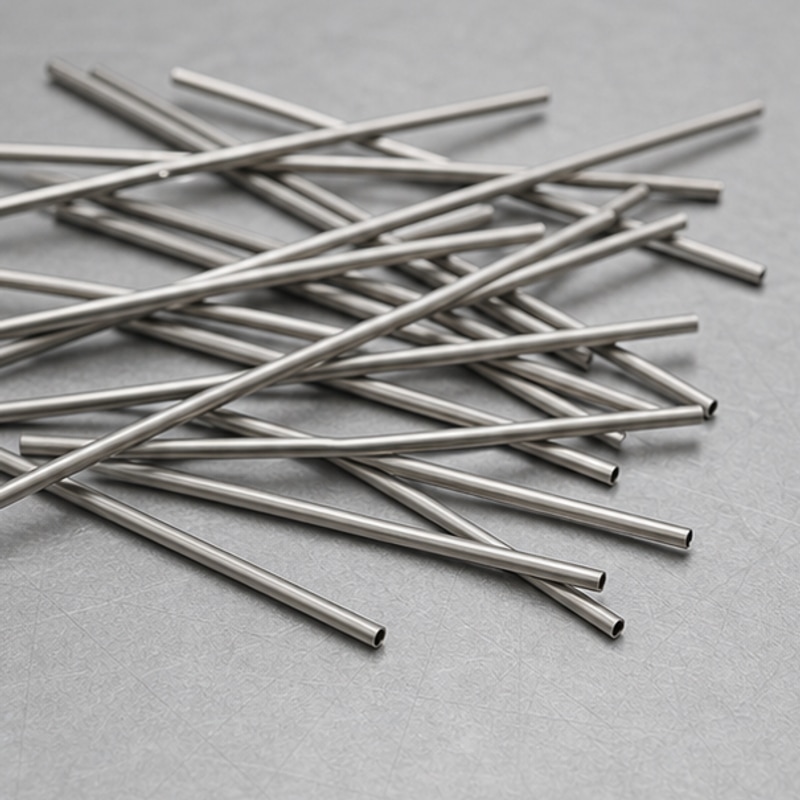
310S seamless capillary tubing is a specialized product for applications requiring sustained performance at elevated temperatures and in corrosive environments. Unlike standard 304 or 316L grades, 310S offers higher chromium and nickel content, providing superior oxidation resistance and creep strength. For engineers specifying capillary dimensions—typically 0.5 mm to 12.7 mm OD with wall thicknesses from 0.05 mm to 2.0 mm—understanding the material’s limits, manufacturing tolerances, and inspection criteria is essential to avoid premature failure in service.
Chemical Composition and Mechanical Properties of 310S
310S is an austenitic stainless steel with a nominal composition of 24–26% chromium and 19–22% nickel, with carbon limited to 0.08% max. The higher chromium content forms a stable, adherent chromium oxide scale at temperatures up to 1150°C (2100°F) in continuous service, and up to 1035°C (1900°F) in cyclic conditions. Typical mechanical properties for annealed 310S capillary tubing include a tensile strength of 515–690 MPa, yield strength of 205–310 MPa, and elongation of 40–50% in 50 mm. These values are measured on drawn and annealed tubing; cold-drawn material may show higher tensile and yield strengths with reduced elongation, depending on the final temper specified.
| Element | Composition Range (%) |
|---|---|
| Chromium (Cr) | 24.0 – 26.0 |
| Nickel (Ni) | 19.0 – 22.0 |
| Carbon (C) | 0.08 max |
| Manganese (Mn) | 2.0 max |
| Silicon (Si) | 1.5 max |
| Phosphorus (P) | 0.045 max |
| Sulfur (S) | 0.030 max |
| Iron (Fe) | Balance |
310S vs 310: Key Differences for High-Temperature Applications
The primary distinction between 310 and 310S is carbon content. Standard 310 permits up to 0.25% carbon, which increases room-temperature strength but promotes carbide precipitation at grain boundaries in the 425–815°C range. This sensitization reduces corrosion resistance in certain media. 310S, with its 0.08% max carbon limit, minimizes carbide formation, making it the preferred grade for applications involving both high temperature and corrosive environments, such as chemical processing and heat-treat furnace components. For capillary tubing, where wall thicknesses are thin and corrosion allowances are minimal, specifying 310S over 310 reduces the risk of intergranular attack during shutdown or cleaning cycles.
Seamless vs Welded: Why Seamless Construction Matters for 310S
Seamless 310S capillary tubing is produced by cold drawing a pierced hollow or extruded shell through a series of dies and over a mandrel. The absence of a longitudinal weld seam eliminates the potential for preferential corrosion, reduced mechanical properties, or microstructural inhomogeneity at the weld zone. In drawn seamless tubing, the grain structure is uniform circumferentially and longitudinally, resulting in consistent pressure integrity and fatigue resistance. For high-temperature service, where weld zones may exhibit different creep behavior or oxide scale adherence, seamless construction provides a single-phase, homogeneous material response. Additionally, seamless tubing can be drawn to tighter tolerances—typically ±0.025 mm to ±0.05 mm on OD—compared to welded and drawn tubing, which is critical for precision capillary applications in analytical instrumentation and medical devices.
Dimensional Specifications and Tolerance Classes
310S seamless capillary tubing is available in a range of dimensions suited to OEM requirements. Outside diameters typically span 0.5 mm to 12.7 mm, with wall thicknesses from 0.05 mm to 2.0 mm. Standard drawing tolerances are ±0.05 mm on OD for sizes above 3.0 mm, and ±0.025 mm for smaller diameters. Wall thickness tolerances are generally ±10% of nominal. For applications requiring tighter control, such as flow restrictors or chromatography columns, precision-drawn tubing can be supplied with OD tolerances of ±0.013 mm and wall tolerances of ±5%. Lengths are commonly supplied in random mill lengths of 1–6 meters, or cut to specific dimensions with squareness and burr-free ends.
| OD Range (mm) | Standard OD Tolerance (mm) | Precision OD Tolerance (mm) |
|---|---|---|
| 0.5 – 3.0 | ±0.025 | ±0.013 |
| 3.0 – 6.0 | ±0.050 | ±0.025 |
| 6.0 – 12.7 | ±0.050 | ±0.038 |
Corrosion Resistance and Maximum Service Temperature
310S exhibits excellent resistance to oxidation, sulfidation, and carburization at elevated temperatures due to its high chromium and nickel content. In air, continuous service up to 1150°C is feasible, though cyclic exposure above 1035°C may cause spalling of the oxide layer. In aqueous environments, 310S offers corrosion resistance comparable to 304 in oxidizing acids but is less resistant to chlorides than 316L. The material is not recommended for reducing sulfur environments above 500°C without protective coatings. For capillary tubing used in high-temperature gas sampling probes or thermocouple sheaths, 310S provides reliable performance where lower-alloy grades would oxidize rapidly.
Quality Control and Inspection Protocol
Inspection of 310S seamless capillary tubing typically includes dimensional verification using laser micrometers or air gauges, surface defect detection via eddy current or ultrasonic testing, and mechanical property confirmation through tensile and flattening tests. For medical or analytical applications, internal cleanliness is verified by flushing with solvent and measuring particulate count. Chemical composition is confirmed by optical emission spectroscopy or X-ray fluorescence on each heat. Pressure integrity is assessed by hydrostatic testing or pneumatic testing to specified burst pressures. Documentation typically includes a mill test certificate per EN 10204 Type 3.1 or 3.2, depending on the end-use regulatory requirements.
Industry-Specific Applications for 310S Seamless Capillary Tubing
310S seamless capillary tubing is used in high-temperature thermocouple sheaths, furnace atmosphere sampling probes, and chemical injection lines in petrochemical crackers. In analytical instrumentation, it serves as transfer lines for gas chromatography where thermal stability and low outgassing are required. Medical device applications include components for surgical tools that undergo repeated sterilization at elevated temperatures, where 310S resists scaling and maintains dimensional stability. Industrial OEMs specify 310S for capillary-level sight glasses and pressure sensing lines in heat-treatment furnaces. The combination of corrosion resistance at high temperatures and tight dimensional control makes 310S a practical choice for environments where 304 or 316L would fail within weeks.
Procurement Checklist for 310S Seamless Capillary Tubing
When specifying 310S seamless capillary tubing, confirm the following: material grade and heat number with certified composition; OD and wall dimensions with tolerance class; temper condition (annealed, quarter-hard, half-hard); surface finish (bright annealed, pickled, or as-drawn); end finish (cut square, deburred, or chamfered); and quantity with acceptable length range. For applications involving bending or flaring, request a flattening test and flaring test data. If the tubing will be used in a vacuum or high-purity gas system, specify internal cleanliness level and packaging requirements, such as nitrogen purging or sealed polyethylene bags. Always request a mill test certificate traceable to the heat.
For more information about 310S seamless capillary tubing, contact Healsmed’s engineering team with your material grade, drawing, tolerance requirements, and quantity. Submit inquiries through the Healsmed website for prompt technical review and quotation.
Conclusion
310S seamless capillary tubing offers a balance of high-temperature oxidation resistance, corrosion performance, and dimensional precision that is difficult to achieve with welded or lower-alloy alternatives. The seamless drawn manufacturing route eliminates weld-zone variability and allows tighter tolerances, which are critical for capillary-scale components. Engineers specifying 310S should verify chemical composition, mechanical properties, and tolerance classes against the intended service conditions, particularly maximum temperature and cyclic exposure.
For OEMs designing equipment for chemical processing, analytical instrumentation, or medical devices, 310S seamless capillary tubing provides a reliable material option when standard austenitic grades reach their thermal limits. By understanding the material’s composition, manufacturing tolerances, and inspection requirements, procurement decisions can be made with confidence, reducing the risk of field failures and costly replacements.

Healsmed
Leading Stainless Steel Capillary Tube Factory. 1,400+ standard sizes IN STOCK & ready to ship worldwide! High precision, factory-direct price.