Inconel 600 Small Diameter Tubing: Material Properties, Manufacturing Tolerances, and Application Guide
When sourcing Inconel 600 small diameter tubing, engineers are typically balancing three competing demands: the alloy’s high-temperature strength and corrosion resistance, the tight dimensional tolerances required for precision instrumentation, and the metallurgical discipline needed to keep the material clean and burr-free through cutting and finishing. This article covers the material properties that matter for specification, the dimensional and tolerance ranges you should expect to define on a drawing, and the inspection and packaging requirements that determine whether a lot is accepted or rejected at incoming inspection.
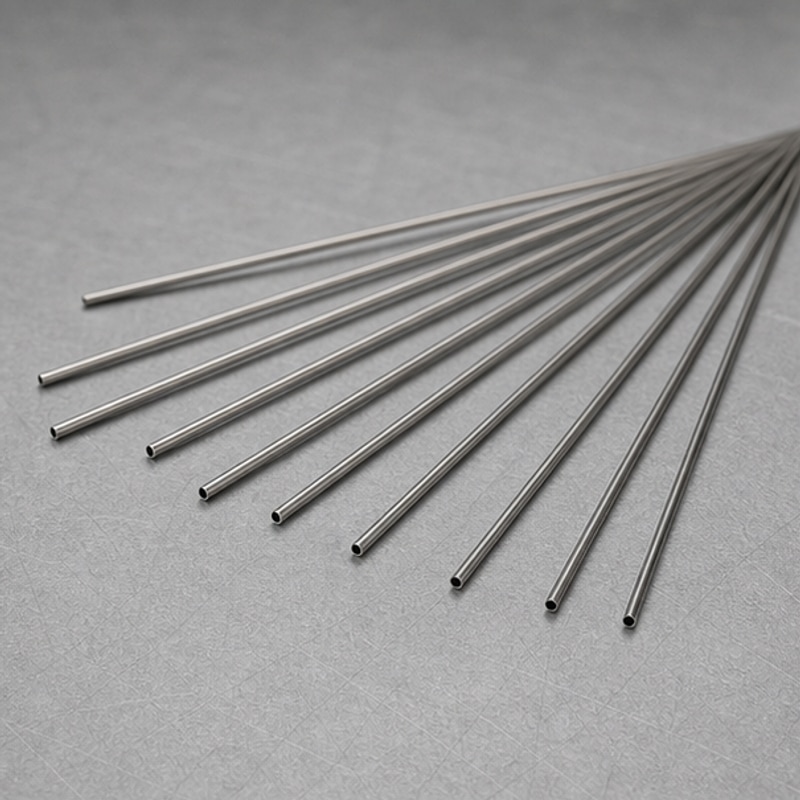
What Inconel 600 Is and Why It Is Specified for Small Diameter Tubing
Inconel 600 is a nickel-chromium-iron alloy (UNS N06600) with a nominal composition of approximately 72% nickel, 14–17% chromium, and 6–10% iron. The high nickel content gives it resistance to chloride-ion stress corrosion cracking and to a range of oxidizing and reducing environments. The chromium content provides resistance to high-temperature oxidation and carburization. Because the alloy does not rely on a precipitation-hardening treatment, it retains useful strength and ductility across a wide temperature range, from cryogenic conditions up to roughly 1090°C (2000°F) in oxidizing atmospheres, depending on the specific environment and mechanical load.
For small diameter tubing, these characteristics translate into specific application drivers: thermocouple sheathing, gas sampling lines, analytical instrumentation probes, heat exchanger elements, and components in vacuum or high-purity gas systems. In these applications, the tube must often be bent, coiled, welded, or brazed without cracking, and it must maintain pressure integrity at elevated temperature.
Applicable Scenarios and Industries
Inconel 600 small diameter tubing is commonly specified in the following contexts:
- Aerospace and defense: fuel and hydraulic lines, sensor sheathing, and exhaust gas sampling probes where resistance to high-temperature oxidation is required.
- Chemical and petrochemical processing: sampling lines and heat exchanger tubes exposed to chlorides, caustics, and high-temperature process streams.
- Nuclear and power generation: instrumentation lines and heat exchanger components where resistance to high-purity water and elevated-temperature steam is needed. Note that nuclear applications typically require additional qualification and traceability beyond standard commercial documentation.
- Analytical and laboratory instrumentation: probe bodies, transfer lines, and chromatograph components where the alloy’s low outgassing and corrosion resistance support clean sample handling.
- Heat treating and furnace equipment: thermocouple protection tubes and gas injection lines where thermal cycling resistance is critical.
In medical device engineering, Inconel 600 is less common than 304 or 316L stainless steel for fluid-contacting components, but it may be considered for high-temperature sterilization fixtures, certain sensor housings, or specialized instrumentation where its thermal and corrosion profile is required. Material selection for any medical application remains the responsibility of the device manufacturer and must be supported by appropriate biocompatibility and process validation testing.
Material Grades and Designations
Inconel 600 is the trade name associated with UNS N06600. Equivalent or related designations include:
- UNS N06600 — the unified numbering system designation.
- Werkstoff 2.4816 — the German material number.
- AFNOR NC 15 Fe — a French designation.
- BS 3076 NA 14 — a British standard designation.
Common product specifications for seamless and welded tubing include ASTM B163 (seamless nickel alloy tube), ASTM B167 (welded nickel alloy tube), and ASTM B751 (general requirements for nickel and nickel alloy tube). For aerospace applications, AMS 5580 may be specified for seamless tubing. Buyers should confirm which specification applies to their design and whether the supplier can provide test reports referencing that specification.
OD, ID, Wall Thickness, and Length Considerations
Small diameter tubing for precision applications is typically defined by outside diameter (OD), inside diameter (ID), and wall thickness. Common OD ranges for capillary and small-diameter tubing fall between approximately 0.5 mm and 12.7 mm (0.020 in. to 0.500 in.), though specific capabilities depend on the mill, the manufacturing route (seamless vs. welded-and-drawn), and the alloy’s work-hardening behavior.
Wall thickness is often specified as a minimum wall or as a nominal wall with a tolerance. For Inconel 600, wall thicknesses in the range of 0.05 mm to 1.5 mm (0.002 in. to 0.060 in.) are commonly requested for small-diameter applications. The achievable wall thickness depends on the drawing process, the required concentricity, and the specified tolerance.
Length can be specified as random lengths, fixed lengths, or cut-to-length. For coiled tubing, coil length and coil diameter should be defined. For straight lengths, the maximum straight length depends on the manufacturing route and handling constraints.
Tolerances for Capillary and Small Diameter Tubing
Tolerances for Inconel 600 small diameter tubing are typically established by the applicable ASTM or AMS specification, or by mutual agreement between buyer and supplier when tighter tolerances are required. The table below provides general reference ranges; actual tolerances must be confirmed against the governing specification and the supplier’s process capability.
| Parameter | Typical Reference Range | Notes |
|---|---|---|
| OD tolerance | ±0.05 mm to ±0.15 mm | Depends on OD size, wall thickness, and specification |
| ID tolerance | ±0.05 mm to ±0.15 mm | Often derived from OD and wall tolerances |
| Wall thickness tolerance | ±10% to ±15% of nominal | May be specified as minimum wall |
| Concentricity | 10% to 15% of wall thickness | Critical for pressure and flow applications |
| Straightness | 0.5 mm to 1.5 mm per meter | For straight lengths; coil may have different criteria |
| Length tolerance | ±1 mm to ±3 mm | For cut-to-length; depends on cutting method |
Because Inconel 600 work-hardens rapidly, achieving very tight tolerances may require multiple drawing passes with intermediate annealing. Buyers should discuss tolerance requirements early in the sourcing process to confirm feasibility.
End Condition and Burr Control
End condition is a frequent source of incoming inspection rejections for small diameter tubing. Common end conditions include:
- Saw cut: Suitable for further processing; may have burrs.
- Deburred: Burrs removed by mechanical or abrasive methods; edge quality should be defined.
- Square cut: End face perpendicular to the tube axis within a specified angle.
- Chamfered: A defined chamfer angle and depth for assembly or welding.
- Sealed or plugged: For cleanliness or pressure testing.
Burr control is especially important for capillary tubing used in flow or sampling applications, where a burr can affect flow characteristics or shed particles. Specify the acceptable burr height or require a deburring process, and define the inspection method (visual, optical comparator, or other).
Surface Finish and Cleanliness Requirements
Surface finish for Inconel 600 small diameter tubing is typically specified as Ra (arithmetic average roughness) or RMS. Common requirements range from Ra 0.8 µm (32 µin.) for general industrial use to Ra 0.4 µm (16 µin.) or better for high-purity or analytical applications. The achievable finish depends on the manufacturing route (cold drawn, bright annealed, electropolished) and the starting surface condition.
Cleanliness requirements may include limits on residual lubricants, oxides, and particulate contamination. For high-purity applications, specify a cleaning process such as degreasing, pickling, or passivation, and define the acceptance criteria (e.g., no visible oil or residue under UV light, particulate count limits). Note that passivation of nickel alloys differs from stainless steel passivation and should be specified accordingly.
Inspection Documentation
Typical documentation for Inconel 600 small diameter tubing includes:
- Material certification: A mill test report (MTR) or certificate of conformance (CoC) referencing the applicable specification (e.g., ASTM B163, B167) and showing chemical composition and mechanical properties.
- Dimensional inspection report: Recorded measurements of OD, ID, wall thickness, and length, with reference to the sampling plan.
- Surface finish report: Ra or RMS measurements if specified.
- Cleanliness verification: If required, results of cleaning validation or particulate testing.
- Traceability: Heat number or lot number linking the tubing to the MTR.
Buyers should specify the documentation requirements in the RFQ and confirm that the supplier can provide the requested reports. For aerospace or nuclear applications, additional requirements such as AMS 5580 or ASME Section III may apply.
Packaging Considerations
Packaging for Inconel 600 small diameter tubing should protect the tube from mechanical damage, contamination, and moisture during storage and shipping. Common practices include:
- Straight lengths: bundled, wrapped in protective paper or plastic, and shipped in rigid tubes or crates.
- Coils: wound on a core or spool, secured to prevent unwinding, and wrapped in protective material.
- Cleanliness-critical tubing: individually bagged in cleanroom-compatible packaging, with end caps or plugs to prevent contamination.
- Identification: each bundle or coil labeled with material grade, heat number, size, and quantity.
Buyers should specify any special packaging requirements, such as nitrogen purge, desiccant, or cleanroom bagging, in the RFQ.
RFQ Information Checklist
To obtain an accurate quotation for Inconel 600 small diameter tubing, include the following information in your request:
- Material grade and specification (e.g., UNS N06600, ASTM B163)
- OD, ID, and wall thickness (with tolerances)
- Length and quantity (random, fixed, or cut-to-length)
- End condition and burr requirements
- Surface finish (Ra or RMS) and cleanliness requirements
- Inspection documentation required (MTR, dimensional report, etc.)
- Packaging requirements
- Any special processing (bending, annealing, electropolishing)
- Delivery schedule and destination
Providing complete information reduces the need for back-and-forth clarification and helps the supplier evaluate feasibility and lead time accurately.
To request a quotation for Inconel 600 small diameter tubing, submit your drawings, material grade, quantity, tolerance, surface finish, and inspection requirements through the Healsmed website. The engineering team will review and respond with a technical evaluation.

Healsmed
Leading Stainless Steel Capillary Tube Factory. 1,400+ standard sizes IN STOCK & ready to ship worldwide! High precision, factory-direct price.