Inconel 625 Stainless Steel Capillary Tube: Material Properties, Manufacturing Tolerances, and Application Guide
Engineers searching for Inconel 625 stainless steel capillary tube are typically trying to solve a specific high-temperature or corrosion-resistance problem that standard austenitic stainless grades cannot handle. You may be sourcing small-diameter tubing for a medical device, an aerospace sensor, a chemical analysis instrument, or a high-pressure fluid system where 304 or 316L would fail prematurely. The challenge is not simply finding a supplier who lists the alloy; it is verifying that the tube meets the required dimensional tolerances, surface finish, and documentation for your application. This guide covers the material properties, manufacturing constraints, and procurement considerations you need to evaluate before placing an order.
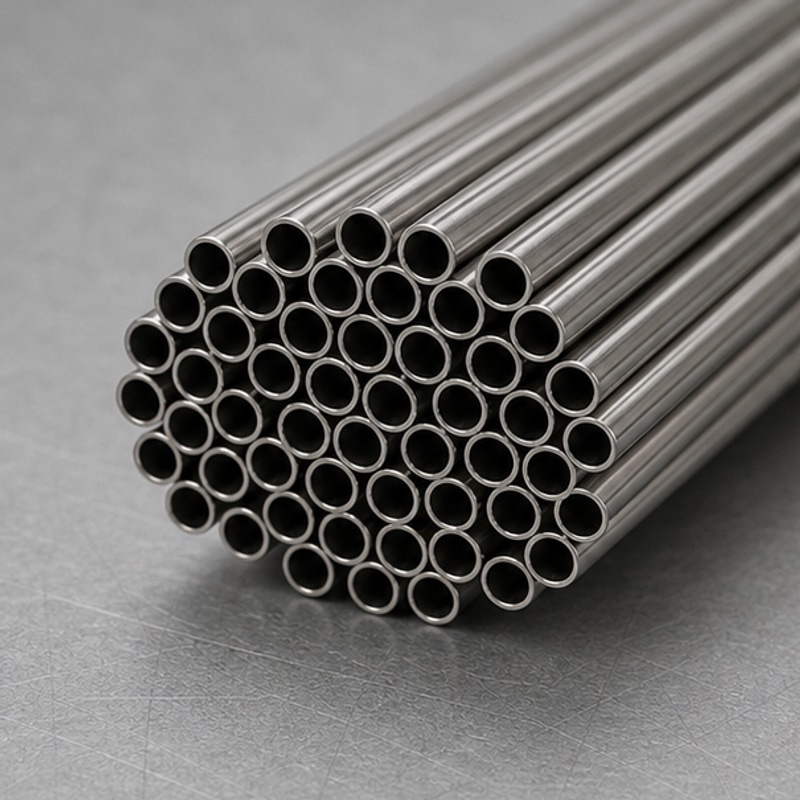
What Is Inconel 625 and Why It Is Not a Stainless Steel
Inconel 625 is a nickel-chromium-molybdenum alloy, not a stainless steel in the conventional sense. The term “Inconel 625 stainless steel capillary tube” is a common search phrase, but the material is actually a nickel-based superalloy. This distinction matters for procurement because you are not buying a 300-series stainless grade. You are buying a material with a different chemistry, different mechanical behavior, and different welding and forming characteristics.
The alloy typically contains approximately 58% nickel, 20-23% chromium, 8-10% molybdenum, and 3.15-4.15% niobium plus tantalum. These elements are specified in standards such as ASTM B444 and ASTM B704 for seamless and welded tubing respectively. The niobium addition, combined with molybdenum, provides resistance to pitting, crevice corrosion, and intergranular attack in chloride-containing environments. The nickel content provides resistance to reducing environments and stress corrosion cracking.
For capillary tube applications, this chemistry translates into several practical benefits:
- Retention of mechanical properties at elevated temperatures where 316L would soften
- Resistance to seawater and chloride-rich fluids without pitting
- Compatibility with high-purity gas and liquid handling systems
- Ability to withstand repeated sterilization cycles without significant degradation
However, Inconel 625 is significantly more expensive and more difficult to machine and form than 316L. It is not a drop-in replacement for stainless steel in every capillary application. It is selected when the operating environment demands properties that stainless steel cannot provide.
Applicable Scenarios and Industries
Inconel 625 capillary tube is typically specified in applications where a combination of small diameter, high pressure, elevated temperature, and corrosive media is present. Common scenarios include:
- Medical and analytical instrumentation: High-performance liquid chromatography (HPLC) systems, mass spectrometry interfaces, and high-pressure fluid delivery lines where corrosion resistance and low extractables are required.
- Aerospace and defense: Sensor lines, hydraulic control tubing, and fuel system components exposed to high temperatures and aggressive fluids.
- Chemical processing: Sampling systems, injection lines, and pressure transmission tubing in chloride-containing or acidic environments.
- Oil and gas: Downhole instrumentation and surface sampling systems where sour gas and high pressures are present.
- Nuclear and power generation: Instrumentation lines in primary and secondary cooling systems.
In each case, the capillary tube is not a structural component. It is a precision fluid or gas conduit where dimensional accuracy, surface cleanliness, and material integrity directly affect system performance and safety.
Material Grades and Designations
Inconel 625 is covered by several international designations. When requesting a quotation, specify the applicable standard and condition.
| Designation | Standard | Typical Product Form |
|---|---|---|
| UNS N06625 | ASTM B444 / B704 | Seamless and welded tube |
| Alloy 625 | DIN 17744 / 17753 | Tube and pipe |
| NA 21 | BS 3074 | Tube |
| NC22DNb | AFNOR | Tube |
For capillary tube, the most common specification is ASTM B444 for seamless tubing or ASTM B704 for welded tubing. The condition is typically annealed. Cold-drawn or cold-rolled conditions may be specified when higher strength or tighter tolerances are required, but this must be agreed upon between buyer and supplier because cold working reduces ductility and may affect corrosion performance.
Do not assume that “Inconel 625” on a purchase order is sufficient. Specify the UNS number, the applicable ASTM standard, the condition (annealed, cold-drawn, etc.), and any additional requirements such as grain size or hardness limits.
OD, ID, Wall Thickness, and Length Considerations
Capillary tube is generally defined as small-diameter tubing with an outside diameter typically ranging from 0.5 mm to 6.35 mm (0.020 in. to 0.250 in.). Wall thickness can range from 0.05 mm to 1.0 mm depending on the OD and the pressure requirements. For Inconel 625, the alloy’s higher strength allows thinner walls than 316L for the same burst pressure, but forming and welding constraints may limit how thin the wall can be practically manufactured.
When specifying dimensions, consider the following:
- OD: The outside diameter determines compatibility with fittings, ferrules, and connectors. Common OD sizes include 1/16 in., 1/8 in., and 3 mm, but custom sizes are available.
- ID: The inside diameter controls flow rate and pressure drop. For a given OD, the ID is determined by the wall thickness.
- Wall thickness: Must be sufficient to contain the operating pressure with an appropriate safety factor. The applicable safety factor depends on the industry standard and the application.
- Length: Capillary tube can be supplied in random lengths, fixed lengths, or cut-to-length pieces. For precision applications, specify the length tolerance and whether ends must be square-cut and deburred.
Because Inconel 625 is a difficult material to draw and form, not all combinations of OD, ID, and wall thickness are commercially available. The achievable dimensions depend on the drawing process, the tooling available, and the quantity required. Provide your drawing with all dimensions and tolerances so the supplier can confirm feasibility.
Tolerances for Inconel 625 Capillary Tube
Tolerances for capillary tube are typically tighter than those for larger pipe or tube. The achievable tolerance depends on the manufacturing process, the material, and the size. For Inconel 625, the following ranges are typical, but actual capability depends on the drawing, material condition, process route, and mutual agreement between parties.
| Parameter | Typical Tolerance Range | Notes |
|---|---|---|
| Outside Diameter (OD) | ±0.05 mm to ±0.10 mm | Tighter tolerances may be possible for small quantities |
| Inside Diameter (ID) | ±0.05 mm to ±0.10 mm | ID tolerance is influenced by wall thickness variation |
| Wall Thickness | ±10% of nominal | For thin walls, tighter percentage may be impractical |
| Length | ±0.5 mm to ±2.0 mm | Depends on cut method and quantity |
| Straightness | 0.5 mm per meter | For coiled tube, straightness is not applicable |
Do not assume that a supplier can hold ±0.01 mm on OD or ID without confirmation. For Inconel 625, achieving very tight tolerances requires specialized drawing equipment and may result in higher scrap rates. The tolerance you specify should be based on the functional requirements of the application, not on a default value.
End Condition and Burr Control
Capillary tube ends must be prepared for the intended connection method. Common end conditions include:
- Square cut: The end is cut perpendicular to the tube axis. The cut face may have a small burr.
- Deburred: The burr is removed from the inside and outside edges. This is critical for fluid systems where burrs can trap particles or disrupt flow.
- Chamfered: A chamfer is added to the outside diameter to facilitate insertion into fittings.
- Coned: The end is formed into a cone for high-pressure metal-to-metal seals.
For Inconel 625, burr control is particularly important because the material is tough and tends to form stringy chips during cutting. Specify whether burrs are acceptable, and if not, specify the maximum allowable burr height. A common requirement is that burrs must not exceed 0.05 mm or must be removed entirely. This must be verified by inspection, not assumed.
Surface Finish and Cleanliness Requirements
Surface finish affects flow characteristics, corrosion resistance, and cleanability. For capillary tube, the internal surface finish is often more critical than the external finish. Typical surface finish requirements include:
- Internal Ra: 0.4 μm to 0.8 μm for general fluid handling; 0.2 μm or better for high-purity or analytical applications.
- External Ra: 0.8 μm to 1.6 μm is typical; tighter finishes may be specified for cosmetic or sealing reasons.
Cleanliness requirements vary by industry. For medical device or pharmaceutical applications, the tube may need to be cleaned to remove oils, particles, and other contaminants. Specify the cleaning method (e.g., ultrasonic cleaning, solvent cleaning, passivation) and the acceptance criteria (e.g., maximum particle count, maximum extractables). Do not assume that a standard mill finish is acceptable for your application. If you require a specific cleanliness level, state it in the purchase order and request verification.
Inspection Documentation
For Inconel 625 capillary tube, the following documentation is commonly requested:
- Material Test Report (MTR): Chemical composition and mechanical properties, traceable to the heat number. The MTR should conform to the applicable ASTM standard.
- Dimensional Inspection Report: Measurements of OD, ID, wall thickness, and length, with the number of samples and the measurement method.
- Surface Finish Report: Ra values for internal and external surfaces, if specified.
- Cleanliness Certification: If required, a statement of cleaning method and results.
- Certificate of Conformance (CoC): A statement that the product meets the specified requirements.
Do not assume that all suppliers provide these documents by default. Specify the documentation requirements in your RFQ. If you need traceability to a specific heat number or lot, state that clearly. If you require third-party inspection or testing, specify the inspection body and the scope.
Packaging Considerations
Inconel 625 capillary tube is susceptible to mechanical damage and contamination during shipping and storage. Packaging should protect the tube from bending, crushing, and surface damage. Common packaging methods include:
- Rigid tubes or sleeves: For straight lengths, the tube is placed in a rigid tube or sleeve to prevent bending.
- Coils: For coiled tube, the coil is supported to prevent kinking and is wrapped in protective material.
- Individual bags: Each piece or coil is sealed in a clean bag to prevent contamination.
- Desiccant: For moisture-sensitive applications, desiccant may be included.
Specify the packaging requirements in your purchase order. If the tube will be used in a cleanroom or sterile environment, specify the packaging cleanliness level. If the tube will be stored for an extended period, specify the preservation method.
RFQ Information Checklist
To receive an accurate quotation for Inconel 625 capillary tube, provide the following information:
- Material grade and specification (e.g., UNS N06625, ASTM B444)
- Condition (annealed, cold-drawn, etc.)
- Dimensions: OD, ID, wall thickness, length
- Tolerances for each dimension
- End condition (square cut, deburred, chamfered, etc.)
- Surface finish requirements (internal and external Ra)
- Cleanliness requirements
- Inspection documentation required (MTR, dimensional report, CoC, etc.)
- Packaging requirements
- Quantity (pieces, total length, or weight)
- Any additional requirements (e.g., grain size, hardness, pressure testing)
If you do not have all of these details, provide what you have and indicate which items are open. The supplier can then propose a solution based on standard capabilities or discuss what is feasible.
To request a quotation for Inconel 625 stainless steel capillary tube, submit your drawings, material grade, quantity, tolerance, surface finish, and inspection requirements through the Healsmed website. The engineering team will review and respond with a technical evaluation.

Healsmed
Leading Stainless Steel Capillary Tube Factory. 1,400+ standard sizes IN STOCK & ready to ship worldwide! High precision, factory-direct price.