Inconel 625 Stainless Steel Capillary Tubing: Material Properties, Manufacturing Tolerances, and Application Guide
If you are sourcing Inconel 625 stainless steel capillary tubing, the challenge is rarely just finding a supplier who can draw the tube. The real engineering problem is matching a high-nickel alloy with tight capillary tolerances while keeping the ID clean, the ends burr-free, and the documentation traceable. Inconel 625 is a nickel-chromium-molybdenum alloy (UNS N06625) that resists chloride pitting and crevice corrosion, holds strength at elevated temperature, and remains ductile enough for severe cold reduction. Engineers specify it for small-diameter lines in analytical instruments, high-pressure sampling probes, thermocouple protection, and medical device fluid paths where 316L alone may not survive the service environment. This guide covers the material designations, dimensional ranges, tolerance expectations, end conditions, cleanliness, inspection documents, and packaging details you should define before requesting a quotation.
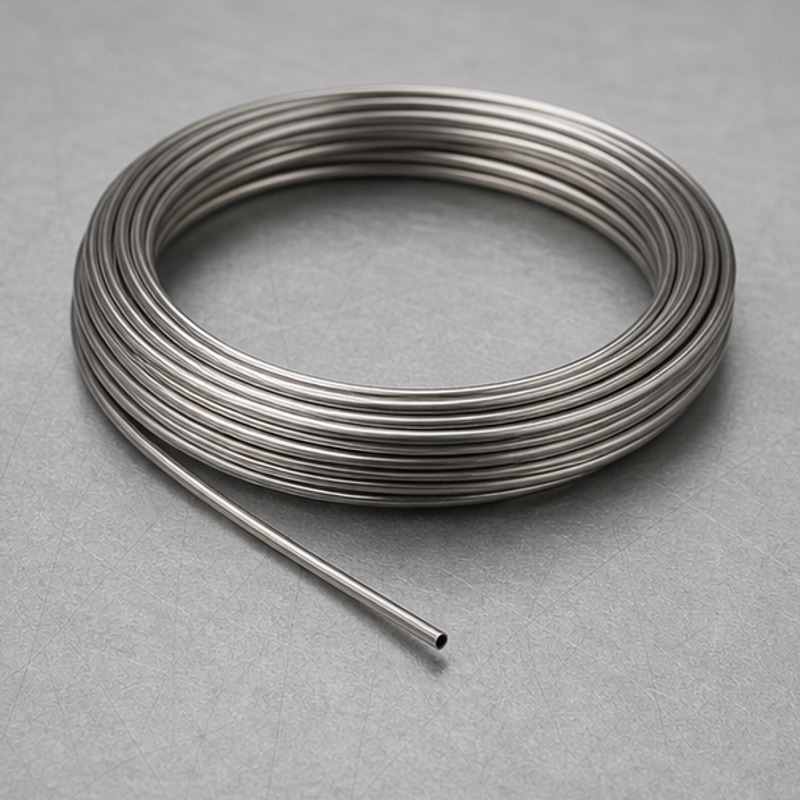
Why Inconel 625 Is Specified for Capillary Tubing
Inconel 625 is not a stainless steel in the 300-series sense, but it is frequently grouped with corrosion-resistant tubing in procurement discussions because it is specified where 304, 316L, 316Ti, or 321 reach their limits. The alloy’s molybdenum and niobium content provides solid-solution strengthening and resistance to pitting and crevice corrosion in chloride-bearing environments. It also maintains useful mechanical properties at cryogenic and elevated temperatures, which is why it appears in aerospace, chemical processing, and analytical instrumentation.
For capillary tubing, the practical benefit is that Inconel 625 can be cold-drawn to small outside diameters and thin walls while retaining enough ductility for bending and flaring. It is not inherently a medical grade or implantable material. Suitability for a medical device depends on the device’s risk assessment, the chosen material condition, surface finish, cleaning validation, and the applicable regulatory pathway.
Applicable Scenarios and Industries
Inconel 625 capillary tubing is typically evaluated for:
- Analytical and laboratory instrumentation: sample transfer lines, chromatography connections, and high-pressure fluid paths where corrosion resistance and low dead volume matter.
- Medical device fluid handling: minimally invasive instruments, catheter components, and diagnostic equipment where a corrosion-resistant small-diameter tube is required. Final suitability depends on the device design, cleaning process, and risk assessment.
- Aerospace and defense: sensor lines, fuel and hydraulic sampling tubes, and thermocouple sheaths exposed to high temperature or chloride environments.
- Chemical and petrochemical: injection probes, pressure sensing lines, and corrosion-resistant sampling systems.
- Semiconductor and high-purity gas systems: where a nickel alloy capillary is selected for corrosion resistance and high-purity surface requirements.
If your application is primarily aqueous at room temperature and does not require the chloride resistance or high-temperature strength of 625, 316L capillary tubing is usually more economical and easier to source. The material selection should be driven by the service environment, not by a generic preference for a higher alloy.
Material Grades and Designations
Inconel 625 is a registered trademark. The generic designation is UNS N06625. Common product forms and specifications include:
| Designation | Type | Typical Use |
|---|---|---|
| UNS N06625 | Alloy | Base designation for Inconel 625 |
| ASTM B444 | Specification | Nickel-chromium-molybdenum alloy tubing |
| ASTM B829 | Specification | General requirements for nickel alloy pipe and tube |
| AMS 5581 | Aerospace material spec | Nickel alloy tubing, corrosion and heat resistant |
| DIN 17752 / 17753 | German standard | Nickel alloy wrought products |
When comparing quotations, confirm the exact specification and material condition. Inconel 625 is available in annealed and cold-worked conditions. Cold-worked tubing can provide higher strength but lower elongation. The applicable condition should be stated on the drawing or purchase order.
OD, ID, Wall Thickness, and Length Considerations
Capillary tubing generally refers to small outside diameters, often from approximately 0.5 mm to 6.35 mm (0.020 in. to 0.250 in.), with wall thicknesses selected to meet pressure, flow, and bending requirements. Exact available ranges depend on the mill, the drawing, and the process route. For Inconel 625, cold drawing to capillary dimensions is feasible, but the alloy’s high strength means that very thin walls and very small IDs require careful process control.
Key dimensional decisions include:
- Outside diameter (OD): driven by fit, ferrule or fitting compatibility, and bending radius.
- Inside diameter (ID): driven by flow rate, pressure drop, and dead volume. For analytical lines, ID tolerance can be as important as OD tolerance.
- Wall thickness: driven by internal pressure, external pressure, bending, and the need to avoid ovality during bending.
- Length: random lengths, fixed lengths, or cut-to-length pieces. For capillary tubing, straight lengths and coil lengths are both common. The preferred form should be stated on the RFQ.
Tolerances for Inconel 625 Capillary Tubing
Tolerance capability depends on the drawing, material condition, process route, and mutual agreement between parties. The following ranges are typical for small-diameter cold-drawn tubing and should be confirmed for your specific size and quantity:
| Parameter | Typical Capillary Range | Notes |
|---|---|---|
| OD tolerance | ±0.025 mm to ±0.10 mm | Tighter tolerances may be possible depending on size and process |
| ID tolerance | ±0.025 mm to ±0.10 mm | Must be specified; ID is often critical for flow |
| Wall thickness tolerance | ±10% of nominal | Depends on OD/ID ratio and drawing practice |
| Concentricity | 0.05 mm to 0.10 mm | Affects bending and pressure performance |
| Straightness | 0.5 mm to 1.5 mm per meter | For straight lengths; coil form is different |
| Length tolerance | ±0.5 mm to ±2.0 mm | For cut-to-length pieces; depends on cut method |
Do not assume that a supplier can hold the tightest tolerance across all sizes. The combination of small OD, thin wall, and high-strength alloy can reduce the achievable tolerance window. If your design requires a specific tolerance, state it on the drawing and ask for a capability review before production.
End Condition and Burr Control
Capillary tubing is often used in fluidic connections where a burr or deformed end can cause leaks, particle generation, or fitting damage. Common end conditions include:
- Saw cut: general purpose, but may leave burrs.
- Deburred cut: mechanically or manually deburred to remove sharp edges.
- Precision cut: clean, square cut with controlled burr height, often required for orbital welding or ferrule connections.
- Chamfered end: for easier insertion into fittings or for weld preparation.
- Flared or beaded end: for specific connection designs.
Burr height and end squareness should be specified if they matter to your assembly. For medical device fluid paths, the end condition may also need to be compatible with cleaning and sterilization processes.
Surface Finish and Cleanliness Requirements
Inconel 625 capillary tubing can be supplied in as-drawn, annealed, pickled, or polished conditions. Surface finish is usually specified as Ra (arithmetic average roughness) or by a visual standard. Typical requirements include:
- Internal surface: Ra values depend on the drawing and application. High-purity and medical applications may require a smoother ID to reduce particle retention and improve cleanability.
- External surface: may be specified for appearance, corrosion resistance, or marking legibility.
- Cleanliness: free of oil, grease, drawing lubricant, and loose particles. For critical applications, specify a cleaning method and verification, such as a cleanliness test or particle count, if required by your quality system.
Do not claim a surface is “medical grade” or “biocompatible” without verification. The appropriate finish and cleaning validation depend on the device and its regulatory requirements.
Inspection Documentation
For Inconel 625 capillary tubing, typical documentation includes:
- Material certification: a mill certificate or certificate of conformance showing the heat number, chemical composition, and mechanical properties.
- Dimensional inspection report: OD, ID, wall thickness, length, and concentricity measurements.
- Visual inspection report: surface condition, end condition, and workmanship.
- Cleanliness or surface finish report: if specified.
- Traceability: heat number and lot identification on the packaging or documents.
The exact documentation package should be agreed before order placement. If your quality system requires specific forms or certificates, include that in the RFQ.
Packaging Considerations
Capillary tubing can be damaged by improper handling. Packaging should protect the tube from bending, crushing, and contamination. Common options include:
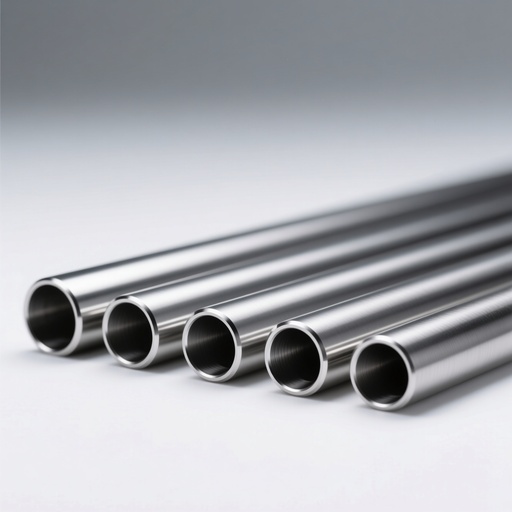
- Straight lengths in rigid tubes or channels with end caps.
- Coils in protective wrapping or containers.
- Individual protective caps or plugs for clean or deburred ends.
- Moisture barrier packaging if required.
- Labeling with material grade, heat number, size, quantity, and lot identification.
If the tubing will be used in a cleanroom or medical assembly area, specify the required packaging cleanliness level and whether the packaging itself must be compatible with your incoming inspection process.
RFQ Information Checklist
To receive an accurate quotation for Inconel 625 stainless steel capillary tubing, include the following in your request:
- Material grade and specification (e.g., UNS N06625, ASTM B444, AMS 5581).
- Material condition (annealed, cold-worked, etc.).
- OD, ID, and wall thickness with tolerances.
- Length and form (straight length, coil, cut-to-length).
- End condition and burr requirement.
- Surface finish and cleanliness requirements.
- Inspection documentation required.
- Packaging requirements.
- Quantity and any scheduled delivery requirements.
- Applicable drawing number and revision.
If a dimension or tolerance is not specified, state whether the supplier may propose a standard. This avoids assumptions during quoting and production.
To request a quotation for Inconel 625 stainless steel capillary tubing, submit your drawings, material grade, quantity, tolerance, surface finish, and inspection requirements through the Healsmed website. The engineering team will review and respond with a technical evaluation.

Healsmed
Leading Stainless Steel Capillary Tube Factory. 1,400+ standard sizes IN STOCK & ready to ship worldwide! High precision, factory-direct price.