Inconel 625 SS Capillary Tube: Material Properties, Manufacturing Tolerances, and Application Guide
When engineers search for “Inconel 625 SS capillary tube,” they are usually trying to resolve a specific conflict: they need the corrosion resistance and high-temperature strength of a nickel-chromium-molybdenum alloy, but they also need it drawn down to capillary dimensions with tight tolerances and clean, burr-free ends. In practice, the term is a hybrid — Inconel 625 is a nickel-based superalloy (UNS N06625), not a stainless steel — but the search intent is clear: sourcing small-diameter Inconel 625 tubing for instruments, sampling systems, or high-temperature fluid handling where 316L will not survive. This guide covers the material properties, manufacturing tolerances, and application considerations that matter when specifying Inconel 625 capillary tube.
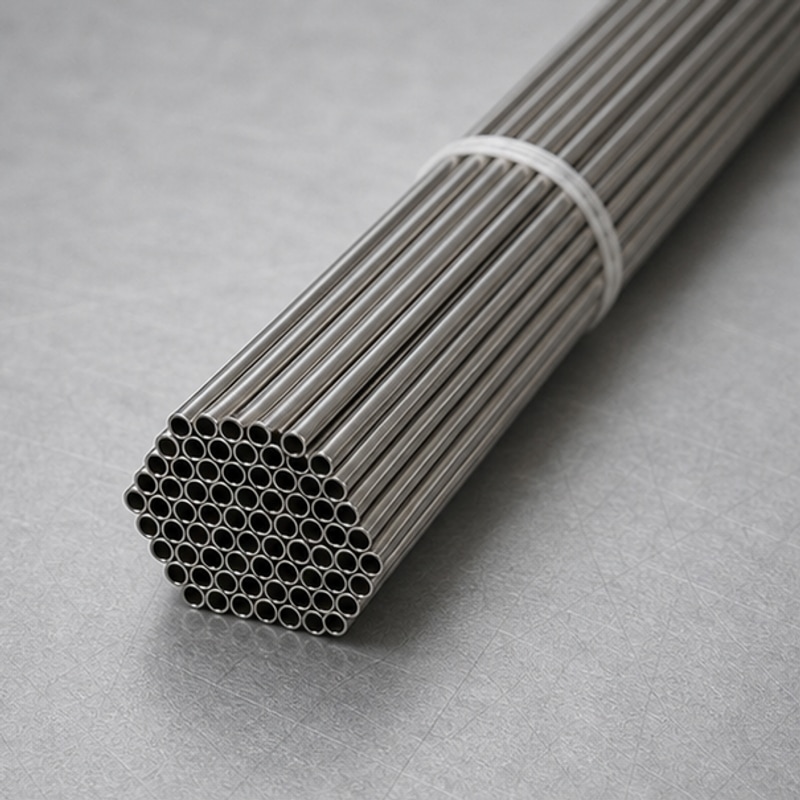
Inconel 625 vs. Stainless Steel: What the Keyword Really Means
The keyword “Inconel 625 SS capillary tube” reflects a common industry shorthand. Inconel 625 is not a stainless steel grade such as 304, 316L, 316Ti, or 321. It is a nickel-based superalloy with a nominal composition of approximately 58% nickel, 20–23% chromium, 8–10% molybdenum, and 3.15–4.15% niobium plus tantalum, per ASTM B444 / ASME SB444 and related specifications. The addition of niobium and molybdenum gives it resistance to pitting, crevice corrosion, and high-temperature oxidation that stainless steels cannot match.
If your application only requires general corrosion resistance at moderate temperatures, a 316L or 316Ti capillary tube may be sufficient and more economical. Inconel 625 becomes relevant when you are dealing with:
- Seawater or chloride-rich environments where pitting resistance is critical
- Service temperatures from cryogenic up to roughly 980°C (1,800°F) in oxidizing conditions, depending on load and environment
- Cyclic thermal exposure where low thermal expansion and high creep resistance matter
- Chemical processing with mixed acids or high-purity fluid pathways
Applicable Scenarios and Industries
Inconel 625 capillary tube is typically specified in applications where the tube is small in diameter but the environment is aggressive. Common scenarios include:
- Oil and gas instrumentation: downhole gauge lines, chemical injection lines, and sampling systems exposed to sour gas or high-pressure chloride brines
- Aerospace and defense: hydraulic and pneumatic sense lines near engines or exhaust zones
- Chemical processing: catalyst sampling, high-purity reagent transfer, and corrosion-resistant sensor sheaths
- Power generation: steam and water sampling lines in supercritical or high-temperature sections
- Medical and analytical instruments: high-pressure fluidic pathways where 316L would corrode or where non-magnetic behavior is required
In medical device contexts, Inconel 625 is sometimes evaluated for its combination of strength, corrosion resistance, and non-magnetic properties. However, material selection for implantable or body-contact devices must be based on the device manufacturer’s own biocompatibility assessment, regulatory pathway, and applicable standards — not on a supplier’s general material description.
Material Grades and Designations
When specifying Inconel 625 capillary tube, the following designations are commonly referenced:
| Designation | Reference |
|---|---|
| UNS N06625 | Unified Numbering System |
| Alloy 625 | Common trade name |
| Inconel 625 | Special Metals trade name |
| 2.4856 | DIN / EN designation |
| NA21 | British designation |
| NC22DNb | AFNOR designation |
For tube product forms, the relevant specifications typically include ASTM B444 (seamless and welded nickel-chromium-molybdenum-niobium alloy pipe and tube) and ASTM B704 for welded tube. Buyers should confirm which specification and condition (annealed, cold-worked, or stress-relieved) applies to their drawing.
OD, ID, Wall Thickness, and Length Considerations
Capillary tube dimensions for Inconel 625 are generally custom-drawn to order. Typical capillary ranges discussed in RFQs include:
- Outer diameter (OD): commonly from about 0.5 mm to 6.35 mm (0.020 in. to 0.250 in.), with smaller or larger sizes possible depending on drawing and mill capability
- Wall thickness: often from 0.05 mm to 1.0 mm, with the wall-to-OD ratio driving drawability and pressure rating
- Length: straight lengths or coiled lengths; coil weights and straightness depend on OD, wall, and temper
Because Inconel 625 work-hardens rapidly, the manufacturing route — whether seamless or welded-and-drawn — affects achievable tolerances, surface finish, and concentricity. These parameters depend on drawing, material condition, process route, and mutual agreement between parties.
Tolerances for Inconel 625 Capillary Tube
Capillary tube tolerances are typically tighter than those for standard instrumentation tubing. The following ranges are commonly discussed, but actual values must be confirmed against the purchase drawing and applicable specification:
| Parameter | Typical discussion range |
|---|---|
| OD tolerance | ±0.02 mm to ±0.10 mm, depending on size and condition |
| ID tolerance | ±0.02 mm to ±0.10 mm, or specified as minimum ID |
| Wall thickness tolerance | ±10% nominal, or tighter by agreement |
| Concentricity | Often specified as a percentage of wall thickness |
| Straightness | Varies with OD and temper; coil or straight forms differ |
These figures are not universal. The achievable tolerance depends on the starting stock, cold-draw schedule, annealing steps, and final sizing operation. Buyers should state whether the critical dimension is OD, ID, or wall, because this influences the process route and inspection plan.
End Condition and Burr Control
Capillary tube is often used in fluidic or pneumatic connections where the end condition affects sealing and flow. Common end conditions include:
- Cleanly cut, deburred ends for compression or ferrule fittings
- Square-cut ends with controlled burr height for orbital welding
- Chamfered or formed ends for specific connector systems
- Sealed, plugged, or capped ends for shipment
Burr control is especially important in small-ID tubing because a burr can restrict flow, trap particles, or interfere with a fitting. The acceptable burr height and inspection method should be stated on the drawing or in the purchase order.
Surface Finish and Cleanliness Requirements
Surface finish and cleanliness specifications for Inconel 625 capillary tube vary widely by application. In analytical or high-purity fluid systems, buyers may specify:
- Maximum surface roughness (Ra) on the ID
- Freedom from drawing lubricants, oxides, or particulates
- Passivation or pickling condition
- Cleanroom packaging or double-bagging
For general industrial service, standard mill finish and normal handling cleanliness may be acceptable. The key is to define the requirement in the RFQ, because cleaning and surface treatment add cost and lead time.
Inspection Documentation
Depending on the application and the buyer’s quality system, documentation for Inconel 625 capillary tube may include:
- Material test certificate (MTC) with chemical composition and mechanical properties traceable to the heat number
- Dimensional inspection report for OD, ID, wall, and length
- Surface finish or roughness report, if specified
- Hydrostatic or pneumatic pressure test, if required
- Eddy current or ultrasonic test, if specified
- Certificate of conformance (CoC)
Not every order requires every document. Buyers should list the required inspection documents in the RFQ so the supplier can quote the correct inspection level.
Packaging Considerations
Inconel 625 capillary tube is susceptible to mechanical damage and surface contamination during shipping. Packaging discussions often cover:
- Straight lengths in rigid tubes or wooden boxes with end protection
- Coils supported to prevent kinking or flattening
- Plastic end caps or plugs to protect burr-free ends
- Moisture barrier or desiccant for long transit or storage
- Labeling with heat number, dimensions, and quantity
Packaging requirements should be agreed in advance, especially for export shipments or cleanroom-bound material.
RFQ Information Checklist
To receive an accurate quotation for Inconel 625 capillary tube, include the following in your request:
- Material grade and specification (e.g., UNS N06625, ASTM B444)
- OD, ID, and wall thickness with tolerances
- Length and form (straight or coil)
- End condition and burr requirement
- Surface finish and cleanliness requirement
- Quantity and unit (pieces, meters, or kilograms)
- Inspection documents required
- Packaging and labeling instructions
- Any special testing or certification needs
To request a quotation for Inconel 625 capillary tube, submit your drawings, material grade, quantity, tolerance, surface finish, and inspection requirements through the Healsmed website. The engineering team will review and respond with a technical evaluation.

Healsmed
Leading Stainless Steel Capillary Tube Factory. 1,400+ standard sizes IN STOCK & ready to ship worldwide! High precision, factory-direct price.