Inconel 625 SS Capillary Tubing: Material Properties, Manufacturing Tolerances, and Application Guide
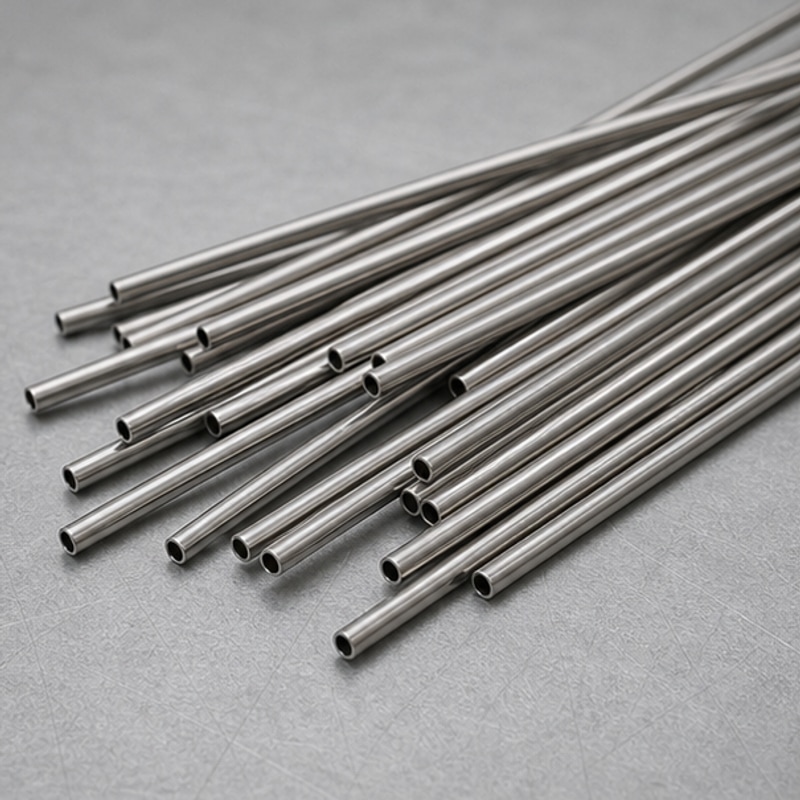
When an engineer searches for Inconel 625 SS capillary tubing, the request usually involves a high-pressure, high-temperature, or corrosive service condition where standard 316L stainless steel is expected to fall short. The sourcing goal is a small-diameter tube that combines the mechanical strength of a nickel-chromium alloy with the dimensional precision of capillary tubing—typically for instrumentation, analytical equipment, or medical device fluid paths. This article covers material properties, manufacturing tolerances, and specification checkpoints for procurement.
What Inconel 625 Is—and Why It Is Not Stainless Steel
Inconel 625 is a nickel-based superalloy, not a stainless steel grade. The keyword “Inconel 625 SS capillary tubing” is common in search queries, but the material is governed by nickel alloy specifications rather than the 300-series stainless steel standards. This distinction matters for material certification, welding procedures, and corrosion analysis.
Typical chemistry for UNS N06625 includes nickel (58.0% min), chromium (20.0–23.0%), molybdenum (8.0–10.0%), and niobium plus tantalum (3.15–4.15%). These ranges are specified in ASTM B444 / ASME SB444 for seamless and welded nickel-chromium-molybdenum alloy pipe and tube. The niobium addition stabilizes the alloy against sensitization and contributes to its high-temperature strength.
Mechanical properties depend on condition and product form. For annealed tubing, typical room-temperature values include tensile strength around 120 ksi (827 MPa) and yield strength around 60 ksi (414 MPa), with elongation in the 30–40% range. These values are indicative and should be confirmed against the actual mill certificate and applicable specification for the ordered temper.
Applicable Scenarios and Industries
Inconel 625 capillary tubing is specified where resistance to chlorides, seawater, and high-temperature oxidation is required alongside small-diameter geometry. Common applications include:
- Downhole instrumentation and pressure monitoring in oil and gas
- Analytical instrumentation sample lines and probe sheaths
- Aerospace and defense hydraulic or fuel system sense lines
- Chemical process sampling systems handling aggressive media
- High-temperature thermocouple and sensor protection tubes
- Medical device fluid paths where corrosion resistance and strength are both required
In medical device design, Inconel 625 is generally selected for its corrosion resistance and mechanical properties, not as an implant material. Any implant or long-term body-contact use requires separate biocompatibility evaluation and regulatory review. Healsmed does not claim implant suitability or biocompatibility for this material.
OD, ID, Wall Thickness, and Length Considerations
Capillary tubing for Inconel 625 is typically produced in outside diameters from approximately 0.010 in (0.25 mm) up to 1.0 in (25.4 mm), with wall thicknesses ranging from about 0.002 in (0.05 mm) to 0.065 in (1.65 mm). The exact available range depends on the drawing, material condition, process route, and mutual agreement between parties.
Because Inconel 625 work-hardens rapidly, small-diameter tubing with tight ID tolerances may require multiple draw passes with intermediate annealing. This affects both cost and lead time. When specifying, define:
- Nominal OD and ID, or OD and wall thickness
- Whether ID or wall is the critical dimension
- Straight lengths or coil form, and maximum coil weight
- Whether the tube will be bent, flared, or welded downstream
Tolerances for Inconel 625 Capillary Tubing
Capillary tubing tolerances are tighter than standard instrumentation tubing. Typical ranges for cold-drawn small-diameter tubing are shown below. These are general industry ranges; the actual tolerance must be confirmed against the drawing and the manufacturer’s capability for the specific size.
| Parameter | Typical Range | Notes |
|---|---|---|
| OD tolerance | ±0.001 in to ±0.003 in | Tighter on smaller OD |
| ID tolerance | ±0.001 in to ±0.004 in | Depends on wall and draw route |
| Wall thickness tolerance | ±10% nominal | Confirm for thin walls |
| Concentricity | 10% of wall max | Critical for flow and burst |
| Straightness | 0.010 in per 3 ft typical | Varies with OD and temper |
| Length tolerance | ±0.125 in typical cut length | Depends on cut method |
End Condition and Burr Control
End condition affects downstream assembly, welding, and fluid flow. Common options include:
- Clean cut with deburred OD and ID
- Square cut within a specified angular tolerance
- Chamfered ends for insertion into fittings
- Sealed, plugged, or capped ends for contamination control
Burr control is especially important in capillary sizes where a small burr can restrict flow or create a particle source. Specify maximum allowable burr height and whether both ends require inspection. For medical or analytical use, an edge inspection under magnification may be required.
Surface Finish and Cleanliness
Surface finish is specified as Ra or RMS and depends on the draw process, mandrel condition, and any post-draw cleaning. Typical as-drawn capillary tubing may be in the 16–32 µin Ra range, while finer finishes require additional processing. State whether the finish applies to OD, ID, or both.
Cleanliness requirements vary by application. For medical device or analytical fluid paths, specify:
- Maximum allowable particle count or size
- Freedom from oil, grease, and drawing lubricant residue
- Cleaning method (for example, solvent, alkaline, or ultrasonic)
- Whether passivation is required, and to which specification
Do not assume a material is “medical grade” by name. Cleanliness and finish are process outcomes that must be specified and verified.
Inspection Documentation
For procurement and quality records, request documentation that matches the application risk level. Typical documents include:
- Material test certificate (mill cert) with chemistry and mechanical properties traceable to heat number
- Dimensional inspection report for OD, ID, wall, and length
- Concentricity or wall variation report where applicable
- Surface finish report if specified
- Cleanliness or particle count report if specified
- Certificate of conformance to the purchase order and drawing
Confirm in advance which documents are standard and which are premium or third-party services.
Packaging Considerations
Inconel 625 capillary tubing is susceptible to mechanical damage and contamination during shipping. Packaging should protect both dimensions and cleanliness. Common practices include:
- Straight lengths in rigid tubes or channels with end caps
- Coils supported to prevent kinking and cross-over
- Individually bagged or wrapped tubes for clean applications
- Desiccant and moisture barrier for long storage
- Labeling with heat number, size, quantity, and purchase order reference
RFQ Information Checklist
To receive an accurate quotation and technical evaluation, include the following in your request:
- Material grade and specification (for example, UNS N06625, ASTM B444)
- OD, ID, and wall thickness with tolerances
- Length, cut tolerance, and whether straight or coil
- End condition and burr requirement
- Surface finish requirement (Ra or RMS, OD and/or ID)
- Cleanliness requirement and cleaning method
- Inspection documents required
- Packaging and labeling requirements
- Quantity and any scheduled delivery requirements
- Drawing number and revision
To request a quotation for Inconel 625 SS capillary tubing, submit your drawings, material grade, quantity, tolerance, surface finish, and inspection requirements through the Healsmed website. The engineering team will review and respond with a technical evaluation.

Healsmed
Leading Stainless Steel Capillary Tube Factory. 1,400+ standard sizes IN STOCK & ready to ship worldwide! High precision, factory-direct price.