316Ti Stainless Steel Capillary Tubing: Material Properties, Manufacturing Tolerances, and Application Guide
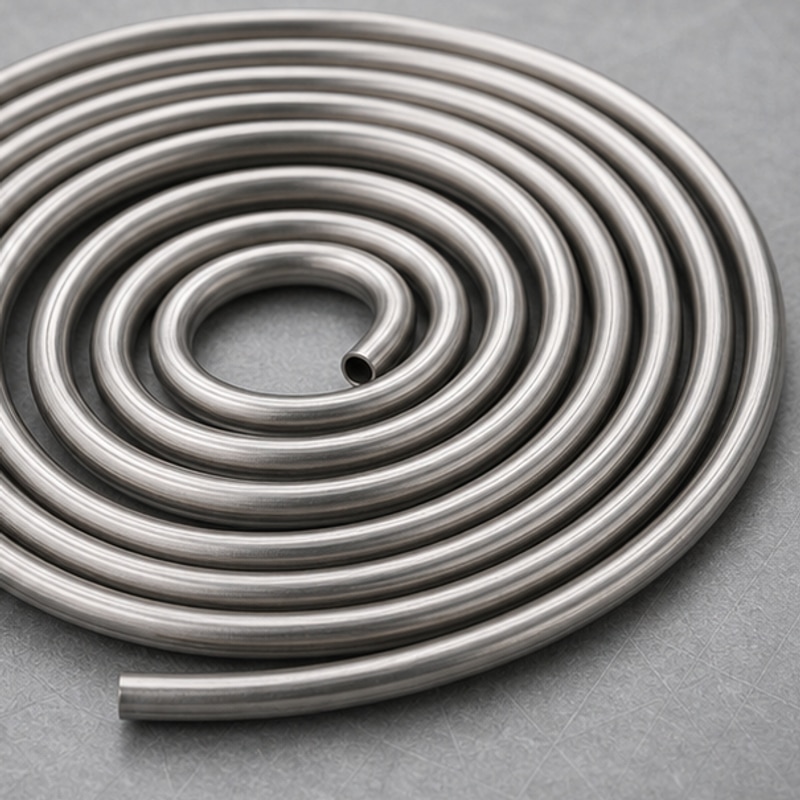
When selecting 316Ti stainless steel capillary tubing for precision fluid handling or sensor applications, engineers must evaluate not only the base corrosion resistance but also the stabilized microstructure that differentiates this grade from standard 316 or 316L. 316Ti stainless steel capillary tubing offers improved resistance to intergranular corrosion in welded or high-temperature service, making it a reliable choice for medical devices, analytical instruments, and industrial OEM assemblies where dimensional stability and material integrity are non-negotiable.
Chemical Composition and Mechanical Properties of 316Ti Stainless Steel
316Ti is a titanium-stabilized austenitic stainless steel, derived from Type 316 with the addition of titanium (Ti) in a ratio of approximately 5× (C + N) to prevent chromium carbide precipitation during welding or service in the 425–900°C range. The nominal chemical composition per ASTM A269 and ASTM A213 is as follows:
| Element | Composition Range (wt%) |
|---|---|
| Carbon | ≤ 0.08 |
| Manganese | ≤ 2.00 |
| Phosphorus | ≤ 0.045 |
| Sulfur | ≤ 0.030 |
| Silicon | ≤ 0.75 |
| Chromium | 16.0 – 18.0 |
| Nickel | 10.0 – 14.0 |
| Molybdenum | 2.0 – 3.0 |
| Titanium | ≥ 5× (C + N) and ≤ 0.70 |
Typical mechanical properties for 316Ti capillary tubing in the annealed condition include a tensile strength of 515–690 MPa, yield strength (0.2% offset) of ≥ 205 MPa, and elongation in 2 inches of ≥ 35%. These values ensure adequate ductility for cold drawing and forming while maintaining structural integrity under pressure.
Understanding 316Ti: What Buyers Actually Mean
When procurement or engineering specifies 316Ti stainless steel capillary tubing, they are typically seeking a material that offers corrosion resistance similar to 316L but with enhanced resistance to sensitization. Unlike standard 316, which can suffer from chromium depletion at grain boundaries when exposed to welding heat or service temperatures above 425°C, 316Ti uses titanium to preferentially form carbides, preserving the chromium in solid solution. This makes 316Ti suitable for applications where the tubing may see intermittent high-temperature exposure or where welded joints cannot be solution annealed after fabrication.
Dimensional Specifications and Tolerance Classes for Capillary Tubing
Healsmed supplies 316Ti stainless steel capillary tubing in outer diameters (OD) ranging from 0.5 mm to 12.7 mm, with wall thicknesses from 0.05 mm to 2.0 mm. Standard tolerances for drawn capillary tubing are as follows:
| Dimension | Standard Tolerance | Precision Tolerance (upon request) |
|---|---|---|
| Outer Diameter (OD) | ± 0.05 mm | ± 0.025 mm |
| Wall Thickness | ± 10% of nominal | ± 5% of nominal |
| Length (cut-to-length) | ± 0.5 mm | ± 0.1 mm |
Tighter tolerances are achievable through multiple cold drawing passes and intermediate annealing, but these increase lead time and cost. For critical applications such as chromatography columns or hypodermic needle assemblies, specifying precision tolerances is recommended.
Seamless vs Welded: Which Manufacturing Route to Choose
316Ti capillary tubing is available in both seamless and welded forms. Seamless tubing is produced by piercing a solid billet and cold drawing to final dimensions, offering uniform wall structure and no longitudinal weld seam. This is the preferred route for high-pressure fluidic systems, medical implants, and applications requiring absolute leak integrity. Welded 316Ti tubing is formed from strip and longitudinally welded, then cold drawn to reduce the weld bead and improve dimensional consistency. Welded tubing is generally more economical for larger OD ranges (above 6 mm) and non-critical industrial uses. For capillary tubing below 3 mm OD, seamless is the dominant choice due to the difficulty of maintaining weld quality at small diameters.
Manufacturing Process: Cold Drawing, Annealing, Straightening, and Cutting
The production of 316Ti stainless steel capillary tubing involves several controlled steps. Cold drawing reduces the tube diameter and wall thickness through a series of dies, with intermediate annealing at 950–1050°C to restore ductility and relieve work hardening. After final drawing, the tubing is straightened using multi-roller straighteners to achieve a camber of less than 0.5 mm per meter. Cutting is performed using precision abrasive saws or laser cutting for clean, burr-free ends. For medical-grade tubing, electropolishing and ultrasonic cleaning are often added to remove surface contaminants and improve biocompatibility.
Corrosion Resistance and Maximum Service Temperature
316Ti offers excellent resistance to general corrosion in chloride-containing environments, though it is not immune to pitting in highly aggressive conditions (e.g., seawater at elevated temperatures). Its pitting resistance equivalent number (PREN) is approximately 24–26, similar to 316L. The key advantage of 316Ti over 316L is its maximum service temperature: 316Ti can be used continuously up to 800°C in oxidizing atmospheres, whereas 316L is typically limited to 450°C to avoid sensitization. In reducing or sulfur-containing environments, consult corrosion tables for specific compatibility.
Industry-Specific Applications for 316Ti Capillary Tubing
Common applications include:
- Medical devices: Catheter shafts, drug delivery cannulas, and biopsy needle assemblies where sterilization cycles (autoclaving) demand sensitization resistance.
- Analytical instrumentation: Gas chromatography columns, mass spectrometer inlet lines, and sample loops where inertness and dimensional precision are critical.
- Industrial OEM: Thermocouple sheaths, heat exchanger tubing, and hydraulic control lines in environments with intermittent high-temperature exposure.
Quality Control and Inspection Protocol
Each lot of 316Ti capillary tubing at Healsmed undergoes dimensional inspection using laser micrometers and air gauges, with 100% OD and wall measurement for precision orders. Material traceability is maintained via mill test reports (MTRs) per EN 10204 Type 3.1 or 3.2. Additional non-destructive testing (eddy current or hydrostatic pressure testing) is available upon request. Surface finish is verified against specified roughness (Ra 0.4 µm typical for drawn tubing, Ra 0.2 µm achievable with electropolishing).
For more information about 316Ti stainless steel capillary tubing, contact Healsmed’s engineering team with your material grade, drawing, tolerance requirements, and quantity. Submit inquiries through the Healsmed website for prompt technical review and quotation.
Conclusion
316Ti stainless steel capillary tubing provides a distinct advantage over standard 316 grades when welded joints or elevated service temperatures are unavoidable. Its titanium stabilization prevents intergranular corrosion without sacrificing the mechanical properties required for precision cold drawing. Engineers evaluating material options for medical, analytical, or industrial capillary applications should consider 316Ti when the operating environment includes temperatures above 450°C or repeated autoclave cycles.
By understanding the chemical composition, dimensional tolerance limits, and manufacturing capabilities available from suppliers like Healsmed, procurement teams can specify the correct grade and tolerance class for their specific application. Always verify the exact titanium-to-carbon ratio and request MTRs to confirm compliance with ASTM A269 or equivalent standards.

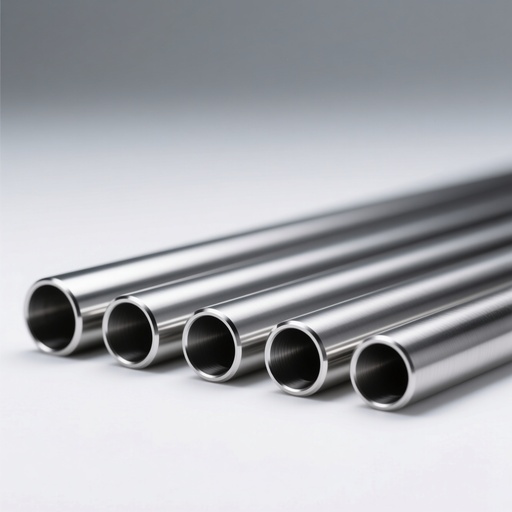
Healsmed
Leading Stainless Steel Capillary Tube Factory. 1,400+ standard sizes IN STOCK & ready to ship worldwide! High precision, factory-direct price.