316Ti Stainless Steel Capillary Tube: Material Properties, Manufacturing Tolerances, and Application Guide
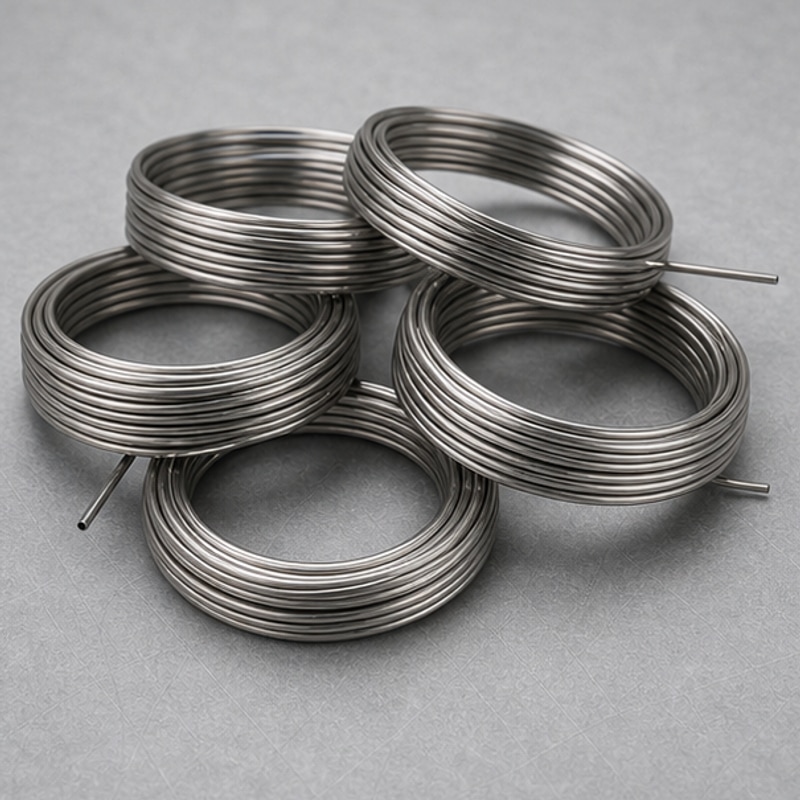
When selecting a 316Ti stainless steel capillary tube for a demanding application, the choice often comes down to balancing corrosion resistance with elevated temperature stability. 316Ti, a titanium-stabilized variant of 316 stainless steel, offers improved resistance to intergranular corrosion in welded or high-temperature service. This article provides procurement and design engineers with the technical data needed to evaluate 316Ti capillary tubing for medical devices, analytical instruments, and industrial systems.
Understanding 316Ti Stainless Steel: Stabilization and Practical Implications
Standard 316 stainless steel contains molybdenum for enhanced pitting corrosion resistance, but when exposed to temperatures in the 450–850°C range, chromium carbides can precipitate at grain boundaries, reducing corrosion resistance—a phenomenon known as sensitization. 316Ti addresses this by adding titanium (Ti) in a ratio of at least 5× the carbon content. Titanium preferentially forms carbides, leaving chromium available for corrosion protection. For capillary tube applications that involve welding, brazing, or intermittent high-temperature exposure, 316Ti provides a practical solution without requiring post-weld heat treatment.
Chemical Composition and Mechanical Properties of 316Ti Stainless Steel Capillary Tube
Typical chemical composition ranges for 316Ti (UNS S31635) are as follows (weight percent):
| Element | Composition Range (%) |
|---|---|
| Carbon | ≤ 0.08 |
| Manganese | ≤ 2.00 |
| Silicon | ≤ 0.75 |
| Phosphorus | ≤ 0.045 |
| Sulfur | ≤ 0.030 |
| Chromium | 16.0 – 18.0 |
| Nickel | 10.0 – 14.0 |
| Molybdenum | 2.00 – 3.00 |
| Titanium | 5×C min – 0.70 |
Mechanical properties for annealed 316Ti capillary tube typically meet or exceed the following:
| Property | Value |
|---|---|
| Tensile Strength | ≥ 515 MPa (75 ksi) |
| Yield Strength (0.2% offset) | ≥ 205 MPa (30 ksi) |
| Elongation in 2″ | ≥ 40% |
| Hardness (Rockwell B) | ≤ 95 |
316Ti retains useful mechanical properties up to approximately 800°C, though oxidation resistance begins to decrease above 650°C. For continuous service, 316Ti is typically rated to 925°C in non-corrosive environments.
Dimensional Specifications and Tolerance Classes for Capillary Tubing
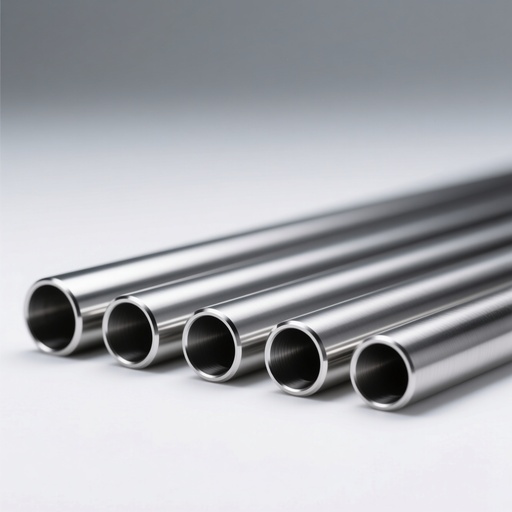
316Ti stainless steel capillary tube is manufactured in a wide range of dimensions. Standard outer diameters range from 0.5 mm to 12.7 mm, with wall thicknesses from 0.05 mm to 2.0 mm. Tolerance expectations depend on the drawing process and final application:
- Standard drawn tolerance: ±0.05 mm on OD for diameters above 3.0 mm; ±0.025 mm for smaller diameters.
- Precision drawn tolerance: ±0.013 mm on OD achievable for specialized applications (e.g., chromatography columns or medical catheters).
- Wall thickness tolerance: Typically ±10% of nominal wall, with tighter controls possible for thin-wall applications.
- Straightness: 1 mm per meter is standard; 0.5 mm per meter available for automated assembly.
Lengths are commonly supplied in random mill lengths (1–6 m) or cut-to-length with ±0.5 mm tolerance. For high-volume OEM applications, coil forms are also available in certain sizes.
Manufacturing Process: Cold Drawing, Annealing, Straightening, and Cutting
Capillary tube manufacturing begins with either seamless hollows or welded tube stock. For 316Ti, the production sequence typically involves:
Cold drawing: The tube is pulled through a series of dies and over a mandrel to reduce OD and wall thickness. Multiple passes are required, with intermediate annealing to restore ductility. 316Ti work-hardens at a rate similar to 316L, so draw schedules are designed to avoid excessive reduction per pass.
Annealing: After cold drawing, the tube is annealed in a controlled atmosphere furnace at 1040–1120°C, followed by rapid cooling. This step ensures full austenitic structure, eliminates residual stresses, and maintains corrosion resistance. For 316Ti, the stabilization anneal is not required, but the solution anneal must be sufficient to dissolve any titanium carbides that may have formed during processing.
Straightening: Rotary straighteners or multi-roller straighteners are used to achieve the required straightness. For capillary tubes below 1.0 mm OD, straightening may be performed on a tension leveler to avoid surface marking.
Cutting: Abrasive cutting, laser cutting, or mechanical shearing is used depending on tube size and end finish requirements. Deburring is standard for most medical and instrumentation applications.
Seamless vs Welded 316Ti Capillary Tube: A Brief Comparison
Both seamless and welded manufacturing routes are available for 316Ti capillary tube. Seamless tube is produced from a solid billet that is pierced and then cold drawn. It offers uniform wall thickness and no weld seam, which is critical for high-pressure or fatigue-sensitive applications. Welded tube starts from strip that is formed and longitudinally welded, then cold drawn to size. For 316Ti, welded tube can be supplied in the as-welded condition or after full drawing. The weld zone in drawn welded tube is often indistinguishable from the base metal. Welded tube is generally more economical for larger diameters and thinner walls, but seamless remains preferred for OD below 3.0 mm or when internal cleanliness is paramount.
Corrosion Resistance and Service Environment Considerations
316Ti offers corrosion resistance comparable to 316L in most environments, with the added benefit of resistance to intergranular corrosion after welding or short-term high-temperature exposure. It performs well in:
- Chloride-containing environments (up to 1000 ppm Cl⁻ at moderate temperatures)
- Organic acids, phosphoric acid, and dilute sulfuric acid
- Marine atmospheres (though pitting may occur in stagnant seawater)
- Pharmaceutical and clean steam systems
In strongly reducing environments (e.g., hydrochloric acid), 316Ti is not recommended. For applications involving stress corrosion cracking risk, nickel alloys or duplex grades should be considered.
Industry-Specific Applications for 316Ti Stainless Steel Capillary Tube
Common applications for 316Ti capillary tubing include:
- Medical devices: Guidewire sheaths, biopsy needle cannulas, and fluid delivery lines where the tube sees autoclave sterilization or repeated steam exposure.
- Analytical instrumentation: Sample loops, transfer lines for gas chromatography, and high-performance liquid chromatography (HPLC) systems requiring inertness and low outgassing.
- Industrial sensors: Thermowells, pressure sensor capillaries, and hydraulic control lines in chemical processing environments.
- Heat exchangers: Small-diameter tube bundles for laboratory or pilot-scale equipment operating at moderate temperatures.
Quality Control and Inspection Protocol
Standard inspection for 316Ti capillary tube includes:
- Dimensional checks: OD, ID, wall thickness, and ovality measured using laser micrometers or air gauges.
- Surface finish: Visual inspection under controlled lighting; roughness measurement (Ra) per ASTM B912 for medical grades.
- Mechanical testing: Tensile and hardness tests per ASTM A1016.
- Corrosion testing: Intergranular corrosion test per ASTM A262 Practice E (Strauss test) for weldable grades.
- Non-destructive testing: Eddy current or ultrasonic testing for seamless tube; hydrostatic or pneumatic pressure testing for high-pressure applications.
For medical applications, additional cleanliness testing (particulate count, endotoxin, or biocompatibility per ISO 10993) may be specified.
Procurement Checklist for 316Ti Stainless Steel Capillary Tube
When specifying 316Ti capillary tube, include the following in your procurement documentation:
- Material grade and applicable standard (ASTM A269, ASTM A213, or customer-specific)
- OD, wall thickness, and tolerance class
- Length requirements (mill lengths, cut-to-length, or coil)
- Surface finish specification (e.g., bright annealed, pickled, or electrophished)
- End finish (square cut, deburred, chamfered)
- Packaging requirements (individual sleeves, bulk bundles, or clean-room packaging)
- Certification requirements (EN 10204 Type 3.1 or 3.2, mill test reports)
Avoid specifying 316Ti for applications that do not require stabilization—if the operating temperature never exceeds 400°C, 316L is typically sufficient and more cost-effective.
For more information about 316Ti stainless steel capillary tube, contact Healsmed’s engineering team with your material grade, drawing, tolerance requirements, and quantity. Submit inquiries through the Healsmed website for prompt technical review and quotation.
Conclusion
316Ti stainless steel capillary tube offers a specific advantage over standard 316 and 316L grades when welded components or intermittent high-temperature service is involved. Its titanium stabilization prevents sensitization, allowing engineers to design assemblies that require brazing, welding, or exposure to moderate temperatures without sacrificing corrosion resistance. The material’s mechanical properties and dimensional versatility make it suitable for a broad range of medical, analytical, and industrial applications.
When evaluating suppliers, focus on process control during cold drawing and annealing, as these steps directly affect final tolerances and material integrity. A well-documented inspection protocol and clear communication of dimensional requirements will ensure the capillary tube meets the intended performance criteria. For OEMs and system integrators, 316Ti remains a reliable choice where standard austenitic grades fall short.

Healsmed
Leading Stainless Steel Capillary Tube Factory. 1,400+ standard sizes IN STOCK & ready to ship worldwide! High precision, factory-direct price.