Inconel 825 Seamless Capillary Tubing: Material Properties, Manufacturing Tolerances, and Application Guide
When engineers and procurement teams search for Inconel 825 seamless capillary tubing, they are typically sourcing a small-diameter, corrosion-resistant nickel-iron-chromium alloy tube for instrumentation, sampling systems, or high-purity fluid handling where carbon steel or standard stainless grades would fail. The challenge is not finding “a tube” — it is finding a supplier who can deliver seamless construction, controlled tolerances, clean inner surfaces, and documented material traceability in one package. This guide covers what matters when specifying and purchasing UNS N08825 capillary tubing.
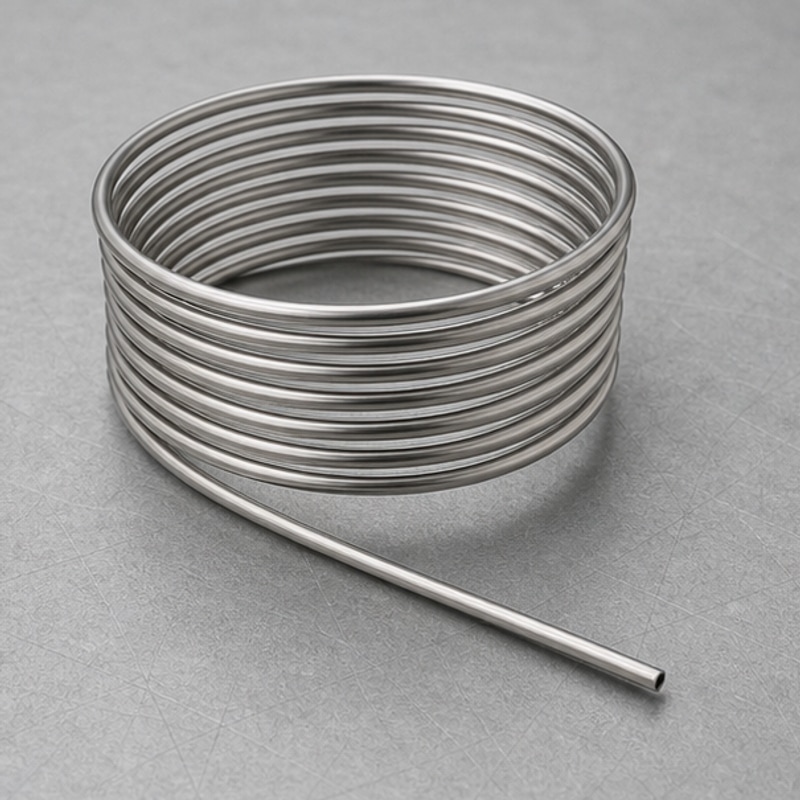
What Inconel 825 Seamless Capillary Tubing Is Used For
Inconel 825 (UNS N08825, also covered by DIN 2.4858 and EN NiCr21Mo) is a nickel-iron-chromium alloy with additions of molybdenum, copper, and titanium. The combination resists both reducing and oxidizing acids, chloride-induced pitting, and stress-corrosion cracking in many environments. That profile drives its use in several industries:
- Oil and gas instrumentation: downhole gauge lines, chemical injection lines, and sampling systems exposed to sour gas or CO2-rich fluids.
- Chemical processing: capillary lines for analyzers, dosing systems, and pressure transmitters handling sulfuric or phosphoric acid streams.
- Power generation: sampling and sensing lines in flue-gas desulfurization and nuclear auxiliary systems (subject to project-specific qualification).
- Medical and analytical equipment: high-purity fluid paths where corrosion resistance and clean inner surfaces are required — though the buyer must verify biocompatibility and cleaning validation against their own regulatory pathway.
- Aerospace and defense: hydraulic and pneumatic sense lines where weight, corrosion resistance, and pressure integrity matter.
Seamless construction is specified when the application cannot tolerate a longitudinal weld that may act as a corrosion initiation site or a leak path under vibration and thermal cycling.
Material Grade and Designations
Inconel 825 is the trade name; the standardized designations buyers will see on mill certificates include:
| System | Designation |
|---|---|
| UNS | N08825 |
| DIN / W.Nr. | 2.4858 |
| EN | NiCr21Mo |
| AFNOR | NC21FeDU |
Typical chemical composition (weight %, per ASTM B423 / ASME SB-423 for seamless pipe and tube) includes approximately: Ni 38–46%, Cr 19.5–23.5%, Fe balance, Mo 2.5–3.5%, Cu 1.5–3.0%, Ti 0.6–1.2%, C ≤0.05%, Mn ≤1.0%, S ≤0.03%. Mechanical properties for annealed seamless tube are typically: tensile strength ≥ 586 MPa (85 ksi), yield strength ≥ 241 MPa (35 ksi), elongation ≥ 30%. These values are minimums for the annealed condition and vary with size and test direction — always confirm against the applicable specification and the mill certificate for the actual heat.
If a project references “Inconel 825” without a specification, clarify whether the requirement is ASTM B423, B163 (condenser and heat exchanger tubes), B704/B705 (welded), or a customer-specific standard. Seamless capillary is most commonly ordered to ASTM B423 or an equivalent aerospace/medical specification.
OD, ID, Wall Thickness, and Length
Capillary tubing is generally defined by outside diameter (OD) and wall thickness, with inside diameter (ID) derived. Common capillary size ranges for Inconel 825 seamless tube include OD from approximately 0.5 mm to 12.7 mm (0.020″ to 0.500″), with wall thicknesses from roughly 0.05 mm to 1.5 mm. Exact availability depends on mill capability, drawing requirements, and whether the tube is cold-drawn or cold-rolled.
Length options typically include:
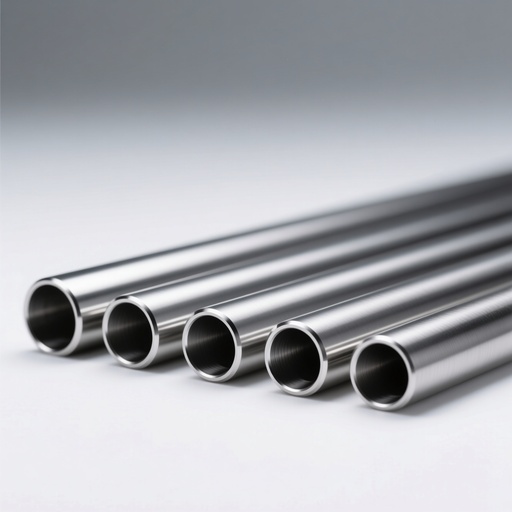
- Straight lengths in random or fixed cut lengths (e.g., 3 m, 6 m) — limited by OD and wall ratio.
- Coiled lengths for instrumentation and downhole applications, often in continuous lengths up to several hundred meters depending on size and supplier capability.
- Precision cut-to-length pieces for medical or analytical devices, where the buyer specifies tolerance on overall length.
Because Inconel 825 work-hardens rapidly, very small OD with very thin wall may require multiple drawing passes with intermediate annealing. That affects both cost and achievable tolerance. Buyers should state whether the tube will be further processed (bent, flared, welded, or swaged) so the supplier can advise on temper and surface condition.
Tolerances for Seamless Capillary Tubing
Capillary tube tolerances are tighter than standard pipe or mechanical tube. Typical ranges that suppliers work to — subject to drawing, material condition, process route, and mutual agreement — include:
| Parameter | Typical Capillary Range |
|---|---|
| OD tolerance | ±0.02 mm to ±0.10 mm, depending on size and specification |
| Wall thickness tolerance | ±5% to ±10% of nominal wall |
| ID tolerance | Derived from OD and wall; often specified as ±0.02 mm to ±0.05 mm for precision applications |
| Concentricity (wall eccentricity) | Typically 5–10% of wall thickness |
| Straightness | Varies by length and OD; often expressed as mm per meter |
| Length tolerance | ±1 mm to ±3 mm for cut lengths, depending on saw or laser method |
These are not universal values. The correct approach is to specify the functional requirement (e.g., flow rate, pressure rating, fit into a ferrule) and let the supplier confirm achievable tolerance for the chosen size and condition.
End Condition and Burr Control
Capillary tube ends are often the first place a system leaks or a sample contaminates. Buyers should specify:
- Cut method: saw cut, laser cut, or abrasive cut — each leaves a different edge quality.
- Deburring: internal and external burr removal, often required for medical and analytical applications.
- End squareness: important for butt welding or ferrule sealing.
- End finish: chamfered, radiused, or plain cut.
For high-purity or medical fluid paths, specify burr-free ends and a defined end inspection method (visual, borescope, or dimensional).
Surface Finish and Cleanliness
Inconel 825 capillary tubing can be supplied in several surface conditions:
- As-drawn: typical mill finish, suitable for many industrial applications.
- Annealed / pickled: oxide-free surface after heat treatment.
- Bright annealed: controlled atmosphere anneal for cleaner surface, common for instrumentation and semiconductor-adjacent uses.
- Electropolished: for high-purity, low-particulate, or corrosion-critical inner surfaces.
Cleanliness requirements should be stated explicitly: e.g., maximum particle count, oil and grease limit, or a specified cleaning and passivation procedure. “Clean” is not a specification. For medical device fluid paths, the buyer is responsible for validating the cleaning process against their own quality system and regulatory requirements.
Inspection Documentation
For Inconel 825 seamless capillary tubing, typical documentation includes:
- Mill test certificate (MTC) to EN 10204 3.1 or equivalent, showing heat number, chemical composition, and mechanical properties.
- Dimensional inspection report for OD, ID, wall, length, and straightness.
- Surface finish and cleanliness report, if specified.
- Hydrostatic or pneumatic pressure test report, if required.
- Eddy current or ultrasonic test report for seam integrity, if specified.
- Certificate of conformance (CoC) to the purchase order.
Buyers should state which documents are mandatory and whether third-party inspection (e.g., SGS, TUV, or customer witness) is required. Note that no supplier can claim FDA approval or CE marking for a material; those are product- or device-level regulatory statuses, not material properties.
Packaging Considerations
Capillary tubing is easily bent or contaminated in transit. Packaging should protect both dimensions and surface:
- Straight lengths: wooden or plastic carriers, with end caps or plastic plugs to protect ends and ID.
- Coils: wound on a core with a minimum bend radius that avoids plastic deformation, wrapped in protective material.
- Cleanliness-critical orders: individual bags, nitrogen purge, or vacuum packaging as agreed.
- Identification: heat number, size, condition, and quantity on each bundle or coil.
RFQ Information Checklist
To get an accurate quotation for Inconel 825 seamless capillary tubing, include the following in your request:
- Material grade and specification (e.g., UNS N08825, ASTM B423).
- OD, ID, and wall thickness with tolerances.
- Length: straight or coiled, fixed or random, with tolerance.
- Quantity: total meters or pieces, plus any minimum order considerations.
- Condition: annealed, bright annealed, electropolished, etc.
- Surface finish and cleanliness requirements.
- End condition: cut, deburred, chamfered, etc.
- Inspection and documentation requirements (MTC, dimensional report, pressure test, etc.).
- Packaging and identification requirements.
- Any downstream processing (bending, flaring, welding) the tube must withstand.
To request a quotation for Inconel 825 seamless capillary tubing, submit your drawings, material grade, quantity, tolerance, surface finish, and inspection requirements through the Healsmed website. The engineering team will review and respond with a technical evaluation.

Healsmed
Leading Stainless Steel Capillary Tube Factory. 1,400+ standard sizes IN STOCK & ready to ship worldwide! High precision, factory-direct price.