316L Miniature Tubing: Material Properties, Manufacturing Tolerances, and Application Guide
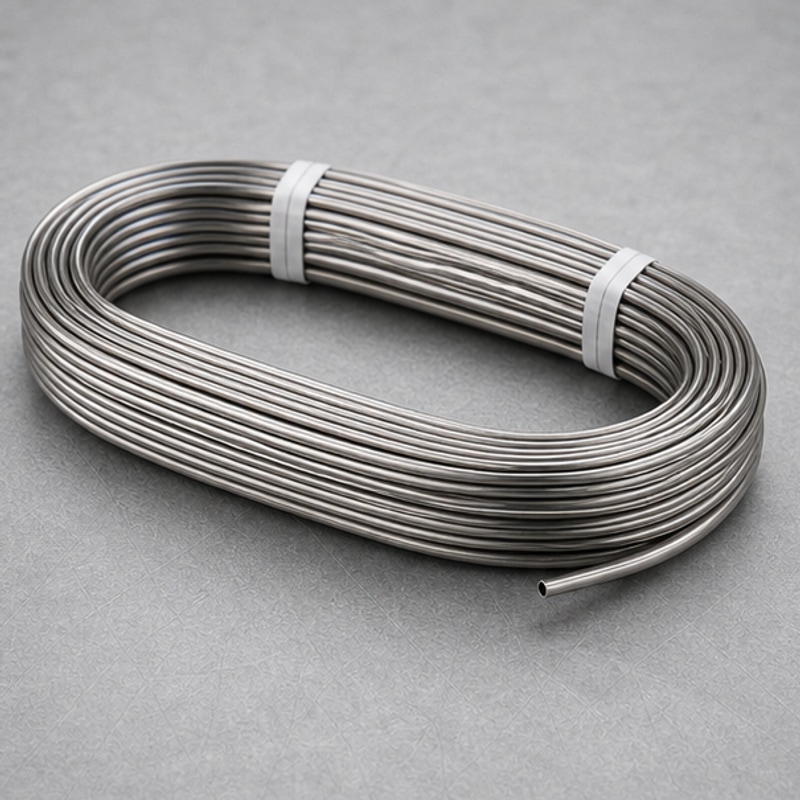
316L miniature tubing is a standard choice for applications requiring a balance of corrosion resistance, formability, and dimensional precision in small diameters. Engineers specifying capillary tubes for medical devices, analytical instruments, or industrial fluid handling often select 316L for its low carbon content, which minimizes carbide precipitation during welding and heat exposure. This article provides a technical overview of 316L miniature tubing—covering material properties, manufacturing processes, tolerance classes, and practical procurement considerations—to support informed material selection and specification.
Understanding 316L Miniature Tubing: What Engineers Need to Know
When engineers refer to 316L miniature tubing, they are typically specifying a low-carbon version of Type 316 stainless steel, conforming to ASTM A269 or ASTM A213 standards. The “L” designation indicates a maximum carbon content of 0.03%, which reduces the risk of sensitization and intergranular corrosion in welded or heat-affected zones. Capillary tubing in this grade is commonly produced with outer diameters ranging from 0.5 mm to 12.7 mm and wall thicknesses from 0.05 mm to 2.0 mm. The material is non-magnetic in the annealed condition and retains good ductility for subsequent bending, flaring, or swaging operations.
Chemical Composition and Mechanical Properties of 316L Stainless Steel
| Element | ASTM A269 / A213 316L Composition (%) |
|---|---|
| Carbon | 0.03 max |
| Manganese | 2.00 max |
| Phosphorus | 0.045 max |
| Sulfur | 0.03 max |
| Silicon | 0.75 max |
| Chromium | 16.0 – 18.0 |
| Nickel | 10.0 – 14.0 |
| Molybdenum | 2.00 – 3.00 |
| Nitrogen | 0.10 max |
| Iron | Balance |
| Mechanical Property (Annealed Condition) | Typical Value |
|---|---|
| Tensile Strength, min | 485 MPa (70 ksi) |
| Yield Strength (0.2% offset), min | 170 MPa (25 ksi) |
| Elongation in 50 mm, min | 35% |
| Hardness (Rockwell B) | 95 max |
The molybdenum content in 316L provides improved pitting and crevice corrosion resistance compared to 304 or 304L grades, particularly in chloride-containing environments. Maximum service temperature for continuous use is approximately 450°C (840°F), though oxidation resistance begins to decline above that range. For cryogenic applications, 316L retains impact strength down to -196°C.
Dimensional Specifications and Tolerance Classes for Capillary Tubes
316L miniature tubing is available in several tolerance classes depending on the manufacturing route and final application. For general-purpose capillary tubes, standard OD tolerances are ±0.05 mm. Precision-drawn tubing intended for medical or analytical use can achieve OD tolerances of ±0.025 mm or tighter. Wall thickness tolerances typically follow ASTM A269 guidelines, with ±10% of nominal wall for seamless tubing and ±15% for welded and drawn tubing. Straightness is often specified as 1 mm per 1000 mm length for small-diameter tubes. Custom tolerances are negotiable but typically require dedicated drawing passes and increased inspection.
Seamless vs Welded 316L Miniature Tubing: Manufacturing Route Considerations
Seamless 316L miniature tubing is produced by hot or cold piercing of a solid billet, followed by cold drawing to final dimensions. This route yields a uniform microstructure and no longitudinal weld seam, making it preferred for high-pressure or cyclic-load applications. Welded 316L tubing starts from strip that is roll-formed and longitudinally welded, then cold drawn to size. The weld zone is typically removed or refined during subsequent drawing and annealing. For capillary sizes below 3 mm OD, seamless tubing is more common because weld bead control becomes increasingly difficult. Both routes can meet ASTM A269 requirements, and the choice depends on cost, availability, and performance requirements.
Capillary Tube Manufacturing Process: Cold Drawing, Annealing, Straightening, and Cutting
The production of 316L miniature tubing involves several controlled steps. Cold drawing reduces the tube through a series of dies to achieve the desired OD and wall thickness. Between passes, the tube is annealed in a protective atmosphere (typically hydrogen or argon) to restore ductility and eliminate work hardening. After the final draw, the tubing is straightened using rotary straighteners or tension straightening to meet straightness specifications. Cutting is performed with abrasive wheels, laser cutting, or mechanical cutting to produce precise lengths with minimal end deformation. For capillary tubes with OD below 1 mm, centerless grinding may be used to achieve tight surface finish and dimensional uniformity.
Surface Finish and Internal Cleanliness for Medical and Analytical Applications
For 316L miniature tubing used in medical devices or analytical instrumentation, internal cleanliness is critical. Residual drawing lubricants or oxides can compromise fluid flow or contaminate samples. Typical surface finish requirements range from 0.4 µm Ra for general applications to 0.2 µm Ra or better for high-purity uses. Internal cleaning may involve ultrasonic cleaning, solvent rinsing, or electropolishing. Electropolishing also improves corrosion resistance by removing a thin surface layer and creating a passive oxide film. Engineers should specify cleanliness levels according to ASTM A632 or internal standards, and request certification of cleaning procedures.
Corrosion Resistance of 316L Miniature Tubing in Service Environments
316L miniature tubing offers good resistance to a wide range of corrosive media, including organic acids, dilute sulfuric acid, and chloride solutions up to about 1000 ppm at moderate temperatures. In environments with higher chloride concentrations or at elevated temperatures, pitting or crevice corrosion may occur. The low carbon content of 316L reduces the risk of sensitization during welding, allowing the tubing to maintain corrosion resistance in the heat-affected zone. For aggressive chemical service, engineers may consider higher-alloyed grades such as 317L or 904L, but 316L remains a cost-effective choice for many pharmaceutical, food processing, and marine applications.
Quality Control and Inspection Protocol for 316L Capillary Tubing
Incoming inspection of 316L miniature tubing typically includes dimensional verification using micrometers and optical comparators, surface finish measurement with profilometers, and chemical composition verification by optical emission spectrometry or combustion analysis. Mechanical testing includes tensile testing per ASTM E8 and hardness testing per ASTM E18. For seamless tubing, hydrostatic or eddy current testing is common to detect longitudinal defects. Dimensional certification with actual measured values is often required for medical and aerospace orders. Third-party inspection by an independent laboratory can be arranged at the buyer’s request.
Common Specification Mistakes to Avoid When Ordering 316L Miniature Tubing
One frequent error is specifying a standard OD and wall without confirming availability from standard drawing schedules. For example, a 0.5 mm OD tube with a 0.1 mm wall may require a custom draw if the ratio exceeds typical limits. Another mistake is assuming that all 316L tubing is identical in cleanliness or surface finish; always specify the required condition. Engineers sometimes overlook the need for end conditioning—deburring, chamfering, or squareness—which affects assembly in compression fittings or ferrule seals. Finally, confirming the heat lot traceability requirement before ordering can prevent delays during incoming inspection.
For more information about 316L miniature tubing, contact Healsmed’s engineering team with your material grade, drawing, tolerance requirements, and quantity. Submit inquiries through the Healsmed website for prompt technical review and quotation.
Conclusion
316L miniature tubing provides a reliable combination of corrosion resistance, mechanical strength, and formability for demanding applications in medical devices, analytical instrumentation, and industrial fluid systems. Understanding the material’s chemical composition, mechanical properties, and manufacturing tolerances allows engineers to specify tubing that meets functional requirements without over-specifying cost. The cold drawing and annealing process yields consistent dimensional control, while attention to surface finish and cleanliness ensures compatibility with sensitive processes.
When sourcing 316L miniature tubing, engineers should verify that the supplier can provide the required tolerance class, seamless or welded construction, and inspection documentation. Clear communication of dimensional, cleanliness, and straightness requirements reduces the risk of non-conforming material. By matching material properties to application demands, 316L miniature tubing remains a practical and widely used option across multiple industries.

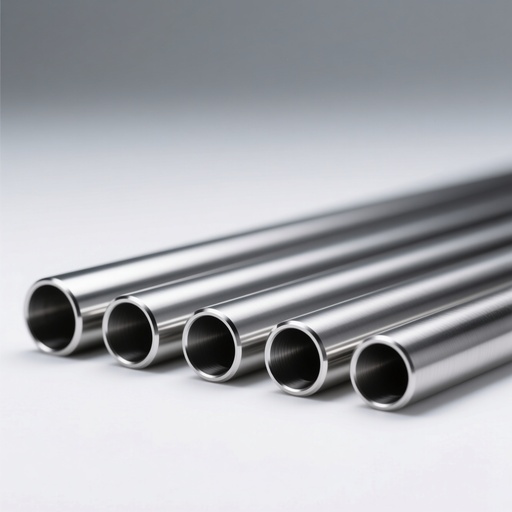
Healsmed
Leading Stainless Steel Capillary Tube Factory. 1,400+ standard sizes IN STOCK & ready to ship worldwide! High precision, factory-direct price.