316L Small Diameter Tubing: Material Properties, Manufacturing Tolerances, and Application Guide
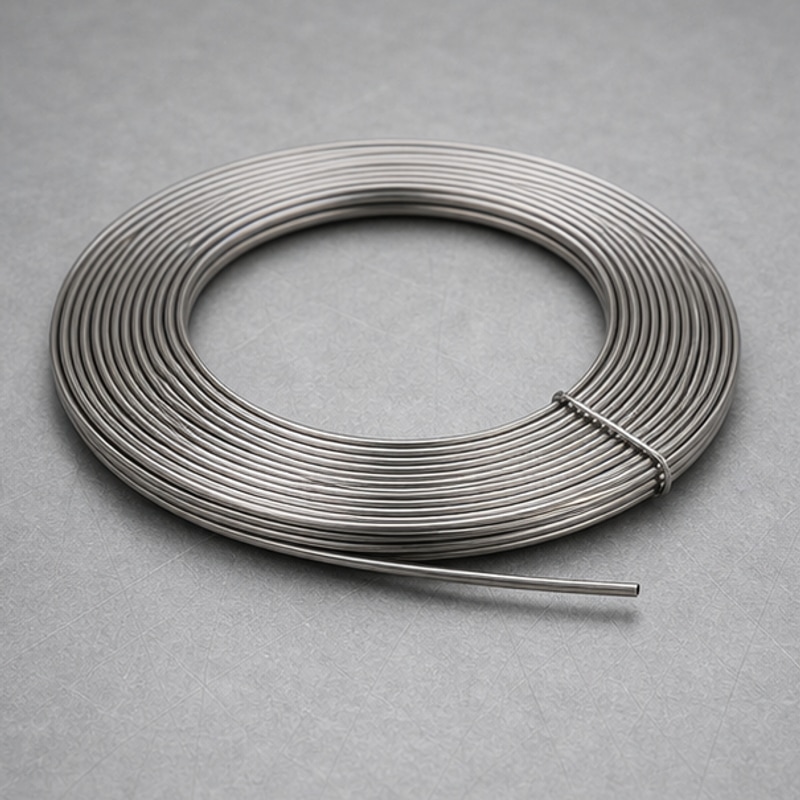
When specifying 316L small diameter tubing for medical devices, analytical instruments, or industrial fluid systems, engineers must evaluate material chemistry, dimensional consistency, and manufacturing capability. This article provides a technical overview of 316L small diameter tubing, covering corrosion resistance, mechanical properties, cold drawing processes, tolerance classes, and application-specific considerations for procurement professionals.
Chemical Composition and Mechanical Properties of 316L Stainless Steel
316L is a low-carbon version of 316 austenitic stainless steel, designed to minimize carbide precipitation during welding and high-temperature exposure. The reduced carbon content (maximum 0.03%) provides improved corrosion resistance in welded assemblies and in environments where sensitization is a concern. Typical chemical composition ranges for 316L small diameter tubing are shown below.
| Element | Composition (wt%) |
|---|---|
| Carbon | ≤ 0.030 |
| Manganese | ≤ 2.00 |
| Phosphorus | ≤ 0.045 |
| Sulfur | ≤ 0.030 |
| Silicon | ≤ 0.75 |
| Chromium | 16.0 – 18.0 |
| Nickel | 10.0 – 14.0 |
| Molybdenum | 2.00 – 3.00 |
| Iron | Balance |
Mechanical properties for annealed 316L small diameter tubing typically include a tensile strength of 485 MPa minimum, yield strength (0.2% offset) of 170 MPa minimum, and elongation of 40% minimum in 50 mm. The molybdenum content enhances pitting resistance in chloride-containing environments, making 316L a preferred choice for biomedical and chemical analysis applications.
Dimensional Specifications and Tolerance Classes for Capillary Tubing
316L small diameter tubing is commonly available in outer diameter (OD) ranges from 0.5 mm to 12.7 mm, with wall thicknesses from 0.05 mm to 2.0 mm. Tolerances depend on the drawing process and final pass schedule. Standard commercial tolerances for capillary tubing are ±0.05 mm on OD, while precision drawn tubing can achieve ±0.025 mm on OD. Wall thickness tolerances are typically ±10% of nominal. For applications requiring tight ID control, such as chromatography or drug delivery, ID tolerances can be specified with similar precision.
| Parameter | Typical Range | Standard Tolerance | Precision Tolerance |
|---|---|---|---|
| Outer Diameter | 0.5 – 12.7 mm | ±0.05 mm | ±0.025 mm |
| Wall Thickness | 0.05 – 2.0 mm | ±10% | ±7.5% |
| Length (cut) | As specified | +0.5 / -0.0 mm | ±0.1 mm |
Seamless vs Welded: Manufacturing Route Selection for 316L Capillary Tubing
Seamless 316L small diameter tubing is produced by piercing a solid billet and cold drawing through a series of dies to achieve the final dimensions. This method yields a homogeneous microstructure with no longitudinal weld seam, making it suitable for high-pressure applications and environments where internal surface integrity is critical. Welded tubing, formed from strip and longitudinally welded, offers cost advantages for larger diameters and thinner walls. For capillary sizes below 3 mm OD, seamless is the predominant choice due to the difficulty of maintaining weld consistency at small scales. Both routes undergo cold drawing, intermediate annealing, and final straightening to meet dimensional specifications.
Cold Drawing, Annealing, and Straightening Processes
Manufacturing 316L small diameter tubing involves multiple cold drawing passes to reduce OD and wall thickness while improving surface finish and mechanical properties. After each pass, the tubing is annealed in a controlled atmosphere (typically 1040–1120°C) to relieve work hardening and restore ductility. Annealing also ensures the low carbon content remains effective in preventing sensitization. Straightening is performed using rotary or roller straighteners to achieve a camber of less than 0.5 mm per meter for capillary tubing. Final cutting can be done by abrasive saw, laser, or mechanical shear, depending on length accuracy requirements and end finish needs.
Corrosion Resistance of 316L in Small Diameter Configurations
316L small diameter tubing offers excellent resistance to pitting and crevice corrosion in chloride environments up to approximately 60°C, depending on chloride concentration. The critical pitting temperature (CPT) in 3.5% NaCl solution is typically around 20–25°C for 316L, which is higher than 304 but lower than higher-alloyed grades like 317L or 6% molybdenum superaustenitics. For biomedical applications, 316L resists corrosion in physiological fluids, though it is not recommended for long-term implant use where nickel release is a concern. In analytical instrumentation, the tubing must be passivated and cleaned to remove surface contaminants that could leach into process fluids.
Industry-Specific Applications for 316L Small Diameter Tubing
In medical device manufacturing, 316L small diameter tubing is used for hypodermic needles, catheters, biopsy devices, and drug delivery cannulas. The low carbon content ensures weldability for joining to hubs and fittings. Analytical instrumentation applications include gas chromatography columns, liquid chromatography transfer lines, and sample loops where internal diameter precision and chemical inertness are required. Industrial OEMs use 316L capillary tubing for pneumatic controls, fuel injection systems, and hydraulic sensing lines. The combination of moderate strength, corrosion resistance, and formability makes 316L a versatile choice for these sectors.
Quality Control and Inspection Protocol for Capillary Tubing
Incoming inspection for 316L small diameter tubing typically includes dimensional verification using laser micrometers or air gauges, surface finish measurement (Ra value per customer specification), and eddy current or ultrasonic testing for defect detection. Chemical composition is verified via optical emission spectrometry or X-ray fluorescence on representative samples. Mechanical testing (tensile, hardness, flaring, and flattening) is performed per ASTM A1016 or equivalent standards. For medical device applications, endotoxin and cleanliness testing may be required. All inspection data should be traceable to heat numbers and manufacturing lot records.
For more information about 316L small diameter tubing, contact Healsmed’s engineering team with your material grade, drawing, tolerance requirements, and quantity. Submit inquiries through the Healsmed website for prompt technical review and quotation.
Conclusion
316L small diameter tubing offers a balanced combination of corrosion resistance, mechanical properties, and manufacturability for demanding applications in medical, analytical, and industrial sectors. Understanding the relationship between chemical composition, cold drawing parameters, and dimensional tolerances is essential for selecting the right tubing for a given fluid handling or structural requirement.
Procurement engineers should specify material certification, dimensional tolerance class, surface finish, and any special cleaning or passivation requirements at the RFQ stage. Working with a supplier that maintains tight process control and provides full traceability reduces risk in critical applications where tubing failure is not an option.

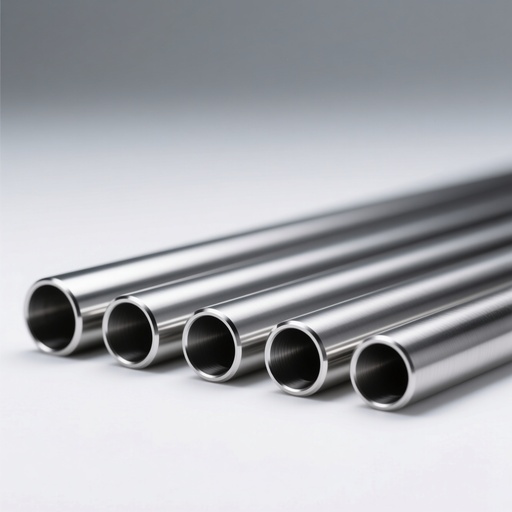
Healsmed
Leading Stainless Steel Capillary Tube Factory. 1,400+ standard sizes IN STOCK & ready to ship worldwide! High precision, factory-direct price.