316L Precision Capillary Tubing: Material Properties, Manufacturing Tolerances, and Application Guide
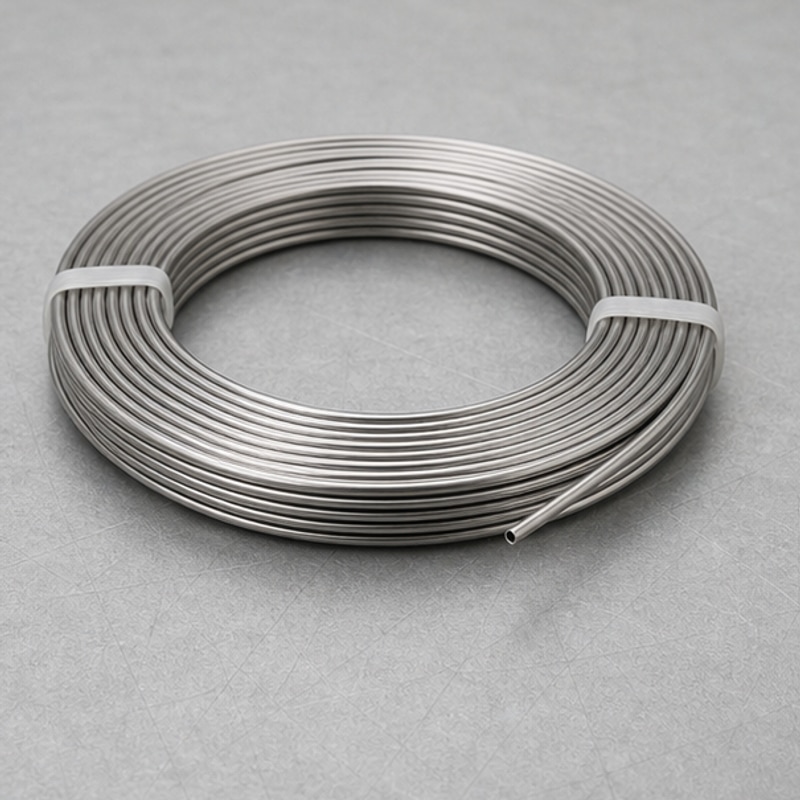
Selecting the right 316L precision capillary tubing for an OEM application requires more than a grade designation. Engineers must evaluate material chemistry, dimensional consistency, surface condition, and the manufacturing route to ensure the tubing meets functional demands in medical devices, analytical instruments, or industrial fluid systems. This article provides a technical reference for procurement and design engineers working with 316L stainless steel capillary tubing, covering composition, mechanical limits, tolerance classes, production methods, and inspection criteria.
Chemical Composition and Mechanical Properties of 316L
316L is a low-carbon austenitic stainless steel, defined by ASTM A269 and A213. The reduced carbon content (max 0.03%) minimizes chromium carbide precipitation during welding or heat exposure, preserving corrosion resistance. Typical composition ranges: chromium 16.0–18.0%, nickel 10.0–14.0%, molybdenum 2.0–3.0%, manganese ≤2.0%, silicon ≤0.75%, phosphorus ≤0.045%, sulfur ≤0.030%, nitrogen ≤0.10%. Molybdenum provides improved pitting and crevice corrosion resistance in chloride environments compared to 304 or 304L.
Mechanical properties for annealed capillary tubing: tensile strength 485–620 MPa, yield strength (0.2% offset) ≥170 MPa, elongation in 50 mm ≥35%. Hardness typically ≤95 HRB. Maximum service temperature in oxidizing atmospheres is approximately 870°C, though continuous use above 425°C may reduce toughness. For capillary applications, the material’s ductility allows cold drawing to thin walls without cracking.
Dimensional Specifications and Tolerance Classes for Capillary Tubing
316L precision capillary tubing is commonly supplied in outer diameters from 0.5 mm to 12.7 mm, with wall thicknesses ranging from 0.05 mm to 2.0 mm. Tolerances depend on drawing reduction and final pass control. Typical OD tolerance for drawn tubing is ±0.05 mm for diameters up to 6.35 mm, and ±0.10 mm for larger diameters. Precision-grade tubing can achieve ±0.025 mm on OD when specified. Wall thickness tolerance is usually ±10% of nominal, but tighter control (±5%) is available for critical flow applications. Straightness is specified as 0.5 mm per meter for cut lengths, and cut length tolerance is ±0.5 mm for standard orders.
| Parameter | Standard Range | Precision Range |
|---|---|---|
| Outer Diameter | 0.5 – 12.7 mm | 0.5 – 6.35 mm |
| OD Tolerance | ±0.05 mm | ±0.025 mm |
| Wall Thickness | 0.05 – 2.0 mm | 0.10 – 1.0 mm |
| Wall Tolerance | ±10% | ±5% |
| Straightness | 1.0 mm/m | 0.5 mm/m |
Seamless vs Welded: Manufacturing Route Considerations
Seamless 316L capillary tubing is produced by hot extrusion or rotary piercing of a solid billet, followed by cold drawing. This route eliminates weld seams, making it preferred for high-pressure or fatigue-critical applications such as HPLC columns, gas chromatography, and medical infusion lines. Welded tubing is formed from strip and longitudinally welded, then cold drawn to reduce weld bead height. Welded tubing can achieve similar dimensions but may have a slightly different grain structure at the weld zone. For most analytical and medical applications, seamless tubing is specified unless cost constraints justify welded with full nondestructive examination.
Cold Drawing, Annealing, Straightening, and Cutting Processes
The manufacturing sequence for 316L precision capillary tubing begins with cold drawing through carbide or diamond dies to reduce diameter and wall thickness. Multiple passes with intermediate annealing (solution treatment at 1040–1120°C followed by rapid cooling) restore ductility and remove work hardening. Final pass may use a mandrel for controlled ID. After drawing, tubing is straightened using rotary straighteners to achieve required straightness. Cutting is performed by abrasive saws or laser cutting for burr-free ends. Electropolishing or passivation may follow to remove surface contaminants and improve corrosion resistance.
Corrosion Resistance and Surface Finish for Sensitive Applications
316L’s molybdenum content provides superior resistance to pitting and crevice corrosion in chloride-containing media, such as saline or biological fluids. The low carbon content prevents sensitization during welding, maintaining corrosion resistance in heat-affected zones. Surface finish is critical for capillary tubing used in fluid transfer or chromatography. Typical finishes: bright annealed (Ra ≤ 0.8 µm), cold drawn (Ra 0.4–0.8 µm), or electropolished (Ra ≤ 0.3 µm). Internal cleanliness is verified by solvent flush and particulate count for medical and analytical applications.
Industry-Specific Applications for 316L Precision Capillary Tubing
In medical devices, 316L capillary tubing is used for catheters, biopsy needles, endoscope channels, and drug delivery systems. Analytical instrumentation applications include gas chromatography columns, mass spectrometer inlets, HPLC connecting lines, and sample loops. Industrial uses include pneumatic controls, hydraulic sensing lines, fuel injection components, and heat exchanger coils. The combination of corrosion resistance, mechanical strength, and dimensional precision makes 316L a default choice for capillary systems requiring long-term reliability.
Quality Control and Inspection Protocol
Standard inspection for 316L precision capillary tubing includes dimensional verification using laser micrometers, air gauges, or contact micrometers. Surface defects are detected by eddy current testing or dye penetrant inspection for seamless tubing. Mechanical tests per ASTM A269 include tensile, flattening, and flaring tests. Chemical analysis via optical emission spectrometry or combustion analysis confirms composition. Endotoxin testing and surface cleanliness verification per applicable standards may be required depending on the end-use environment. Certification typically includes mill test reports (MTR) and traceability to heat number.
For more information about 316L precision capillary tubing, contact Healsmed’s engineering team with your material grade, drawing, tolerance requirements, and quantity. Submit inquiries through the Healsmed website for prompt technical review and quotation.
Conclusion
316L precision capillary tubing offers a reliable combination of corrosion resistance, mechanical properties, and dimensional control for demanding OEM applications. Understanding the nuances of chemical composition, manufacturing tolerances, and production processes allows engineers to specify tubing that meets functional and regulatory requirements without overspecification. The choice between seamless and welded routes, tolerance classes, and surface finishes should be based on application pressure, fluid chemistry, and cleanliness needs.
When sourcing, request mill test reports and verify that dimensional tolerances align with your assembly or flow requirements. Partnering with a supplier who understands capillary tubing manufacturing and inspection ensures consistent quality across production lots. Proper specification and supplier communication reduce rework and field failures in critical systems.

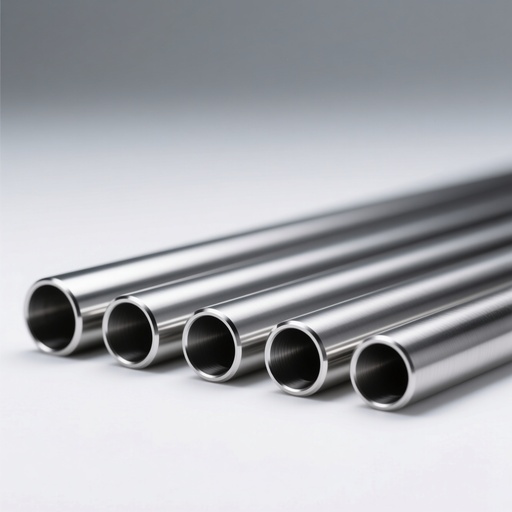
Healsmed
Leading Stainless Steel Capillary Tube Factory. 1,400+ standard sizes IN STOCK & ready to ship worldwide! High precision, factory-direct price.