316L Thin Wall Capillary Tube: Material Properties, Manufacturing Tolerances, and Application Guide
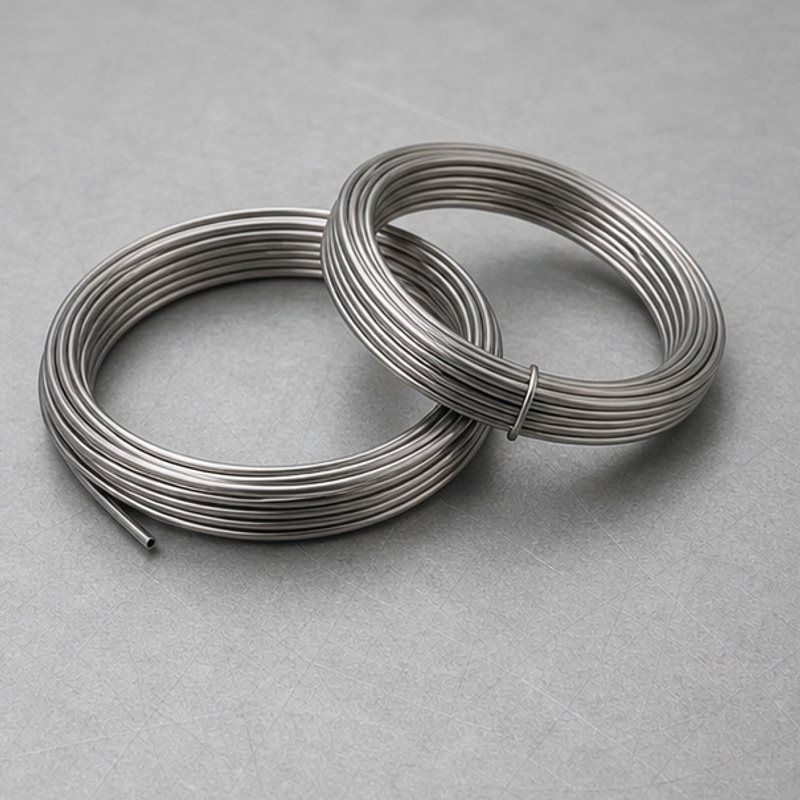
When design engineers specify a 316L thin wall capillary tube, they are typically balancing conflicting requirements: minimal wall thickness for weight or internal volume reduction, while maintaining structural integrity during handling and assembly. This article provides a technical overview of 316L thin wall capillary tubing—covering material properties, realistic dimensional tolerances, manufacturing challenges, and application-specific considerations for medical devices, analytical instruments, and industrial OEMs.
Material Grade Rationale: Why 316L for Thin Wall Capillary Applications
316L stainless steel is a low-carbon version of 316, with a maximum carbon content of 0.03% by weight. This reduction minimizes carbide precipitation during welding or heat exposure, improving corrosion resistance in the heat-affected zone. For thin wall capillary tubes (walls below 0.2 mm), the low carbon content is particularly relevant because the small cross-section makes the material more susceptible to intergranular corrosion if sensitization occurs. Typical chemical composition for 316L capillary tubing per ASTM A269/A213 includes: chromium 16.0–18.0%, nickel 10.0–14.0%, molybdenum 2.0–3.0%, manganese ≤2.0%, silicon ≤0.75%, phosphorus ≤0.045%, sulfur ≤0.030%, and carbon ≤0.030%. The molybdenum addition provides pitting resistance in chloride environments, which is critical for medical fluidic pathways and analytical sample lines.
Mechanical Properties and Thin Wall Behavior
For 316L capillary tubing in the annealed condition, typical mechanical properties include tensile strength of 485–515 MPa, yield strength (0.2% offset) of 170–210 MPa, and elongation of 40–50% in 50 mm. These values are standard for ASTM A269 seamless tubing. However, when wall thickness drops below 0.15 mm, the material’s apparent yield behavior changes—the thin cross-section cannot support the same bending moment before buckling. Engineering teams must account for this when designing bend radii or compression fittings. The elastic modulus (193 GPa) remains unchanged, but the moment of inertia scales with wall thickness cubed, making thin wall tubes significantly more flexible.
Dimensional Specifications and Tolerance Classes for Thin Wall Capillary
Capillary tubing is generally defined by outer diameter (OD) and wall thickness. Healsmed supplies 316L thin wall capillary tubes in OD ranges from 0.5 mm to 12.7 mm, with wall thicknesses from 0.05 mm to 2.0 mm. For thin wall products (wall/OD ratio < 0.1), standard OD tolerance is ±0.05 mm, with tighter ±0.025 mm available by drawing. Wall thickness tolerance is typically ±10% of nominal. The table below summarizes common dimensional classes:
| Tolerance Class | OD Range (mm) | OD Tolerance (mm) | Wall Tolerance | Typical Application |
|---|---|---|---|---|
| Standard | 0.5 – 6.35 | ±0.05 | ±10% | General industrial, pneumatic |
| Precision | 0.5 – 6.35 | ±0.025 | ±8% | Analytical instrumentation, medical |
| High-precision | 0.8 – 3.175 | ±0.013 | ±5% | HPLC, chromatography, drug delivery |
Ovality is a critical parameter for thin wall capillary. For wall/OD ratios below 0.05, ovality can exceed 0.05 mm under standard drawing processes. Healsmed uses multi-pass cold drawing with controlled reduction ratios to maintain ovality within 0.03 mm for precision grades.
Manufacturing Process: Seamless Cold Drawing for Thin Wall Integrity
316L thin wall capillary tubes are manufactured via seamless cold drawing from extruded hollows or pierced billets. The process involves sequential reductions through tungsten carbide dies with intermediate annealing (1050–1100°C) followed by rapid quenching to maintain the austenitic structure and corrosion resistance. For thin wall tubes, the reduction per pass is limited to 15–25% to avoid wall collapse or die galling. After final drawing, straightening is performed using two-plane roller straighteners; excessive straightening force can induce ovality or residual stress, so parameters are adjusted per tube dimension. Surface finish after pickling is typically 0.8–1.6 µm Ra, with optional electropolishing to 0.2–0.4 µm Ra for medical or high-purity applications.
Thin Wall Challenges: Collapse Risk, Ovality Control, and Handling Damage
Thin wall capillary tubes present distinct manufacturing and handling challenges. During cutting (abrasive or carbide wheel), the tube wall can collapse if support mandrels are not used. Healsmed recommends internal support for wall thicknesses below 0.1 mm during secondary operations. Ovality control is most difficult at tube ends; for precision applications, end finishing with a chamfer tool reduces deformation. Handling damage—dents or scratches—occurs easily because the thin wall lacks the rigidity to resist point loads. Tubes should be shipped in individual plastic sleeves or foam-lined boxes. In service, designers should avoid sharp transitions in fittings and use compression ferrules with controlled compression force to prevent buckling.
Corrosion Resistance Performance in Typical Environments
316L thin wall capillary tubing offers good resistance to general corrosion in most organic and inorganic media at moderate temperatures. The critical pitting temperature (CPT) in 1M NaCl is approximately 15–20°C for 316L, compared to 0–5°C for 304. For thin wall tubes, the reduced cross-section means that localized corrosion (pitting or crevice) can lead to through-wall failure faster than with thicker walls. In medical applications, resistance to sterilization methods (autoclaving, ethylene oxide, gamma radiation) is adequate, though repeated autoclaving may cause surface oxidation. For chloride-containing environments above 50°C, consider stress corrosion cracking risk; 316L is more resistant than 304 but not immune.
Application Guide: Where Thin Wall 316L Capillary Is Specified
Thin wall 316L capillary tubing is selected where weight reduction, small OD buildup, or minimal internal volume is critical. In medical devices, it is used for catheter shafts, drug delivery cannulas, and biopsy needles—wall thicknesses of 0.08–0.15 mm allow smaller OD while maintaining a lumen for fluid flow. In analytical instrumentation (gas chromatography, HPLC), thin wall tubes reduce dead volume and improve response times. Industrial OEMs use thin wall capillary for pneumatic controls, thermal sensor sheaths, and precision fluid metering. The table below lists typical dimensions by application:
| Application | Typical OD (mm) | Typical Wall (mm) | Key Requirement |
|---|---|---|---|
| Medical catheter | 0.8 – 2.0 | 0.08 – 0.15 | Flexibility, surface finish |
| HPLC tubing | 1.59 – 3.175 | 0.1 – 0.25 | Internal smoothness, tight ID tolerance |
| Pneumatic control line | 1.0 – 6.35 | 0.15 – 0.5 | Leak integrity, burst pressure |
| Thermocouple sheath | 1.0 – 3.0 | 0.1 – 0.3 | Thermal conductivity, corrosion resistance |
For more information about 316L thin wall capillary tube, contact Healsmed’s engineering team with your material grade, drawing, tolerance requirements, and quantity. Submit inquiries through the Healsmed website for prompt technical review and quotation.
Conclusion
316L thin wall capillary tubing provides a practical combination of corrosion resistance, mechanical properties, and formability for demanding applications in medical, analytical, and industrial sectors. Successful specification requires understanding the trade-offs between wall thickness, ovality control, and handling robustness. Dimensional tolerances of ±0.025 mm on OD are achievable for precision applications, but designers must account for the reduced structural capacity of thin walls during assembly and service.
When selecting a supplier, verify that the manufacturing process includes controlled cold drawing, proper annealing cycles, and appropriate inspection for ovality and surface defects. Healsmed’s engineering team can assist with material selection and tolerance optimization for your specific application. Provide a detailed drawing or specification to ensure the tubing meets your functional and regulatory requirements.

Healsmed
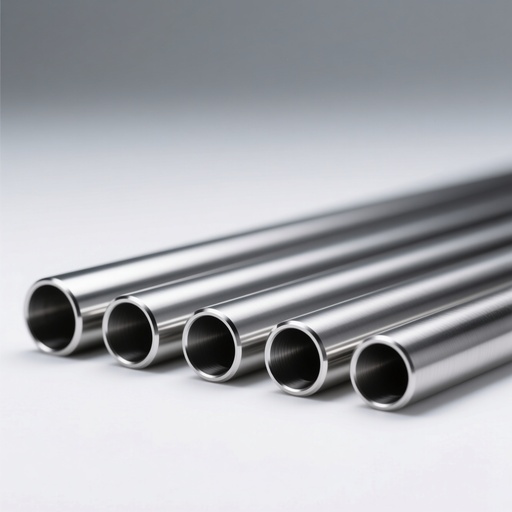
Leading Stainless Steel Capillary Tube Factory. 1,400+ standard sizes IN STOCK & ready to ship worldwide! High precision, factory-direct price.