316Ti SS Capillary Tube: Material Properties, Manufacturing Tolerances, and Application Guide
When selecting a precision stainless steel capillary tube for applications involving elevated temperatures or corrosive environments, the 316Ti SS capillary tube offers distinct advantages over standard 316L. This article provides a technical overview of material properties, manufacturing tolerances, and application considerations for 316Ti SS capillary tube, intended for engineers and procurement specialists evaluating material options for medical devices, analytical instrumentation, or industrial OEM systems.
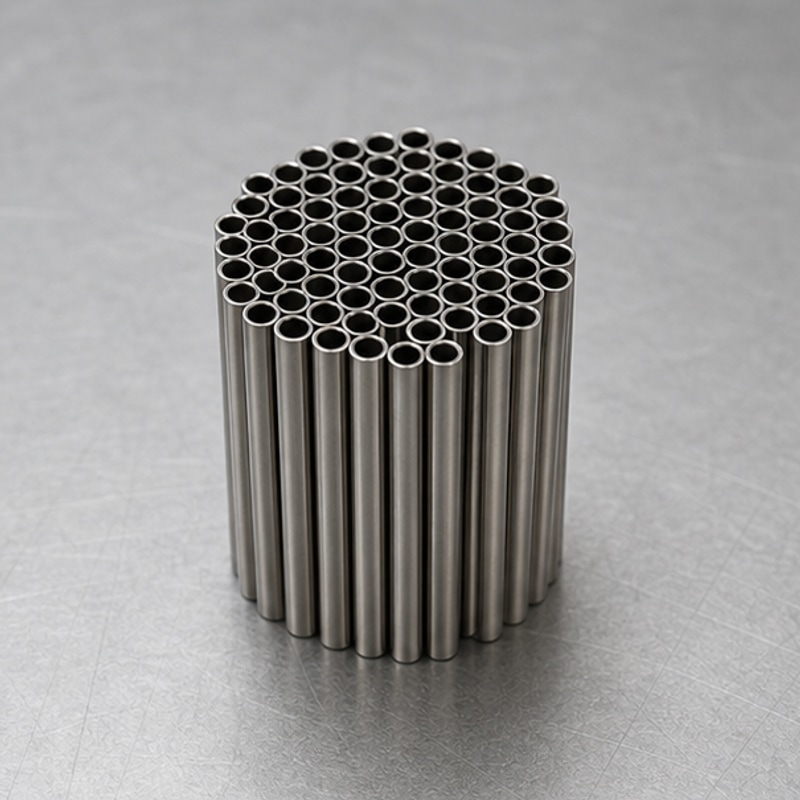
Understanding 316Ti SS Capillary Tube: What the Grade Designation Means
The “Ti” in 316Ti indicates the addition of titanium (Ti) to the standard 316 austenitic stainless steel composition. Typical titanium content ranges from 0.3% to 0.7% by weight. The primary purpose of this addition is stabilization: titanium forms carbides preferentially over chromium, preventing chromium carbide precipitation at grain boundaries during welding or service in the 425–850°C range. This makes 316Ti SS capillary tube particularly suitable for applications requiring intermittent or continuous exposure to elevated temperatures where sensitization and subsequent intergranular corrosion would otherwise occur in standard 316 or 316L.
Chemical Composition and Mechanical Properties of 316Ti Stainless Steel
Below is the typical chemical composition range for 316Ti stainless steel as used in capillary tube production. Actual values may vary by mill and specification (e.g., ASTM A269, ASTM A213).
| Element | Composition Range (wt%) |
|---|---|
| Carbon | ≤ 0.08 |
| Manganese | ≤ 2.00 |
| Silicon | ≤ 0.75 |
| Phosphorus | ≤ 0.045 |
| Sulfur | ≤ 0.030 |
| Chromium | 16.0 – 18.0 |
| Nickel | 10.0 – 14.0 |
| Molybdenum | 2.0 – 3.0 |
| Titanium | 0.3 – 0.7 |
| Iron | Balance |
Mechanical properties in the annealed condition for 316Ti SS capillary tube (typical values):
| Property | Value |
|---|---|
| Tensile Strength (MPa) | 515 – 690 |
| Yield Strength, 0.2% offset (MPa) | 205 – 310 |
| Elongation in 50 mm (%) | 30 – 45 |
| Hardness (Rockwell B) | ≤ 95 |
Compared to 316L, 316Ti exhibits slightly higher tensile and yield strength due to the titanium addition, while maintaining good ductility. Maximum service temperature in continuous service is approximately 870°C, with intermittent service up to 925°C, limited by oxidation resistance rather than sensitization.
Corrosion Resistance: Where 316Ti Excels Over 316L
In general aqueous corrosion environments (e.g., chlorides up to moderate levels, acids, alkalis), 316Ti SS capillary tube performs similarly to 316L. The key advantage emerges in environments where the material is exposed to temperatures in the sensitization range (425–850°C) during welding, heat treatment, or service. In such conditions, 316L can precipitate chromium carbides at grain boundaries, reducing local chromium content and making the material susceptible to intergranular corrosion. The titanium in 316Ti preferentially forms titanium carbides, leaving chromium in solid solution. This stabilization makes 316Ti a preferred choice for welded capillary assemblies or components operating in corrosive media at elevated temperatures. However, for low-temperature (<400°C) applications without welding, 316L remains cost-effective.
Dimensional Specifications and Tolerance Classes for Capillary Tube
Healsmed supplies 316Ti SS capillary tube in the following typical dimensional ranges:
- Outside Diameter (OD): 0.5 mm to 12.7 mm
- Wall Thickness: 0.05 mm to 2.0 mm
- Length: Custom cut lengths from 10 mm to 6000 mm, or coil forms
Tolerance classes depend on the drawing process and final annealing:
- Standard tolerance: ±0.05 mm on OD for sizes above 3 mm; ±0.025 mm for sizes below 3 mm
- Precision tolerance: ±0.025 mm on OD for most sizes; ±0.013 mm achievable on smaller diameters with additional processing
- Wall tolerance: Typically ±10% of nominal wall thickness for standard; ±7.5% for precision
These tolerances are achievable through cold drawing with controlled die sequences and intermediate annealing. For applications requiring tighter control, such as fluidic metering or gas chromatography columns, specify precision tolerance classes during inquiry.
Seamless vs Welded 316Ti Capillary Tube: Manufacturing Route Considerations
Both seamless and welded manufacturing routes are available for 316Ti SS capillary tube. Seamless tube is produced by piercing a solid billet and cold drawing to final dimensions. It offers uniform wall structure and no longitudinal weld seam, making it the standard choice for high-pressure applications, medical implants, and analytical columns where internal cleanliness and structural integrity are critical. Welded tube is formed from strip and longitudinally welded, then cold drawn to reduce the weld bead and achieve capillary dimensions. Welded 316Ti tube can be cost-effective for larger diameters and moderate pressure applications, provided the weld zone is properly stabilized (316Ti’s titanium content helps here). For most capillary applications below 6 mm OD, seamless is the industry norm due to better concentricity and absence of weld defects.
Manufacturing Process: Cold Drawing, Annealing, Straightening, and Cutting
The typical production sequence for 316Ti SS capillary tube involves:
- Cold drawing: Tube is pulled through a series of dies to reduce OD and wall thickness. Each pass reduces cross-section by 10–30%, depending on material condition and desired final dimensions.
- Interpass annealing: After each drawing pass, the tube is annealed at 1050–1100°C in a controlled atmosphere (e.g., hydrogen or dissociated ammonia) to restore ductility and remove work hardening. Annealing also ensures the titanium carbides are properly distributed.
- Straightening: Rotary straightening or multi-roll straighteners correct any curvature induced during drawing. Straightness tolerances of 1 mm per meter are standard; tighter straightness (0.5 mm/m) can be specified.
- Cutting: Precision cutting using abrasive wheels, laser, or mechanical shearing to customer lengths. Burr-free ends are achievable with secondary deburring.
Surface finish after final annealing and pickling is typically a matte or bright annealed finish. For applications requiring high internal cleanliness (e.g., medical or analytical), electropolishing or passivation can be applied.
Quality Control and Inspection Protocol for 316Ti Capillary Tube
Standard inspection for 316Ti SS capillary tube includes:
- Dimensional measurement: OD, ID, wall thickness, ovality, and straightness using micrometers, laser gauges, and air gauges
- Visual inspection: Surface defects, scratches, pits, and discoloration
- Chemical composition verification: Spectrographic analysis per heat
- Mechanical testing: Tensile, yield, and elongation per ASTM A370
- Corrosion testing: ASTM A262 Practice E (copper sulfate-sulfuric acid test) for intergranular corrosion susceptibility, especially for welded products
- Hydrostatic or pneumatic pressure testing: As required by customer specification
For medical device applications, additional cleanliness testing (e.g., particulate count, extractables) and lot traceability are available upon request.
Industry-Specific Applications for 316Ti SS Capillary Tube
Because of its stabilized structure, 316Ti SS capillary tube is used in:
- Analytical instrumentation: Gas chromatography columns, fluid transfer lines in high-temperature ovens (e.g., 300–450°C)
- Medical devices: Catheter components, drug delivery systems, biopsy needles where repeated sterilization at elevated temperatures (autoclaving) is required
- Industrial heat exchangers: Small-diameter tubes in heat recovery systems or sample coolers operating above 400°C
- Chemical processing: Capillary lines for corrosive fluids at elevated temperatures, such as in polymer processing or specialty chemical reactors
- Aerospace: Fuel and hydraulic lines in engine compartments where temperature excursions occur
For applications below 400°C without welding, 316L is often sufficient and more economical. Evaluate service temperature, welding requirements, and corrosive media before selecting 316Ti.
Procurement Checklist for 316Ti SS Capillary Tube
When specifying 316Ti SS capillary tube, include the following in your inquiry:
- Nominal OD and wall thickness, with tolerance class
- Length and quantity (pieces or coil weight)
- Condition: annealed, bright annealed, or electropolished
- Applicable standard: ASTM A269, ASTM A213, or customer-specific
- Testing requirements: mechanical, corrosion, pressure, cleanliness
- Packaging: individual sleeves, bulk bundles, or coil winding with spools
For more information about 316Ti SS capillary tube, contact Healsmed’s engineering team with your material grade, drawing, tolerance requirements, and quantity. Submit inquiries through the Healsmed website for prompt technical review and quotation.
Conclusion
316Ti SS capillary tube provides a specific advantage over standard 316L in applications where elevated temperature exposure or welding is involved, due to its titanium stabilization that prevents sensitization and intergranular corrosion. Its mechanical properties, corrosion resistance, and dimensional capabilities make it a viable choice for demanding medical, analytical, and industrial uses. However, it is not a universal replacement for 316L; engineers should evaluate the actual service conditions to justify the material cost premium.
When sourcing 316Ti SS capillary tube, working with a supplier that understands the nuances of cold drawing, annealing, and inspection for stabilized grades ensures consistent quality. Healsmed supplies 316Ti capillary tube in a range of sizes and tolerances, backed by material certifications and traceability. For your next project requiring stabilized stainless steel capillary, consider the technical data presented here as a starting point for specification.

Healsmed
Leading Stainless Steel Capillary Tube Factory. 1,400+ standard sizes IN STOCK & ready to ship worldwide! High precision, factory-direct price.