Inconel 600 Stainless Steel Capillary Tube: Material Properties, Manufacturing Tolerances, and Application Guide
When engineers search for an Inconel 600 stainless steel capillary tube, they are typically trying to solve a specific high-temperature or corrosion-resistance problem that standard austenitic stainless steels like 304 or 316L cannot handle. Inconel 600 (UNS N06600) is a nickel-chromium-iron alloy, not a stainless steel in the conventional sense, but the keyword persists because buyers often use ‘stainless’ as a catch-all for corrosion-resistant tubing. If you are designing a thermocouple sheath, a gas sampling line, or a high-purity fluid transfer component for an environment involving elevated temperatures, chloride stress corrosion cracking, or alkaline media, you are likely evaluating whether Inconel 600 capillary tube is the correct material. This guide covers the material properties, manufacturing tolerances, and application-specific sourcing considerations you need to specify and procure this tubing correctly.
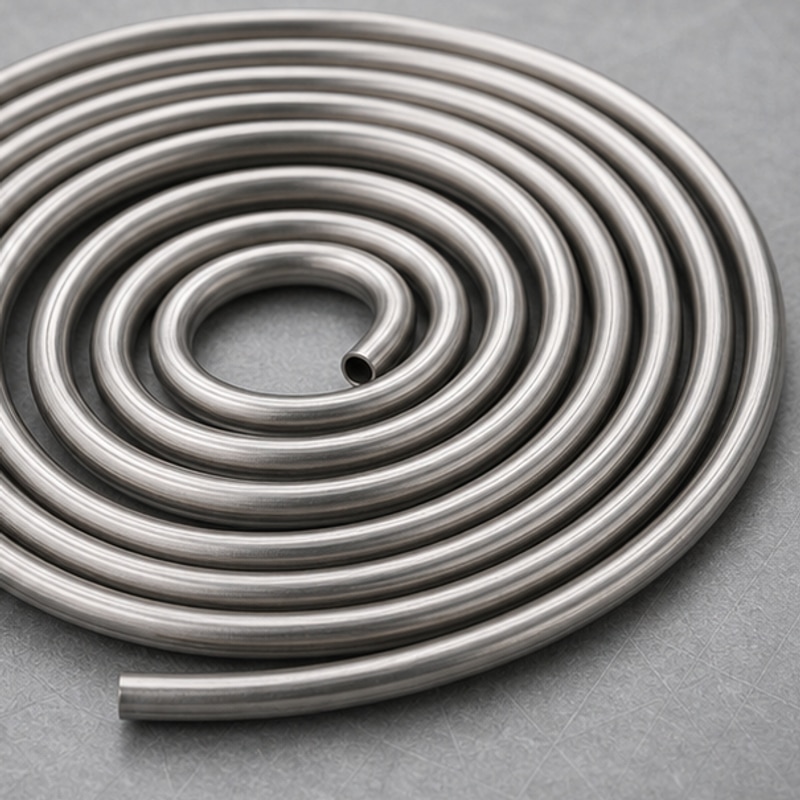
What Is Inconel 600 and Why It Is Specified for Capillary Tubing
Inconel 600 is a nickel-chromium alloy with a nominal composition of approximately 72% nickel, 14–17% chromium, and 6–10% iron. It is standardized under UNS N06600 and covered by specifications such as ASTM B167 (seamless pipe and tube) and ASTM B516 (welded tube). Unlike 304 or 316L stainless steel, Inconel 600 does not rely on a passive chromium oxide layer alone for corrosion resistance; its high nickel content provides inherent resistance to chloride-ion stress corrosion cracking and to reducing environments.
For capillary tube applications, the key advantages are:
- Retention of mechanical properties at elevated temperatures (up to approximately 700°C in continuous service, depending on environment and stress)
- Resistance to chloride stress corrosion cracking, which is a common failure mode for 304 and 316L in warm chloride-containing environments
- Good resistance to alkaline solutions and high-purity water
- Low magnetic permeability in the annealed condition, though cold working can increase it
Because Inconel 600 is not a stainless steel, the phrase ‘Inconel 600 stainless steel capillary tube’ is technically a misnomer. However, it remains a common search term. If you are comparing Inconel 600 to 316L, the decision usually hinges on temperature, chloride exposure, and cost. Inconel 600 is significantly more expensive than 316L, so it is typically specified only when the service conditions justify it.
Applicable Scenarios and Industries
Inconel 600 capillary tube is specified across several industries where small-diameter tubing must survive aggressive conditions:
- Aerospace and defense: thermocouple sheaths, sensor housings, and hydraulic lines exposed to high temperatures and vibration.
- Chemical processing: sampling lines for chloride-containing or alkaline process streams, where 316L would be susceptible to stress corrosion cracking.
- Nuclear and power generation: instrumentation tubing in steam generators and heat exchangers, where high-temperature strength and corrosion resistance are required.
- Medical and analytical instrumentation: high-performance liquid chromatography (HPLC) tubing and gas chromatography transfer lines where chemical inertness and cleanliness are critical. Note that Inconel 600 is not inherently a ‘medical grade’ material; suitability for a specific medical device depends on the device’s regulatory pathway, biocompatibility testing, and the finished device manufacturer’s quality system.
- Heat treating and furnace equipment: thermocouple protection tubes and gas sampling probes.
In each case, the common thread is an environment where standard austenitic stainless steels would fail prematurely due to stress corrosion cracking, oxidation, or high-temperature creep.
Material Grades and Designations
While Inconel 600 is the most common designation, you may encounter equivalent or closely related grades in specifications:
- UNS N06600: The unified numbering system designation for Inconel 600.
- Alloy 600: A generic industry term for the same nickel-chromium-iron composition.
- Inconel 601 (UNS N06601): A related alloy with higher chromium and aluminum additions for improved oxidation resistance. Not interchangeable with 600 for all environments.
- Inconel 625 (UNS N06625): A higher-strength, more corrosion-resistant nickel-chromium-molybdenum alloy. More expensive and often specified for more severe conditions.
For capillary tube, Inconel 600 is typically supplied in the annealed condition to facilitate cold drawing and to provide consistent mechanical properties. Cold-drawn and stress-relieved conditions may be available depending on the required strength and dimensional stability.
OD, ID, Wall Thickness, and Length Considerations
Capillary tube is generally defined by its small outside diameter, typically ranging from 0.5 mm to 6.35 mm (0.020 in. to 0.250 in.), though larger diameters may be available. The inside diameter is determined by the OD and wall thickness. For Inconel 600, common capillary sizes include:
- OD: 1.0 mm to 3.0 mm
- Wall thickness: 0.1 mm to 0.5 mm
- Length: straight lengths up to 3 meters or coiled lengths, depending on OD and wall thickness
Because Inconel 600 is a harder material than 316L, cold drawing to very small diameters with thin walls requires more careful process control. The achievable OD/ID ratio and minimum wall thickness depend on the drawing equipment, mandrel availability, and the supplier’s experience with nickel alloys. For this reason, it is advisable to consult the supplier early in the design phase if you are targeting an unusually small diameter or a very thin wall.
Tolerances for Inconel 600 Capillary Tube
Tolerances for capillary tube are typically tighter than for standard instrumentation tubing. The following table provides typical ranges for cold-drawn Inconel 600 capillary tube. Actual tolerances depend on the drawing, material condition, process route, and mutual agreement between parties.
| Parameter | Typical Tolerance Range | Notes |
|---|---|---|
| Outside Diameter (OD) | ±0.02 mm to ±0.05 mm | Tighter tolerances possible with additional processing |
| Inside Diameter (ID) | ±0.02 mm to ±0.05 mm | Depends on mandrel and wall thickness control |
| Wall Thickness | ±10% of nominal | For thin walls, may be expressed as a minimum wall |
| Length | ±1 mm for cut lengths | Coiled lengths may have different tolerances |
| Straightness | 0.5 mm per meter | For straight lengths; coiled tube is not straight |
These tolerances are not universal. For critical applications, such as HPLC tubing or thermocouple sheaths, you may need to specify tighter tolerances and agree on the inspection method (e.g., laser micrometer, air gauge, or optical comparator).
End Condition and Burr Control
Capillary tube is often used in applications where the end condition affects flow characteristics, connection integrity, or cleanliness. Common end conditions include:
- Clean cut: Square cut with minimal burr. Burr height is typically controlled to less than 0.05 mm, but this depends on the cutting method and material hardness.
- Deburred: Mechanically or electrochemically deburred to remove sharp edges and loose particles.
- Chamfered: A chamfer may be specified to facilitate insertion into fittings or to reduce turbulence.
- Sealed or plugged: For thermocouple sheaths, one end may be closed and welded.
Burr control is particularly important for medical and analytical applications, where loose particles can contaminate the fluid path. If your application requires a specific burr height or a burr-free condition, state this in your RFQ and specify the inspection method.
Surface Finish and Cleanliness Requirements
Surface finish for Inconel 600 capillary tube is typically specified as either:
- As-drawn: A matte or slightly rough finish typical of cold-drawn tubing. Surface roughness (Ra) may range from 0.4 µm to 1.6 µm, depending on the drawing process and lubrication.
- Polished: Mechanically or electropolished to achieve a smoother surface. Electropolishing can reduce Ra to less than 0.25 µm and improve corrosion resistance by removing surface irregularities.
Cleanliness requirements vary by industry. For medical device or pharmaceutical applications, tubing may need to be cleaned to remove drawing lubricants, oxides, and particulate. Common cleanliness specifications include:
- Free of visible oil, grease, and dirt
- Particulate limits per a specified standard (e.g., USP <788> for injectable solutions, if applicable)
- Passivation or electropolishing to remove free iron and restore the passive layer
Inconel 600 is not inherently clean; the cleaning process must be specified and validated. If you require a specific cleanliness level, provide the acceptance criteria in your RFQ.
Inspection Documentation
For Inconel 600 capillary tube, typical inspection documentation includes:
- Material certification: A certificate of conformance (CoC) or material test report (MTR) per EN 10204 3.1 or equivalent, showing chemical composition and mechanical properties.
- Dimensional inspection report: Measurements of OD, ID, wall thickness, and length, with the inspection method and sampling plan.
- Surface finish report: If specified, Ra measurements or visual inspection results.
- Cleanliness report: If specified, results of particulate or residue testing.
- Burr inspection report: If specified, burr height measurements or visual inspection results.
The specific documentation package should be agreed upon before order placement. Not all suppliers provide the same level of documentation, so it is important to clarify your requirements early.
Packaging Considerations
Inconel 600 capillary tube is susceptible to mechanical damage and contamination during shipping and storage. Packaging should address:
- Protection from bending and crushing: Straight lengths are typically packaged in rigid tubes or wooden boxes. Coiled tube is often wound on a spool or supported to prevent kinking.
- Protection from contamination: Tubing may be capped or sealed in plastic sleeves to prevent dust and moisture ingress.
- Identification: Each bundle or coil should be labeled with the material grade, size, heat number, and quantity.
If your application requires a specific packaging method (e.g., cleanroom packaging, nitrogen purge), include this in your RFQ.
RFQ Information Checklist
To receive an accurate quotation and technical evaluation for Inconel 600 capillary tube, include the following information in your request:
- Material grade: Inconel 600 (UNS N06600) or equivalent. Specify if a particular specification (e.g., ASTM B167) applies.
- Dimensions: Outside diameter, inside diameter, and wall thickness. If ID is critical, specify both OD and ID.
- Length: Straight lengths or coiled, with tolerances.
- Tolerances: OD, ID, wall, length, and straightness tolerances.
- End condition: Cut, deburred, chamfered, sealed, etc.
- Surface finish: As-drawn, polished, electropolished, with Ra requirement if applicable.
- Cleanliness: Any specific cleanliness or particulate requirements.
- Inspection documentation: Required certificates and reports.
- Quantity: Total length or number of pieces, and whether a minimum order quantity applies.
- Packaging: Any special packaging requirements.
Providing this information upfront reduces back-and-forth and helps the supplier determine whether your requirements can be met with standard tooling or require custom drawing.
To request a quotation for Inconel 600 stainless steel capillary tube, submit your drawings, material grade, quantity, tolerance, surface finish, and inspection requirements through the Healsmed website. The engineering team will review and respond with a technical evaluation.

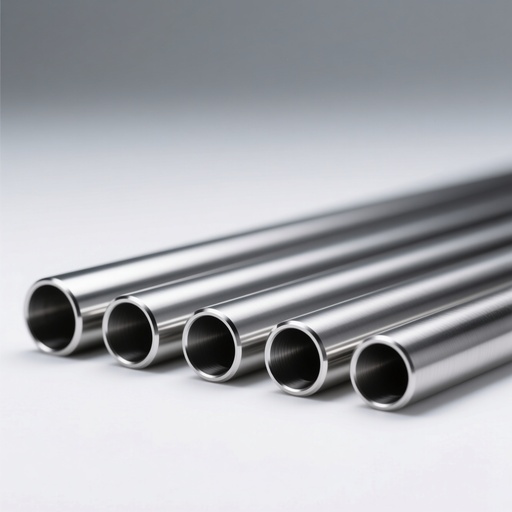
Healsmed
Leading Stainless Steel Capillary Tube Factory. 1,400+ standard sizes IN STOCK & ready to ship worldwide! High precision, factory-direct price.