317L SS Capillary Tubing: Material Properties, Manufacturing Tolerances, and Application Guide
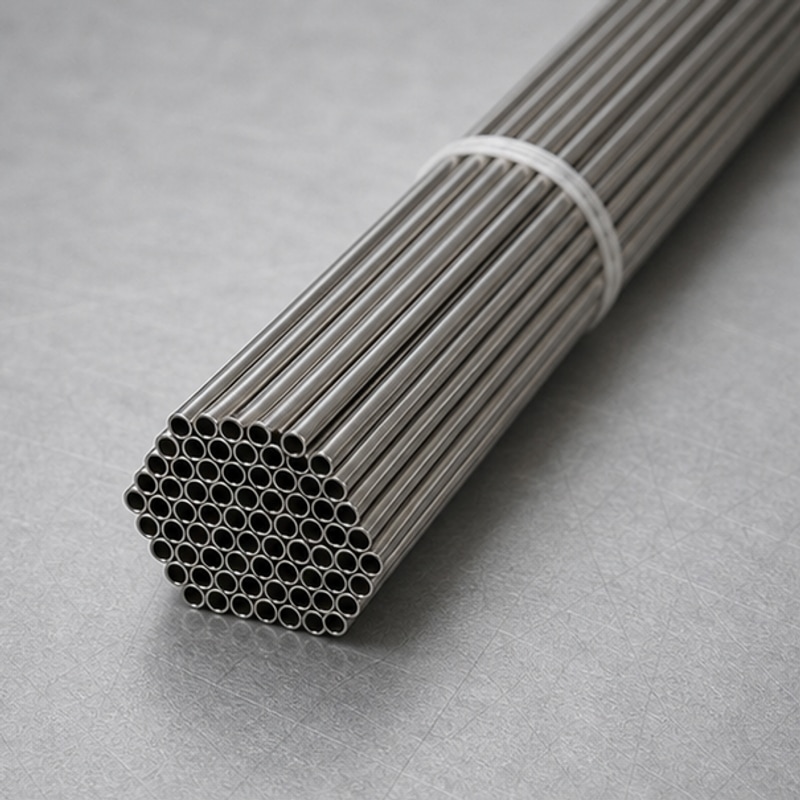
When designing fluid delivery systems, sensor probes, or minimally invasive instruments that must resist pitting and crevice corrosion in chloride-rich environments, engineers often find that standard 304 or 316L stainless capillary tubing does not provide sufficient localized corrosion resistance. The engineering problem is selecting a capillary-grade tube that maintains small-diameter precision while offering enhanced resistance to aggressive media such as saline, bleach, or acidic cleaning solutions. 317L SS capillary tubing addresses this need by combining a higher molybdenum content with a low-carbon composition, making it a preferred material for medical device and analytical instrumentation applications where corrosion resistance and dimensional stability are critical.
Applicable Scenarios and Industries
317L SS capillary tubing is specified in applications where exposure to chlorides, reducing acids, or high-humidity environments would compromise 304 or 316L. Common uses include:
- Medical device fluidic pathways (e.g., catheter shafts, contrast media injector lines) that undergo repeated sterilization or contact with saline.
- Analytical and diagnostic instrumentation (chromatography, blood gas analyzers) requiring corrosion-resistant small-bore tubing.
- Pharmaceutical processing equipment where product purity and resistance to cleaning agents are mandatory.
- Industrial sensors and probes used in marine or chemical processing environments.
Because 317L offers improved resistance to pitting and stress corrosion cracking compared to 316L, it is increasingly specified by medical device OEMs and R&D teams who require long-term reliability in chloride-containing service conditions.
Material Grades and Designations
317L SS capillary tubing is a low-carbon austenitic stainless steel. Relevant designations include:
- UNS S31703
- EN 1.4438
- ASTM A269 / ASTM A213 (for seamless tubing)
- ASTM A1016 (general requirements for ferritic, austenitic, and duplex alloy steel tubes)
The low-carbon content (max 0.030% C) minimizes sensitization during welding or high-temperature exposure, preserving corrosion resistance in the heat-affected zone. The key compositional difference from 316L is higher molybdenum (3.0–4.0% vs. 2.0–3.0% for 316L), which directly improves pitting resistance equivalent number (PREN).
OD / ID / Wall Thickness / Length Considerations
For capillary tubing, the critical dimensions are outside diameter (OD), inside diameter (ID), and wall thickness. Typical ranges for 317L SS capillary tubing depend on drawing and material condition:
| Parameter | Typical Range | Notes |
|---|---|---|
| Outside Diameter (OD) | 0.010″ – 0.250″ (0.25 mm – 6.35 mm) | Smaller ODs possible; depends on drawing and process route |
| Wall Thickness | 0.005″ – 0.065″ (0.13 mm – 1.65 mm) | Thinner walls require careful control of concentricity |
| Length | Random mill lengths or cut-to-length per customer specification | Straight lengths or coiled available; depends on mutual agreement |
ID is a function of OD minus twice the wall thickness. For precision applications, ID tolerances are often more critical than OD, particularly in flow-control devices.
Tolerances (Typical Ranges for Capillary Tube)
Tolerances for 317L SS capillary tubing are not standardized across all dimensions; they depend on drawing, material condition, process route, and mutual agreement between parties. However, common industry practices for precision capillary tubing include:
- OD tolerance: ±0.0005″ to ±0.002″ (0.013 mm to 0.051 mm) for standard sizes; tighter available upon agreement.
- Wall thickness tolerance: ±10% of nominal wall, or as specified on drawing.
- Concentricity (ID/OD): Typically 85–90% minimum wall thickness ratio; tighter concentricity may require secondary processing.
- Straightness: 0.005″ per foot (0.42 mm/m) or better, depending on length and temper.
All tolerances should be confirmed with the supplier against the specific drawing and intended application.
End Condition and Burr Control
Capillary tube ends must be free of burrs, sharp edges, and internal flash to prevent flow disruption and particle generation. Standard end conditions include:
- Square cut (90° ±1°) with deburred internal and external edges.
- Custom end forms (e.g., chamfer, radius, or special profile) per drawing.
- Maximum burr height: depends on drawing and mutual agreement; typical target is ≤0.003″ (0.08 mm).
For medical and analytical applications, ends are often inspected under magnification (10–40×) to verify burr removal.
Surface Finish and Cleanliness Requirements
Surface finish affects corrosion resistance, fluid flow, and biocompatibility (though 317L itself is not inherently medical grade). Typical finishes for capillary tubing include:
- Annealed and pickled: surface roughness Ra ≤ 0.8 µm (32 µin).
- Bright annealed: Ra ≤ 0.4 µm (16 µin) or better, depending on process.
- Electropolished: Ra ≤ 0.2 µm (8 µin) available for critical applications.
Cleanliness requirements should be specified (e.g., degreased, ultrasonically cleaned, or packaged in a cleanroom environment). No claim of inherent cleanliness or sterilization level should be assumed without documented process verification.
Inspection Documentation
Standard documentation for 317L SS capillary tubing includes:
- Material test report (MTR / EN 10204 3.1) certifying chemical composition and mechanical properties per ASTM A269 or equivalent.
- Dimensional inspection report listing OD, ID, wall thickness, and length measurements.
- Surface finish measurement report (if specified).
- Burr inspection report (if required).
Additional testing (e.g., hydrostatic, eddy current, or helium leak) can be requested; feasibility depends on tube size and mutual agreement.
Packaging Considerations
Capillary tubing is susceptible to mechanical damage and contamination during transit. Typical packaging includes:
- Individual poly-bagging or heat-sealed tubing for small quantities.
- Foam-lined boxes or wooden crates for longer lengths.
- Desiccant and moisture-barrier bags if cleanliness or low humidity is required.
- Spooling for continuous lengths (coiled tubing).
Packaging requirements should be specified in the RFQ to avoid damage and ensure traceability.
RFQ Information Checklist
To receive an accurate evaluation for 317L SS capillary tubing, provide the following information:
- Material grade (e.g., 317L / UNS S31703).
- Outside diameter (OD) and tolerance.
- Inside diameter (ID) or wall thickness and tolerance.
- Length (cut-to-length or continuous coil).
- Quantity (pieces or total length).
- End condition requirements (square cut, deburred, chamfer).
- Surface finish (annealed/pickled, bright annealed, electropolished).
- Cleanliness level (e.g., degreased, ultrasonically cleaned).
- Inspection documentation required (MTR, dimensional report, etc.).
- Packaging and labeling preferences.
- Applicable standard (e.g., ASTM A269) or customer drawing number.
To request a quotation for 317L SS capillary tubing, submit your drawings, material grade, quantity, tolerance, surface finish, and inspection requirements through the Healsmed website. The engineering team will review and respond with a technical evaluation.

Healsmed
Leading Stainless Steel Capillary Tube Factory. 1,400+ standard sizes IN STOCK & ready to ship worldwide! High precision, factory-direct price.