Inconel 600 Seamless Capillary Tube: Material Properties, Manufacturing Tolerances, and Application Guide
If you are sourcing Inconel 600 seamless capillary tube, you are likely balancing three pressures at once: high-temperature strength, corrosion resistance in aggressive media, and the dimensional precision required for flow control, sampling, or sensor protection. Inconel 600 is a nickel-chromium-iron alloy selected where stainless steels such as 304 or 316L may fall short in elevated-temperature or chloride-bearing service. This guide covers the material properties, manufacturing tolerances, and application considerations that matter when specifying seamless capillary tubing.
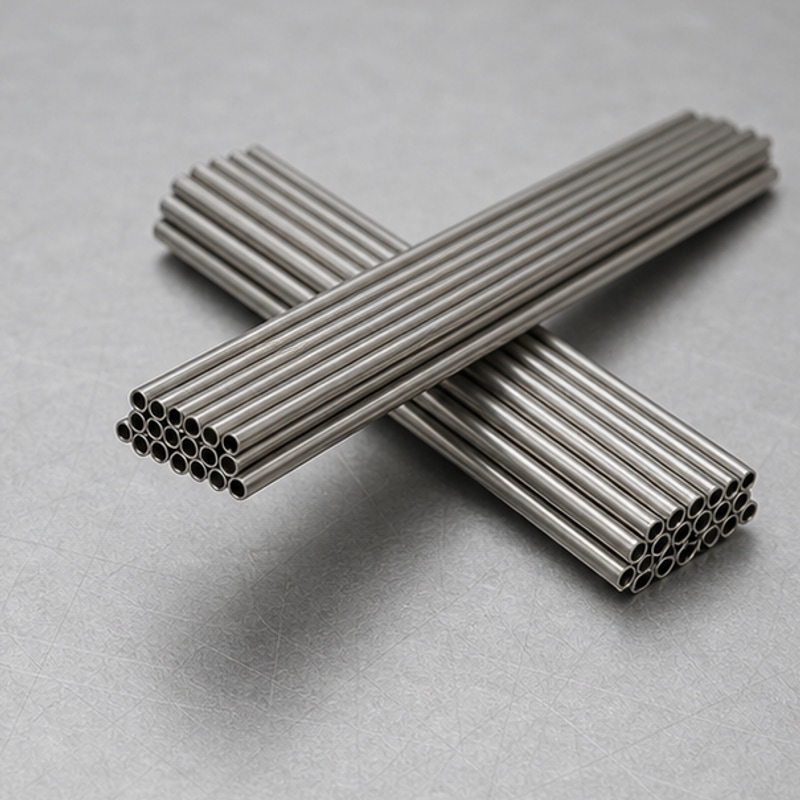
What Is Inconel 600 Seamless Capillary Tube?
Inconel 600 is a nickel-chromium-iron alloy (UNS N06600), standardized under ASTM B167 for seamless pipe and tube and ASTM B163 for seamless condenser and heat-exchanger tubes. A seamless capillary tube is produced by cold drawing or cold pilgering a hollow billet or tube shell, with no longitudinal weld seam. The absence of a weld is important in capillary dimensions because wall thickness is often small and any seam can become a leak path or a corrosion initiation site.
Typical capillary sizes range from approximately 0.5 mm to 6.35 mm outside diameter (OD), with wall thicknesses from about 0.05 mm to 1.0 mm, though exact availability depends on drawing, material condition, process route, and mutual agreement between parties.
Material Properties of Inconel 600
Inconel 600 is specified for its combination of high-temperature strength, oxidation resistance, and resistance to chloride-ion stress-corrosion cracking. Key nominal properties include:
- Nickel content: approximately 72% minimum
- Chromium content: approximately 14–17%
- Iron content: balance
- Density: approximately 8.47 g/cm³
- Melting range: approximately 1354–1413 °C
- Continuous service temperature: often cited up to about 1100 °C in oxidizing atmospheres, depending on mechanical load and environment
Mechanical properties depend on heat treatment and temper. In the annealed condition, typical room-temperature values are approximately 550–690 MPa tensile strength and 240–310 MPa yield strength, with elongation around 30–45%. These values are indicative only and must be confirmed against the applicable ASTM specification and the actual mill certificate.
Inconel 600 is not inherently a “medical grade” material. Suitability for any medical, pharmaceutical, or food-contact application depends on the specific finish, cleaning validation, and regulatory pathway agreed between the parties.
Applicable Scenarios and Industries
Inconel 600 seamless capillary tube is often evaluated for:
- High-temperature thermocouple and RTD protection sheaths
- Sampling and injection lines in analytical instrumentation
- Flow restrictors and capillary elements in process control
- Heat-exchanger and furnace sensor tubing
- Nuclear and aerospace instrumentation lines where nickel-chromium-iron alloys are specified
- Chemical process environments containing chlorides or elevated temperatures
Where corrosion resistance at ambient temperature is the primary requirement, 316L or 316Ti stainless steel capillary tube is often more economical. Inconel 600 becomes relevant when temperature, chloride stress-corrosion, or oxidation resistance drives the material selection.
OD, ID, Wall Thickness, and Length Considerations
Capillary tube is normally specified by OD and wall thickness, with ID calculated or measured. Common configurations include:
| Parameter | Typical range | Notes |
|---|---|---|
| Outside diameter | 0.5–6.35 mm | Depends on drawing and process route |
| Wall thickness | 0.05–1.0 mm | Wall-to-OD ratio affects drawability |
| Inside diameter | Calculated from OD and wall | Verify with flow or gauge requirements |
| Length | Coils or straight lengths | Straight lengths limited by handling and shipping |
For flow-critical applications, specify both OD and ID tolerance, not wall thickness alone, because wall eccentricity can affect internal volume and pressure drop.
Tolerances for Inconel 600 Capillary Tube
Tolerances for seamless capillary tube are tighter than for standard pipe or mechanical tubing. Typical industry ranges include:
- OD tolerance: often ±0.03 mm to ±0.10 mm, depending on size and drawing
- Wall thickness tolerance: often ±10% of nominal wall, with tighter values possible by agreement
- ID tolerance: derived from OD and wall, or specified separately for precision bore applications
- Straightness: typically expressed as mm per meter, depending on temper and length
- Concentricity / eccentricity: often specified as a percentage of wall thickness
Exact tolerance capability depends on drawing, material condition, process route, and mutual agreement between parties. Do not assume a tolerance is achievable without confirming it with the supplier.
End Condition and Burr Control
Capillary tube ends may be supplied as cut, deburred, chamfered, or prepared for specific fittings. Burr control is critical in capillary dimensions because a small burr can alter flow, damage seals, or create particulate contamination.
- Cut length tolerance: often ±0.5 mm to ±2 mm, depending on length and method
- Burr height: can be specified as a maximum, for example 0.05 mm or less, by agreement
- End squareness: important for orbital welding and fitting assembly
If the tube will be welded or bonded, specify end squareness and burr limits on the drawing.
Surface Finish and Cleanliness Requirements
Surface finish and cleanliness affect corrosion performance, flow characteristics, and contamination risk. Common specifications include:
- Surface roughness (Ra): typically 0.4 µm to 1.6 µm for general capillary, with lower values possible by agreement
- Internal cleanliness: free of drawing lubricant, scale, and particulate; may require solvent cleaning, ultrasonic cleaning, or passivation
- Passivation: often performed per ASTM A967 or equivalent, though Inconel 600 passivation behavior differs from stainless steel and should be confirmed
Cleanliness requirements should be stated as a verifiable acceptance criterion, not a general statement such as “clean.”
Inspection Documentation
For procurement and quality teams, documentation is often as important as the tube itself. Typical documents include:
- Material test certificate (mill certificate) with heat number and chemical composition
- Mechanical property report (tensile, yield, elongation)
- Dimensional inspection report for OD, ID, wall, and length
- Surface finish report if specified
- Cleanliness or particulate test report if specified
- Certificate of conformance (CoC)
Specify which documents are required and whether they must be traceable to the heat number. Third-party inspection or witness testing can be arranged by agreement.
Packaging Considerations
Inconel 600 capillary tube can be damaged by improper packaging. Considerations include:
- Coils or straight lengths supported to prevent bending or kinking
- End caps or plugs to protect ends and maintain cleanliness
- Moisture barrier and desiccant for corrosion-sensitive shipments
- Labeling with heat number, size, quantity, and purchase order reference
Packaging requirements should be stated in the purchase order if they are critical to incoming inspection or production.
RFQ Information Checklist
To receive an accurate quotation for Inconel 600 seamless capillary tube, provide:
- Material grade and specification (for example, Inconel 600 per ASTM B167 or B163)
- OD, ID, and wall thickness with tolerances
- Length and end condition (cut, deburred, chamfered)
- Surface finish and cleanliness requirements
- Quantity and unit (pieces, meters, coils)
- Inspection documentation required
- Packaging and labeling requirements
- Any special testing or certification needs
To request a quotation for Inconel 600 seamless capillary tube, submit your drawings, material grade, quantity, tolerance, surface finish, and inspection requirements through the Healsmed website. The engineering team will review and respond with a technical evaluation.

Healsmed
Leading Stainless Steel Capillary Tube Factory. 1,400+ standard sizes IN STOCK & ready to ship worldwide! High precision, factory-direct price.