Inconel 600 SS Capillary Tubing: Material Properties, Manufacturing Tolerances, and Application Guide
When engineers search for Inconel 600 SS capillary tubing, they are typically trying to source a small-diameter nickel-chromium alloy tube that combines high-temperature oxidation resistance with reliable pressure containment in instrumentation, analytical, and thermal processing systems. The challenge is not simply finding any 600 alloy tube; it is finding a supplier who can hold tight OD and ID tolerances, control burrs, document material traceability, and deliver a clean, inspection-ready capillary that fits a specific assembly without rework. This guide explains the material, the manufacturing variables, and the procurement checklist for sourcing Inconel 600 capillary tubing.
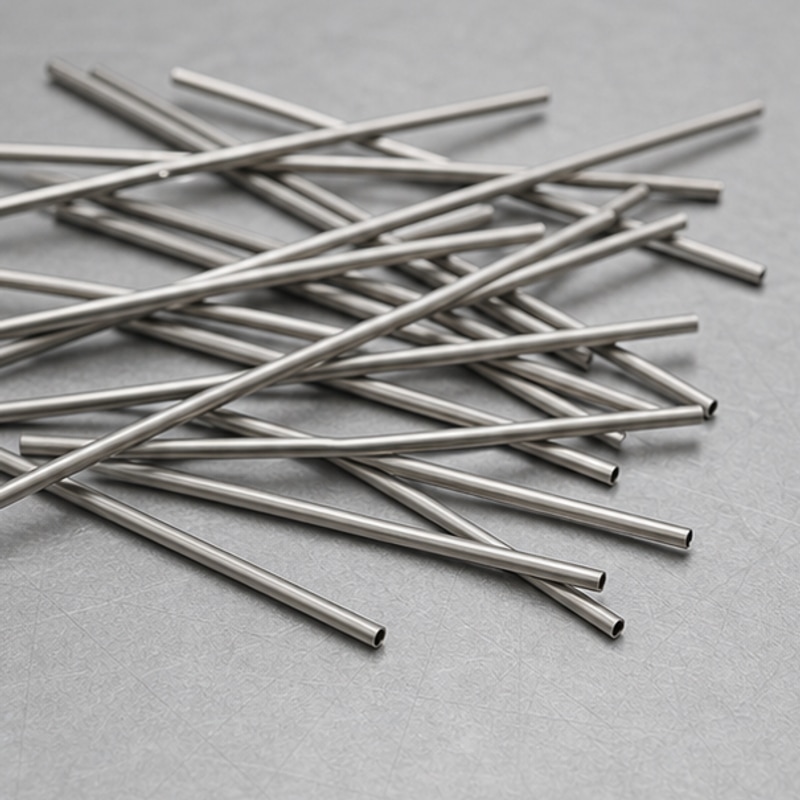
What Inconel 600 Actually Is (and Why It Is Not Stainless Steel)
Inconel 600 is a nickel-chromium-iron alloy, not a stainless steel. The common search phrase “Inconel 600 SS capillary tubing” reflects how buyers often group high-alloy tubing with stainless, but the metallurgy is different. Inconel 600 is typically specified to UNS N06600 and covered by ASTM B167 for seamless and welded tube, and by ASTM B163 for seamless condenser and heat exchanger tube. A typical composition range is approximately 72% nickel minimum, 14–17% chromium, and 6–10% iron, with carbon, manganese, sulfur, silicon, and copper held to controlled maximums. These values should always be confirmed against the current edition of the applicable ASTM specification and the mill certificate for the specific heat.
Compared with 304 or 316L stainless steel, Inconel 600 offers higher resistance to oxidation and carburization at elevated temperatures, better retention of strength in hot environments, and resistance to chloride stress corrosion cracking in many service conditions. It is not a substitute for stainless in every application; it is selected when temperature, corrosion, or thermal cycling exceeds what austenitic stainless can handle reliably.
Applicable Scenarios and Industries
Inconel 600 capillary tubing is commonly evaluated for:
- Instrumentation and impulse lines in high-temperature process systems
- Analytical and chromatography transfer lines where contamination and thermal stability matter
- Thermocouple and RTD protection sheaths in furnaces, kilns, and heat-treat equipment
- Gas sampling probes and pilot-scale reactor tubing
- Aerospace and defense ground support hardware where high-temperature alloy tubing is required
- Nuclear and conventional power plant sensing lines, subject to the applicable code and qualification requirements
In medical device engineering, Inconel 600 is less common than 304 or 316L for fluid path capillary because of cost and nickel release considerations. It may appear in high-temperature sterilization or thermal cycling hardware, but the device manufacturer is responsible for confirming biocompatibility and regulatory suitability for the intended use. Healsmed does not claim implant suitability or biocompatibility for Inconel 600 tubing.
Material Grades and Designations to Confirm on the PO
When specifying Inconel 600 capillary tubing, the purchase order should state:
- Alloy: Inconel 600 / UNS N06600
- Product form: seamless or welded-and-drawn capillary tube
- Specification: ASTM B167, ASTM B163, or an equivalent customer specification
- Condition: annealed, cold-drawn, or as specified by the drawing
- Surface: bright annealed, pickled, or as-drawn, per agreement
Do not assume “Inconel 600” alone is sufficient. The condition and product form affect dimensions, hardness, and pressure capability, so they must be mutually agreed between buyer and supplier.
OD, ID, Wall, and Length Considerations
Capillary tubing is generally defined by small outside diameter, typically from fractional millimeter sizes up to several millimeters, with wall thickness selected to balance pressure rating, flow, and formability. Because the exact commercial range depends on the mill and the drawing, the buyer should provide:
- Nominal OD and OD tolerance
- Nominal ID and ID tolerance, or wall thickness and wall tolerance
- Length: random lengths, fixed lengths, or cut-to-length with tolerance
- Straightness requirement, if the tube must be straight rather than coiled
- End condition: open ends, deburred, chamfered, or sealed
For flow-critical applications, ID tolerance and internal cleanliness often matter more than OD. For fitting and ferrule applications, OD tolerance and surface finish are usually the controlling characteristics.
Tolerances Typical for Capillary Tube
Capillary tolerances are not universal. They depend on alloy, size, wall, condition, drawing process, and inspection method. The table below shows the type of tolerance categories a buyer should expect to define, not fixed values that apply to every order.
| Characteristic | What to specify | Notes |
|---|---|---|
| OD | Nominal plus/minus tolerance, or range | Cold-drawn capillary can hold tighter OD than welded tube; exact capability depends on size and process |
| ID | Nominal plus/minus tolerance, or minimum ID | ID is often inspected with pin gauges or optical methods; method should be agreed |
| Wall thickness | Nominal plus/minus tolerance | Wall eccentricity may be a separate requirement |
| Length | Fixed length tolerance or random length range | Cut length tolerance depends on cutting method and end condition |
| Straightness | Maximum deviation per unit length | Coiled tube may not require straightness |
| Concentricity | Maximum offset or percentage | Important for flow and for thin-wall pressure applications |
If a specific tolerance cannot be verified from the applicable standard or the supplier’s documented capability, it should be written as “depends on drawing, material condition, process route, and mutual agreement between parties.”
End Condition and Burr Control
Capillary tube ends are a common source of assembly problems. Burrs can damage seals, block flow, or shed particles. The buyer should specify:
- Deburred ID and OD
- Chamfer angle and depth, if required
- Squareness of cut
- Maximum allowable burr height or visual acceptance criteria
- Whether ends must be capped or plugged for shipment
Burr control methods include mechanical deburring, electrochemical deburring, and controlled cutting. The appropriate method depends on tube size, wall thickness, quantity, and cleanliness requirement.
Surface Finish and Cleanliness
Surface finish and cleanliness requirements should be stated as measurable criteria where possible, such as Ra value, particle count limit, or a defined cleaning process. For analytical and high-purity applications, buyers may require:
- Bright annealed or electropolished ID
- Oil-free and grease-free surfaces
- Passivation or pickling per applicable specification
- Cleanroom packaging or double-bagging
Do not assume a standard finish is acceptable. Cleaning and finish requirements must be agreed between buyer and supplier and verified by the agreed inspection method.
Inspection Documentation
For Inconel 600 capillary tubing, typical documentation includes:
- Mill certificate or material test report showing heat number, chemistry, and mechanical properties
- Dimensional inspection report for OD, ID, wall, and length
- Surface finish or cleanliness report, if specified
- Burr inspection or visual inspection record, if specified
- Certificate of conformance to the purchase order
Third-party inspection, PPAP, or first article inspection may be requested depending on the industry and risk level. The buyer should list all documentation requirements in the RFQ so the supplier can confirm feasibility.
Packaging Considerations
Capillary tubing can be damaged by handling, vibration, and moisture. Packaging should protect:
- Ends from impact and burr generation
- Surfaces from scratches and contamination
- Straight lengths from bending
- Cleanliness from dust and moisture
Common options include plastic end caps, protective sleeves, rigid tubes, VCI paper, desiccant, and cleanroom bags. The buyer should state whether the tube will be coiled or straight, and whether the packaging must be suitable for cleanroom entry.
RFQ Information Checklist
To receive an accurate evaluation, include the following in your request:
- Alloy and UNS number: Inconel 600 / UNS N06600
- Product form: seamless or welded-and-drawn
- Specification: ASTM B167, ASTM B163, or customer specification
- Condition: annealed, cold-drawn, or as specified
- Dimensions: OD, ID or wall, length, and tolerances
- End condition: deburred, chamfered, capped, or other
- Surface finish and cleanliness requirements
- Straightness or coil requirements
- Quantity and unit of measure
- Inspection documentation required
- Packaging and labeling requirements
- Any applicable quality or regulatory requirements
To request a quotation for Inconel 600 SS capillary tubing, submit your drawings, material grade, quantity, tolerance, surface finish, and inspection requirements through the Healsmed website. The engineering team will review and respond with a technical evaluation.

Healsmed
Leading Stainless Steel Capillary Tube Factory. 1,400+ standard sizes IN STOCK & ready to ship worldwide! High precision, factory-direct price.