Inconel 600 SS Capillary Tube: Material Properties, Manufacturing Tolerances, and Application Guide
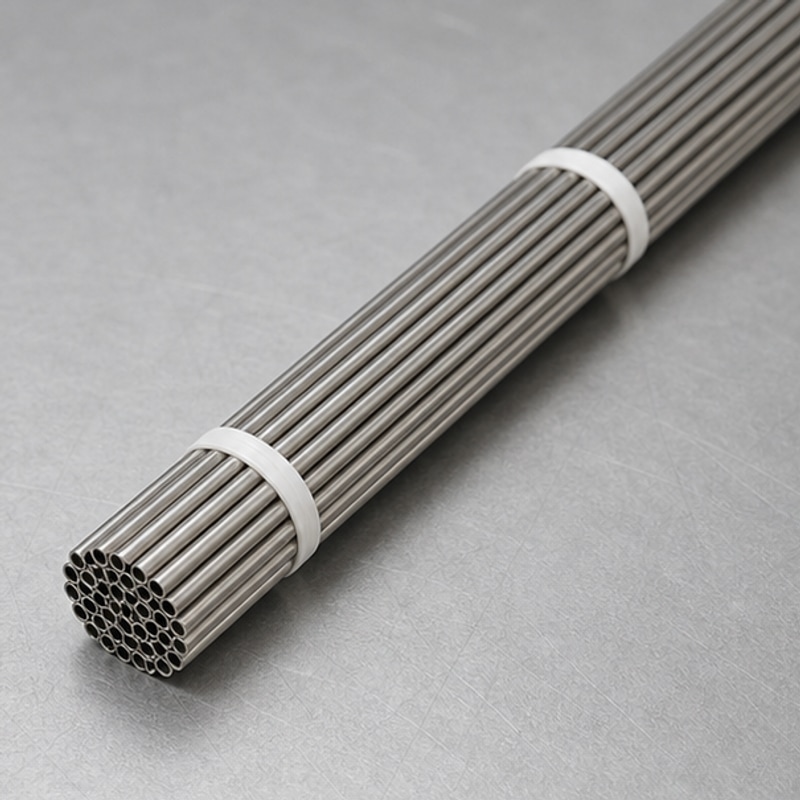
When engineers search for an “Inconel 600 SS capillary tube,” they are typically looking for a small-diameter, thin-wall tube that combines the high-temperature strength and corrosion resistance of a nickel-chromium alloy with the tight dimensional tolerances required for precision instrumentation, medical devices, or analytical equipment. The challenge is not simply finding the alloy; it is sourcing a capillary tube with controlled OD, ID, and wall thickness, clean surfaces, and documented inspection data that will perform reliably in a specific application. This guide outlines the key material and manufacturing considerations for specifying Inconel 600 capillary tubing.
What Is Inconel 600 and Why Use It for Capillary Tubing?
Inconel 600 is a nickel-chromium-iron alloy (UNS N06600) known for its resistance to oxidation at high temperatures, its resistance to chloride-ion stress-corrosion cracking, and its good mechanical properties across a wide temperature range. Unlike austenitic stainless steels such as 304 or 316L, Inconel 600 maintains strength and corrosion resistance in elevated-temperature environments where standard stainless grades may degrade.
For capillary tube applications, this translates to several practical benefits:
- High-temperature stability: Suitable for service in thermal processing, furnace components, and high-temperature instrumentation.
- Corrosion resistance: Resists attack by many organic and inorganic compounds, including chloride stress corrosion.
- Mechanical integrity: Retains strength at temperatures where stainless steels lose load-bearing capacity.
- Non-magnetic: Useful in applications sensitive to magnetic interference.
It is important to note that Inconel 600 is not a stainless steel in the conventional sense; it is a nickel-based superalloy. The keyword “Inconel 600 SS capillary tube” is often used interchangeably, but the material is distinct from 300-series stainless steels.
Applicable Scenarios and Industries
Inconel 600 capillary tubes are specified where a combination of small diameter, high pressure or temperature, and corrosion resistance is required. Typical industries and applications include:
- Medical devices: Components for analytical instruments, high-temperature sterilization equipment, and specialized sensors. Note that material selection for medical devices depends on the specific application, regulatory requirements, and biocompatibility testing; Inconel 600 is not inherently “medical grade.”
- Aerospace and defense: Fuel lines, hydraulic systems, and sensor tubing in high-temperature zones.
- Chemical processing: Sampling lines, thermowells, and capillary tubes for pressure transmitters.
- Energy and power generation: Steam sampling, heat exchangers, and nuclear reactor components (subject to specific codes and approvals).
- Semiconductor manufacturing: Gas delivery lines and high-purity applications where contamination control is critical.
Because Inconel 600 is more difficult to machine and form than stainless steel, the manufacturing process and supplier experience are critical to achieving the required tolerances and surface finish.
Material Grades and Designations
Inconel 600 is a registered trademark of Special Metals Corporation. Equivalent designations include:
- UNS: N06600
- DIN: 2.4816
- AFNOR: NC15Fe
- Other common names: Alloy 600, Nickelvac 600, Ferrochronin 600
While the keyword includes “SS,” it is important to distinguish Inconel 600 from stainless steels like 304, 316L, 316Ti, or 321. Those grades are iron-based and may be suitable for less demanding capillary tube applications. Inconel 600 is nickel-based and chosen for higher temperature or more corrosive environments. When specifying, always reference the exact UNS number or standard to avoid confusion.
OD, ID, Wall Thickness, and Length Considerations
Capillary tubes are defined by their outside diameter (OD), inside diameter (ID), and wall thickness. For Inconel 600, typical capillary dimensions can range from very small (e.g., OD under 1 mm) to several millimeters, depending on the application. The wall thickness is often specified as a percentage of the OD or as an absolute value.
Key considerations when specifying dimensions:
- Flow rate and pressure: The ID directly affects flow characteristics; the wall thickness affects pressure rating.
- Bending and forming: Thinner walls are easier to bend but may require internal support to prevent collapse.
- Length: Capillary tubes can be supplied in straight lengths or coils. Coiled tubing is common for instrumentation but may require straightening for some applications.
- Concentricity: The variation in wall thickness around the circumference is critical for uniform performance.
Because Inconel 600 is a high-strength alloy, achieving very thin walls with tight concentricity requires specialized drawing equipment and process control.
Tolerances for Inconel 600 Capillary Tube
Tolerances for capillary tubing are typically tighter than for standard tubing. The exact tolerance depends on the drawing, material condition, process route, and mutual agreement between parties. The following table provides general industry ranges for reference only; actual capabilities must be confirmed with the supplier.
| Parameter | Typical Range (Reference Only) |
|---|---|
| OD tolerance | ±0.05 mm or tighter, depending on size |
| ID tolerance | ±0.05 mm or tighter, depending on size |
| Wall thickness tolerance | ±10% of nominal wall or as agreed |
| Concentricity | ≤10% of wall thickness |
| Straightness | 0.5 mm per meter or as agreed |
| Length tolerance | ±1 mm for cut lengths, or as agreed |
These values are not universal. For critical applications, tolerances may be tighter; for less demanding uses, they may be relaxed to reduce cost. Always specify tolerances on the drawing and discuss with the supplier before ordering.
End Condition and Burr Control
The end condition of a capillary tube is important for assembly, flow, and cleanliness. Common end conditions include:
- Clean cut: Square cut with minimal burr, suitable for many applications.
- Deburred: Internal and external burrs removed to prevent flow restriction and contamination.
- Chamfered: A slight chamfer to facilitate insertion into fittings.
- Polished: For high-purity or sanitary applications.
Burr control is critical because burrs can break off and contaminate the system, or interfere with flow. For medical or analytical devices, specify maximum burr height and inspection method. The achievable burr size depends on the cutting method, tooling, and material; it should be agreed upon between the buyer and supplier.
Surface Finish and Cleanliness Requirements
Surface finish affects corrosion resistance, cleanliness, and flow characteristics. For Inconel 600 capillary tubing, typical surface finishes range from bright annealed to pickled or polished. The required finish depends on the application:
- Internal surface: For flow and contamination control, specify Ra (average roughness) and any limits on internal defects.
- External surface: For cosmetic or corrosion reasons, specify Ra or a visual standard.
- Cleanliness: For medical, pharmaceutical, or semiconductor applications, specify cleaning and packaging requirements, such as free of oils, particles, and other contaminants. Cleanliness levels should be defined by the buyer and verified by the supplier.
Avoid assuming that a material is “clean” without documentation. Specify the cleaning process and acceptance criteria.
Inspection Documentation
For Inconel 600 capillary tubes, typical inspection documentation includes:
- Material certification: A certificate of conformance or test report showing chemical composition and mechanical properties per the applicable standard (e.g., ASTM B167 for seamless nickel-chromium-iron tubing).
- Dimensional report: Measurements of OD, ID, wall thickness, and length, with pass/fail against drawing tolerances.
- Surface finish report: Ra measurements or visual inspection results, if specified.
- Cleanliness report: If required, results of particle counts or other cleanliness tests.
- Traceability: Heat number and lot identification linking the tube to the material cert.
Additional documentation such as third-party inspection, dye penetrant testing, or hydrostatic testing may be required depending on the application. Discuss these requirements with the supplier during the RFQ stage.
Packaging Considerations
Capillary tubes are delicate and can be damaged by improper handling. Packaging should protect the tube from bending, scratching, and contamination. Common packaging methods include:
- Straight lengths: Packed in rigid tubes or boxes with end caps to prevent movement.
- Coils: Wrapped in protective material and secured to prevent unwinding.
- Cleanroom packaging: For high-purity applications, double-bagged in cleanroom-compatible materials.
- Labeling: Each package should be labeled with material grade, heat number, dimensions, quantity, and any special handling instructions.
Specify packaging requirements in the purchase order to avoid damage during shipping and storage.
RFQ Information Checklist
To receive an accurate quotation for Inconel 600 capillary tubing, provide the following information:
- Material grade: Inconel 600 (UNS N06600) or equivalent.
- Dimensions: OD, ID, wall thickness, and length (or coil length).
- Tolerances: OD, ID, wall, concentricity, straightness, and length.
- End condition: Cut, deburred, chamfered, etc.
- Surface finish: Internal and external Ra or visual standard.
- Cleanliness: Any specific cleaning or contamination limits.
- Inspection: Required documentation and testing.
- Packaging: Straight lengths or coils, cleanroom requirements.
- Quantity: Total length or number of pieces.
- Delivery: Required date and shipping destination.
Include drawings if available. The more detail you provide, the more accurate the quotation and the lower the risk of misalignment between expectations and delivered product.
To request a quotation for Inconel 600 SS capillary tube, submit your drawings, material grade, quantity, tolerance, surface finish, and inspection requirements through the Healsmed website. The engineering team will review and respond with a technical evaluation.

Healsmed
Leading Stainless Steel Capillary Tube Factory. 1,400+ standard sizes IN STOCK & ready to ship worldwide! High precision, factory-direct price.