321 Seamless Capillary Tubing: Material Properties, Manufacturing Tolerances, and Application Guide
When designing or sourcing small-diameter tubing for high-temperature or corrosive environments, engineers often face a specific material selection problem: standard 304 or 316L stainless steels may suffer from intergranular corrosion after welding or when exposed to temperatures in the 425–900°C range. 321 seamless capillary tubing addresses this issue by incorporating a titanium stabilizer that prevents chromium carbide precipitation, making it a preferred choice for applications requiring sustained strength and corrosion resistance at elevated temperatures. This article provides a technical guide to material properties, manufacturing tolerances, and application considerations for 321 seamless capillary tubing, helping procurement and engineering teams evaluate whether this grade meets their design requirements.
Applicable Scenarios and Industries
321 seamless capillary tubing is specified where the service environment includes elevated temperatures, thermal cycling, or exposure to mildly corrosive media. Common industries include:
- Chemical and petrochemical processing – for thermowells, instrument lines, and sampling systems operating between 500°C and 800°C.
- Aerospace – for hydraulic lines, fuel injection components, and bleed air systems where thermal stability is critical.
- Power generation – for boiler instrumentation, heat exchanger tubing, and steam sampling lines.
- Pharmaceutical and bioprocess – for high-temperature steam sterilization cycles where sensitization must be avoided.
- Automotive – for exhaust gas recirculation (EGR) systems and sensor probes.
321 is not typically chosen for low-temperature or cryogenic service; for those conditions, 304L or 316L are more common.
Material Grades and Designations
321 stainless steel is an austenitic grade stabilized with titanium. Relevant standards and designations include:
- UNS S32100 – unified numbering system designation.
- ASTM A269 – standard specification for seamless and welded austenitic stainless steel tubing for general service.
- ASTM A213 – standard specification for seamless ferritic and austenitic alloy-steel boiler, superheater, and heat-exchanger tubes.
- EN 10216-5 – European standard for seamless stainless steel tubes for pressure purposes.
- ISO 1127 – dimensional standard for stainless steel tubes.
Chemical composition (weight %, per ASTM A213):
| Element | Range |
|---|---|
| Carbon (C) | 0.08 max |
| Manganese (Mn) | 2.00 max |
| Silicon (Si) | 0.75 max |
| Phosphorus (P) | 0.045 max |
| Sulfur (S) | 0.030 max |
| Nickel (Ni) | 9.00 – 13.00 |
| Chromium (Cr) | 17.00 – 20.00 |
| Titanium (Ti) | 5 × (C + N) min, 0.70 max |
Mechanical properties (annealed condition, per ASTM A213): tensile strength ≥ 515 MPa (75 ksi), yield strength ≥ 205 MPa (30 ksi), elongation in 2 in. ≥ 35%.
OD / ID / Wall Thickness / Length Considerations
321 seamless capillary tubing is typically produced in outside diameters (OD) from 0.5 mm (0.020 in.) up to 25 mm (1.0 in.), though smaller or larger diameters depend on drawing and process capability. Wall thicknesses range from 0.10 mm (0.004 in.) to 2.0 mm (0.080 in.) or more, depending on the OD and application. Common length options include random mill lengths (typically 3–6 m) or cut-to-length per drawing. For capillary applications, tight control of ID is often more critical than OD, as fluid flow characteristics depend on internal diameter uniformity.
Tolerances (Typical Ranges for Capillary Tube)
Tolerances for 321 seamless capillary tubing are specified per ASTM A269 or customer drawing. Typical ranges for small-diameter tubing (OD ≤ 12.7 mm):
| Parameter | Typical Tolerance Range |
|---|---|
| OD tolerance | ±0.05 mm (±0.002 in.) for OD ≤ 6.35 mm; ±0.10 mm (±0.004 in.) for larger OD |
| ID tolerance | ±0.05 mm (±0.002 in.) or as agreed per drawing |
| Wall thickness tolerance | ±10% of nominal wall |
| Length tolerance (cut-to-length) | +0 / -0.5 mm or per customer specification |
| Straightness | 1 mm per 1000 mm (0.040 in. per 40 in.) typical |
Tighter tolerances are achievable but depend on material condition, process route, and mutual agreement between parties.
End Condition and Burr Control
321 capillary tubing can be supplied with various end conditions:
- Plain cut ends – square cut with deburring of both OD and ID edges.
- Chamfered or beveled ends – for welding or fitting insertion.
- Custom end forms – expanded, reduced, or flared ends per drawing.
Burr control is critical for capillary applications to prevent debris entrapment or flow obstruction. Typical burr height limits are ≤ 0.10 mm (0.004 in.) unless otherwise specified. For ultra-clean applications, ends may be passivated after cutting.
Surface Finish and Cleanliness Requirements
Surface finish for 321 seamless capillary tubing is typically specified as:
- Annealed and pickled – matte surface with Ra ≤ 0.8 μm (32 μin.) typical.
- Bright annealed – smooth, reflective surface with Ra ≤ 0.4 μm (16 μin.) possible.
- Mechanically polished – Ra ≤ 0.2 μm (8 μin.) for special applications.
Cleanliness requirements vary: for general industrial use, tubing is degreased and free of visible oil or scale. For medical device or pharmaceutical applications, additional cleaning (e.g., ultrasonic cleaning in deionized water) and packaging in clean-room conditions may be specified. Note: cleanliness level must be defined by the buyer; Healsmed does not claim any specific cleanliness class unless agreed in writing.
Inspection Documentation
Standard documentation for 321 seamless capillary tubing includes:
- Material test certificate (MTC) – per EN 10204 Type 3.1 or 3.2, showing chemical composition and mechanical properties.
- Dimensional inspection report – OD, ID, wall thickness, length, and straightness measurements from production lot.
- Hydrostatic or pneumatic test report – if required by standard or customer specification.
- Surface finish measurement – Ra values if specified.
- Certificate of conformance (CoC) – confirming compliance with ASTM A269, A213, or other applicable standard.
Additional non-destructive testing (e.g., eddy current, ultrasonic) can be performed upon request, but must be specified at the time of RFQ.
Packaging Considerations
321 capillary tubing is typically packaged to prevent damage during transport and storage:
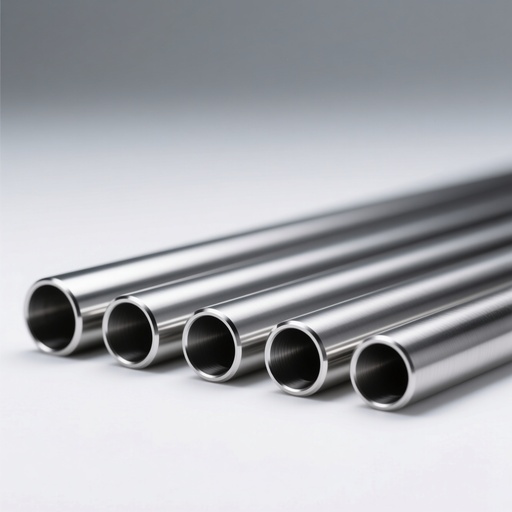
- Individual tubes – wrapped in plastic film or paper, bundled with straps.
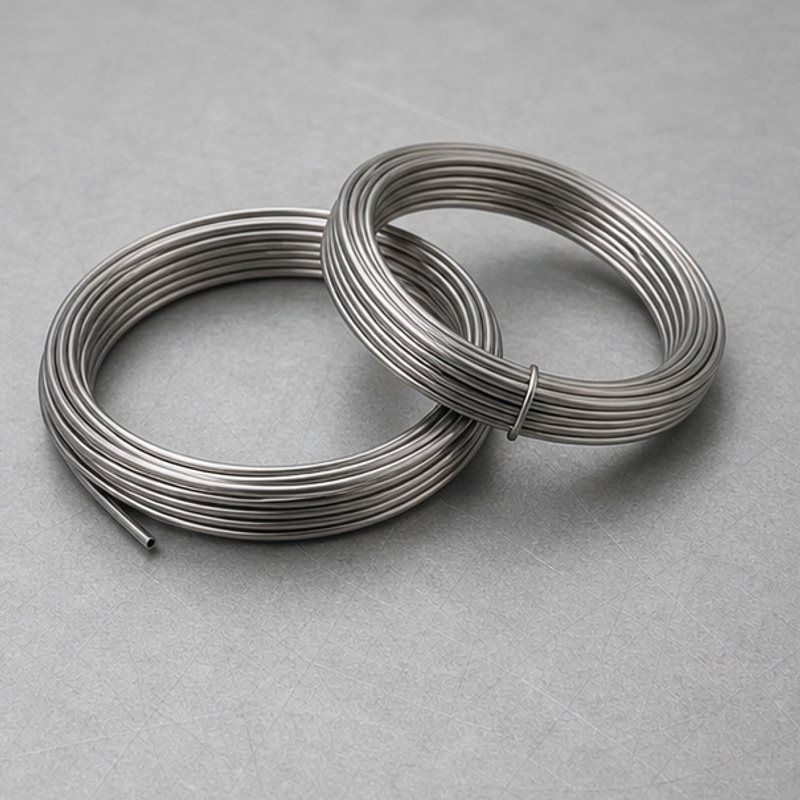
- Coils – for long lengths of small-diameter tubing, coiled with internal and external protective wrapping.
- Clean-room packaging – double-bagged in anti-static polyethylene, with desiccant if required.
- Fiberboard or wooden crates – for fragile or precision-cut lengths.
Packaging method should be specified in the RFQ to match handling and cleanliness requirements.
RFQ Information Checklist
To ensure accurate quotation and production of 321 seamless capillary tubing, include the following in your request:
- Material grade (UNS S32100) and applicable standard (ASTM A269, A213, etc.)
- OD, ID, and wall thickness with tolerances
- Length and quantity (total meters or number of pieces)
- End condition and burr control requirements
- Surface finish (e.g., annealed and pickled, bright annealed, polished)
- Cleanliness and packaging requirements
- Inspection documentation needed (MTC, dimensional report, etc.)
- Any additional testing (hydrostatic, eddy current, etc.)
Providing a detailed drawing or specification sheet is recommended to avoid ambiguity.
To request a quotation for 321 seamless capillary tubing, submit your drawings, material grade, quantity, tolerance, surface finish, and inspection requirements through the Healsmed website. The engineering team will review and respond with a technical evaluation.

Healsmed
Leading Stainless Steel Capillary Tube Factory. 1,400+ standard sizes IN STOCK & ready to ship worldwide! High precision, factory-direct price.