316 Thin Wall Capillary Tube: Material Properties, Manufacturing Tolerances, and Application Guide
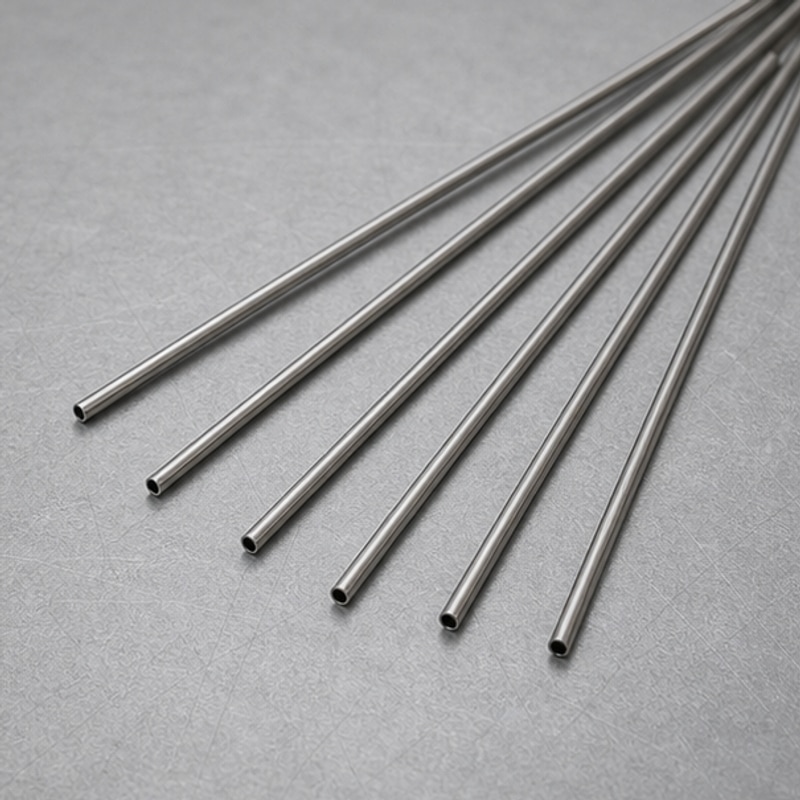
When an application demands the corrosion resistance of 316 stainless steel but requires minimal weight and compact assembly geometry, specifying a 316 thin wall capillary tube becomes a deliberate engineering choice. Unlike standard-wall tubing, thin-wall capillary configurations—typically defined by wall thicknesses below 0.5 mm for outer diameters up to 12.7 mm—introduce unique challenges in manufacturing, handling, and inspection. This article examines the material properties, dimensional tolerances, process controls, and application criteria that procurement and design engineers must evaluate when selecting 316 thin wall capillary tubing for medical devices, analytical instruments, and industrial OEM systems.
Chemical Composition and Mechanical Properties of 316 Stainless Steel
Type 316 austenitic stainless steel derives its enhanced corrosion resistance from molybdenum addition, typically 2.0–3.0% by weight. The standard composition per ASTM A269 and ASTM A213 includes 16–18% chromium, 10–14% nickel, ≤2% manganese, ≤0.75% silicon, ≤0.03% carbon (low-carbon variant 316L), and the balance iron. For thin-wall capillary applications, the low-carbon 316L grade is commonly specified to avoid sensitization during welding or brazing operations. Mechanical properties for annealed 316 capillary tubing: tensile strength 515 MPa minimum, yield strength 205 MPa minimum, elongation 35% minimum in 50 mm gauge length. These values ensure adequate ductility for bending and flaring, though thin walls require careful control of forming forces to avoid buckling.
| Property | Value (Annealed 316) |
|---|---|
| Carbon (max) | 0.08% (0.03% for 316L) |
| Molybdenum | 2.0 – 3.0% |
| Tensile Strength | 515 MPa min |
| Yield Strength (0.2% offset) | 205 MPa min |
| Elongation in 50 mm | 35% min |
| Hardness (Rockwell B) | 95 max |
Dimensional Specifications and Tolerance Classes for Thin-Wall Capillary
316 thin wall capillary tube is typically available in outer diameters from 0.5 mm to 12.7 mm with wall thicknesses ranging from 0.05 mm to 2.0 mm. Standard tolerance classes follow ASTM A269 or customer-specific drawing requirements. For drawn capillary, OD tolerances of ±0.025 mm to ±0.05 mm are achievable, with tighter tolerances requiring additional cold drawing passes and precision mandrel support. Wall thickness tolerances are generally ±10% of nominal for seamless product. Ovality—deviation from true circularity—becomes a critical parameter for thin walls, especially when wall-to-OD ratios fall below 10%. Acceptable ovality is often specified as 0.05 mm TIR max for OD under 6 mm, but tighter control may be necessary for press-fit or interference-fit assemblies.
| OD Range (mm) | Standard OD Tolerance (mm) | Precision OD Tolerance (mm) | Typical Wall Range (mm) |
|---|---|---|---|
| 0.5 – 3.0 | ±0.05 | ±0.025 | 0.05 – 0.50 |
| 3.0 – 6.0 | ±0.05 | ±0.025 | 0.10 – 1.0 |
| 6.0 – 12.7 | ±0.08 | ±0.05 | 0.20 – 2.0 |
Manufacturing Process: Cold Drawing and Thin-Wall Challenges
316 thin wall capillary tube is predominantly produced via cold drawing over a mandrel to achieve precise internal diameter and uniform wall distribution. The drawing process begins with annealed seamless mother tube, which is reduced through a series of dies with inter-pass annealing to restore ductility. As wall thickness decreases, the tube becomes more susceptible to collapse under compressive loads during drawing, requiring careful control of die angle, reduction ratio, and lubrication. For wall thicknesses below 0.2 mm, multiple light reduction passes are preferred over single heavy reductions to maintain concentricity. Post-drawing straightening must be performed with low-force rollers to prevent surface marking or flattening.
Corrosion Resistance and Service Environment Considerations
316 stainless steel offers good resistance to pitting and crevice corrosion in chloride-containing environments up to approximately 1000 ppm Cl⁻ at ambient temperature, thanks to the molybdenum content. For thin-wall capillary, the reduced cross-section means that any localized corrosion attack can quickly compromise structural integrity. In medical devices exposed to saline or biological fluids, 316L thin wall capillary is often passivated per ASTM A967 to remove free iron and enhance the passive oxide layer. Maximum continuous service temperature in oxidizing atmospheres is approximately 870°C, though for thin-wall sections, oxidation rates accelerate above 600°C due to higher surface-area-to-volume ratio. For applications requiring resistance to sulfuric or phosphoric acids, 316 is suitable up to moderate concentrations and temperatures; consult corrosion tables for specific conditions.
Handling, Cutting, and Ovality Control
Thin-wall capillary presents practical handling risks that are less pronounced with standard-wall tubing. Cutting operations—whether abrasive cutoff, laser cutting, or mechanical shearing—must minimize edge deformation and burr formation. Orbital cutting with carbide blades or fiber laser cutting with inert gas assist are preferred for OD under 3 mm with wall under 0.2 mm. Ovality induced during cutting or clamping can exceed the tube’s elastic limit, resulting in permanent distortion. For critical assemblies, suppliers should specify ovality measurement methods (e.g., pin gauge or optical micrometer at multiple rotational positions) and provide certification upon request. Protective end caps or foam inserts are recommended during transport and storage to prevent denting at tube ends.
Industry-Specific Applications for 316 Thin Wall Capillary
In medical devices, 316 thin wall capillary is used for hypodermic needle assemblies, catheter shafts, drug delivery cannulas, and endoscopic instruments where outer diameter must be minimized without sacrificing lumen size for fluid flow. In analytical instrumentation, the tube serves as transfer lines for gas chromatography, liquid chromatography, and mass spectrometry, where internal surface cleanliness and dimensional uniformity directly affect peak resolution and reproducibility. Industrial OEM applications include pneumatic control lines, lubrication feed tubes, miniature heat exchangers, and sensor probes in chemical processing environments where the tube must resist process fluids while occupying minimal space. The choice of 316 over 304 is typically driven by the need for improved pitting resistance in chloride-containing or mildly acidic media.
Quality Control and Inspection Protocol
Standard inspection for 316 thin wall capillary tube includes dimensional verification using laser micrometers or air gauging for OD and ID, eddy current testing for surface and subsurface defects per ASTM E309 or ASTM E426, and hydrostatic or pneumatic pressure testing for leak integrity when specified. For thin walls, burst pressure calculations must account for the reduced wall thickness and potential stress concentration at bends or fittings. A typical procurement specification should define acceptance criteria for OD, ID, wall thickness, ovality, straightness (e.g., 1 mm/m max), surface finish (e.g., 0.8 µm Ra max for medical), and cleanliness level (e.g., no visible oil, particulate, or oxide scale). Material test reports (MTRs) per EN 10204 3.1 or ASTM A269 are standard, with traceability to heat number.
For more information about 316 thin wall capillary tube, contact Healsmed’s engineering team with your material grade, drawing, tolerance requirements, and quantity. Submit inquiries through the Healsmed website for prompt technical review and quotation.
Conclusion
Specifying 316 thin wall capillary tube requires balancing material performance, dimensional precision, and manufacturing feasibility. The molybdenum-bearing 316 grade provides a baseline for corrosion resistance that supports applications from medical implant delivery systems to high-purity analytical fluidics. However, the thin-wall geometry imposes constraints on tolerance capability, handling procedures, and inspection methods that differ from standard-wall products.
Procurement engineers should verify that their supplier can demonstrate repeatable control over ovality, surface finish, and mechanical properties through documented process controls and inspection data. By aligning the tube specification with the actual service conditions and assembly tolerances, designers can avoid costly rework and field failures. Healsmed supplies 316 thin wall capillary tube with dimensional traceability and custom processing options to meet OEM requirements across regulated industries.

Healsmed
Leading Stainless Steel Capillary Tube Factory. 1,400+ standard sizes IN STOCK & ready to ship worldwide! High precision, factory-direct price.