316 Precision Capillary Tubing: Material Properties, Manufacturing Tolerances, and Application Guide
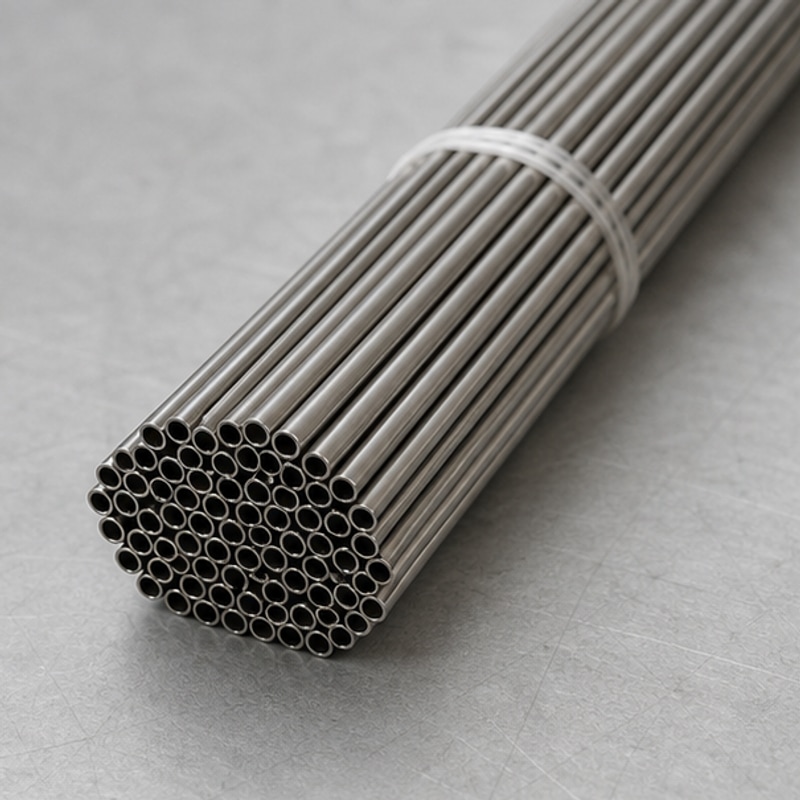
When engineers specify 316 precision capillary tubing, they are selecting a material that balances corrosion resistance, mechanical strength, and dimensional consistency for fluid handling, sensing, and structural applications. This article examines the metallurgical characteristics, manufacturing processes, tolerance classes, and application considerations for 316 stainless steel capillary tubing, providing procurement engineers with the technical data needed for informed material selection.
Chemical Composition and Mechanical Properties of 316 Stainless Steel
The 316 grade is an austenitic stainless steel alloyed with molybdenum to improve pitting and crevice corrosion resistance. The typical chemical composition range per ASTM A269 and ASTM A213 is: chromium 16.0–18.0%, nickel 10.0–14.0%, molybdenum 2.0–3.0%, carbon ≤0.08%, manganese ≤2.0%, silicon ≤0.75%, phosphorus ≤0.045%, sulfur ≤0.030%, and iron balance. The molybdenum content is the key differentiator from 304, providing enhanced resistance to chlorides and reducing environments.
Mechanical properties for annealed 316 capillary tubing typically include tensile strength of 515 MPa minimum, yield strength (0.2% offset) of 205 MPa minimum, and elongation in 2 inches of 35% minimum. For cold-drawn temper conditions, tensile strength can reach 620–860 MPa depending on reduction ratio and final heat treatment. Hardness values range from HRB 95 maximum in annealed condition to HRC 25–30 in full-hard drawn conditions. Maximum service temperature in oxidizing atmospheres is approximately 870°C continuous, though creep strength diminishes above 550°C.
| Property | Annealed Condition | Cold-Drawn (Typical) |
|---|---|---|
| Tensile Strength (MPa) | 515 min | 620–860 |
| Yield Strength 0.2% (MPa) | 205 min | 480–760 |
| Elongation (%) | 35 min | 10–25 |
| Hardness | HRB 95 max | HRC 25–30 |
| Max Service Temp (°C) | 870 | 870 |
Dimensional Specifications and Tolerance Classes for Capillary Tubing
Precision capillary tubing is generally defined by outer diameter (OD) ranging from 0.5 mm to 12.7 mm and wall thickness from 0.05 mm to 2.0 mm. Standard tolerances for drawn tubing follow ASTM A269 or ASTM A213, with typical OD tolerances of ±0.05 mm for sizes under 6.35 mm OD and ±0.08 mm for larger diameters. For tighter requirements, precision drawing can achieve ±0.025 mm on OD and ±0.01 mm on wall thickness, though this increases manufacturing cost and lead time.
Wall thickness tolerance is typically ±10% of nominal for standard applications, but can be held to ±5% for critical flow or pressure applications. Ovality (out-of-roundness) is generally limited to 0.03 mm for small-diameter tubes. Straightness is specified as 1 mm per 1000 mm length for precision applications, with tighter requirements available through roller straightening or stretch straightening. Length tolerances for cut-to-length tubes are ±0.5 mm for standard orders, with ±0.1 mm achievable for high-volume runs using abrasive or laser cutting.
Seamless vs Welded: Manufacturing Route Selection
316 precision capillary tubing is available in both seamless and welded-and-drawn constructions. Seamless tubing starts with a pierced billet or extruded hollow, then undergoes cold drawing to final dimensions. This process eliminates any longitudinal weld seam, providing uniform wall thickness and microstructure. Seamless is preferred for high-pressure applications (above 200 bar), vacuum service, and environments where weld zone corrosion could initiate failure.
Welded tubing is formed from strip and longitudinally welded using TIG or laser, then cold drawn to reduce the weld bead and achieve capillary dimensions. After drawing, the weld zone becomes nearly indistinguishable from the parent metal. Welded tubing is cost-effective for larger volumes and standard sizes, but may exhibit slight wall thickness variation at the weld line. For most analytical instrumentation and medical device applications below 100 bar, welded-and-drawn 316 tubing meets performance requirements at lower cost.
Cold Drawing, Annealing, and Straightening Process
Cold drawing is the primary manufacturing process for achieving precise dimensions and mechanical properties in capillary tubing. A tube is pulled through a die with a mandrel or plug to reduce OD and wall thickness simultaneously. Typical reduction ratios per pass range from 10% to 40%, with multiple passes required to reach final dimensions. Between passes, the tube is annealed at 1040–1120°C in a controlled atmosphere furnace to restore ductility and remove residual stresses.
Annealing is critical for 316 tubing to prevent intergranular corrosion and maintain corrosion resistance. Solution annealing at 1065°C minimum followed by rapid cooling ensures chromium carbides are dissolved and retained in solution. Over-annealing or slow cooling can precipitate carbides at grain boundaries, reducing corrosion resistance in welded or sensitized conditions. After final annealing, tubing is straightened using a two-plane roller straightener or a stretch straightener for high-straightness requirements. Straightening introduces minimal cold work but can increase yield strength by 10–20%.
Cutting methods include abrasive cut-off for general tolerances, laser cutting for burr-free ends, and electrochemical cutting for ultra-clean applications. End preparation—squareness, deburring, and chamfering—is specified according to application requirements. For medical device tubing, electropolishing is often specified to remove surface contaminants and reduce friction.
Corrosion Resistance and Service Environment Considerations
316 stainless steel offers good resistance to a wide range of corrosive media, including organic acids, alkaline solutions, and chloride-containing environments up to approximately 1000 ppm chlorides at ambient temperature. The addition of molybdenum improves pitting resistance equivalent number (PREN) to approximately 24–28, compared to 19–22 for 304. In environments with higher chloride concentrations or elevated temperatures, 316L (low carbon variant) or 317L may be more appropriate.
For medical and pharmaceutical applications, 316 tubing is compatible with steam sterilization (autoclaving), hydrogen peroxide, and common disinfectants. In analytical instrumentation, 316 is suitable for most organic solvents, gases, and aqueous solutions, but is not recommended for hydrochloric acid, sulfuric acid above 10% concentration, or ferric chloride solutions. Stress corrosion cracking can occur in chloride environments above 60°C, so designers should consider stress-relieved or annealed conditions for hot chloride service.
Industry-Specific Applications for 316 Precision Capillary Tubing
In medical devices, 316 capillary tubing is used for hypodermic needles, catheter components, endoscopic instruments, and drug delivery systems. The material’s biocompatibility (ISO 10993 compliant when properly processed) and corrosion resistance in bodily fluids make it a standard choice. Typical dimensions for medical applications range from 0.3 mm to 3.0 mm OD with wall thicknesses of 0.1–0.5 mm.
Analytical instrumentation applications include gas chromatography columns, liquid chromatography flow paths, sample loops, and sensor housings. The tubing must maintain internal cleanliness and dimensional stability under temperature cycling. For these applications, electropolished ID surfaces with roughness Ra ≤0.4 μm are common. Industrial OEM applications include pneumatic controls, hydraulic sensing lines, heat exchanger coils, and chemical injection probes. In these environments, 316 tubing withstands pressures up to 500 bar for small diameters and provides long-term reliability in moderate corrosive conditions.
| Application Sector | Typical OD Range (mm) | Key Requirement |
|---|---|---|
| Medical Devices | 0.3–3.0 | Biocompatibility, clean ID |
| Analytical Instrumentation | 0.5–6.35 | Low surface roughness, tight ID tolerance |
| Industrial OEM | 1.0–12.7 | Pressure rating, corrosion resistance |
Quality Control and Inspection Protocol
Standard inspection for 316 precision capillary tubing includes dimensional verification using air gauging, laser micrometers, and pin gauges. Mechanical properties are verified through tensile testing per ASTM A370. Corrosion resistance is assessed via ASTM A262 Practice E (copper sulfate test) for intergranular corrosion susceptibility. For critical applications, eddy current testing or ultrasonic testing detects longitudinal and transverse defects down to 5% of wall thickness.
Surface finish is evaluated using profilometry for Ra, Rz, and Rmax values. Internal cleanliness is verified by flushing with solvent and gravimetric analysis per ASTM G93 or ISO 15001 for medical oxygen service. Certification packages typically include material test reports (MTR) per EN 10204 3.1 or 3.2, dimensional inspection reports, and certificates of conformance. Buyers should specify required certifications at the RFQ stage to avoid delays.
For more information about 316 precision capillary tubing, contact Healsmed’s engineering team with your material grade, drawing, tolerance requirements, and quantity. Submit inquiries through the Healsmed website for prompt technical review and quotation.
Conclusion
316 precision capillary tubing provides a reliable combination of corrosion resistance, mechanical strength, and dimensional precision for demanding applications in medical, analytical, and industrial sectors. Understanding the material’s chemical composition, mechanical properties, and manufacturing process enables procurement engineers to specify the correct grade, temper, and tolerance class for their application. Seamless construction offers maximum integrity for high-pressure or critical service, while welded-and-drawn tubing provides cost-effective performance for standard requirements.
Successful procurement requires clear communication of dimensional tolerances, surface finish requirements, and certification needs. By aligning material selection with service conditions—particularly chloride concentration, temperature, and pressure—engineers can achieve optimal performance and service life from 316 capillary tubing. As with any precision component, early engagement with the tubing manufacturer during the design phase reduces risk and ensures manufacturability.

Healsmed
Leading Stainless Steel Capillary Tube Factory. 1,400+ standard sizes IN STOCK & ready to ship worldwide! High precision, factory-direct price.