316 Small Diameter Tubing: Material Properties, Manufacturing Tolerances, and Application Guide
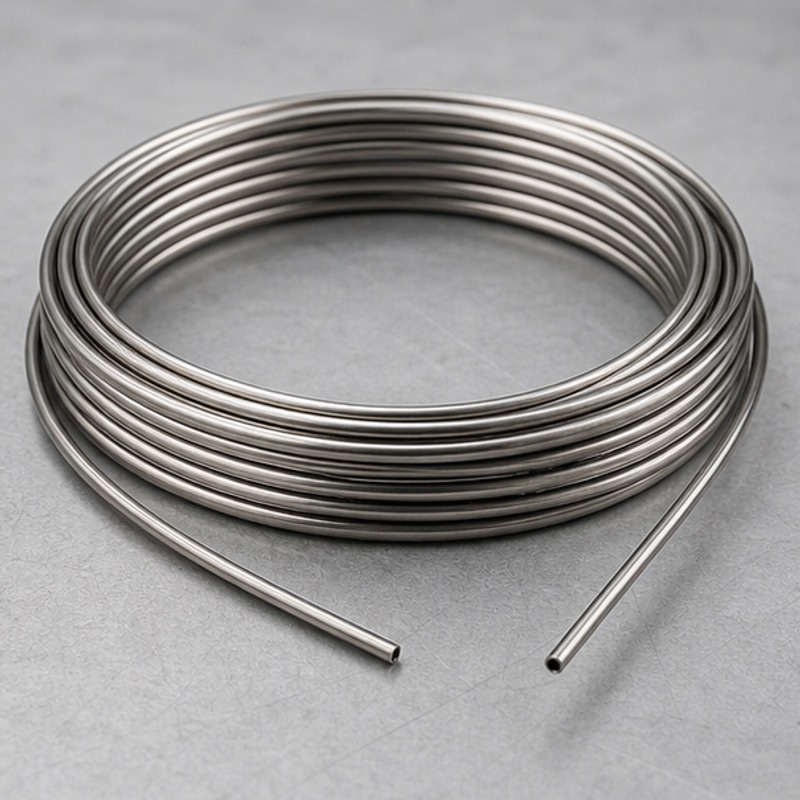
When specifying 316 small diameter tubing for precision fluid handling or structural components in medical devices, analytical instruments, or industrial OEM systems, the material’s corrosion resistance and mechanical stability under varied conditions are critical. 316 small diameter tubing is a common choice for applications where 304 stainless steel lacks sufficient resistance to chlorides or acidic environments. This article provides a factual overview of material properties, manufacturing routes, dimensional tolerances, and inspection criteria for engineers and procurement professionals evaluating capillary tubing in 316 grade.
Defining 316 Small Diameter Tubing: Scope and Limitations
In the context of capillary tubing, “small diameter” typically refers to outer diameters from 0.5 mm to 12.7 mm, with wall thicknesses ranging from 0.05 mm to 2.0 mm. Grade 316 (UNS S31600) is an austenitic stainless steel with molybdenum addition, which improves pitting and crevice corrosion resistance compared to grade 304. For tubing used in biomedical implants or highly corrosive chemical streams, 316L (low carbon variant) is often preferred to avoid sensitization during welding. However, when standard 316 small diameter tubing is specified, it is generally for non-welded, cold-drawn applications where the carbon content (max 0.08%) is acceptable.
Chemical Composition and Mechanical Properties of 316 Small Diameter Tubing
The nominal chemical composition of 316 stainless steel, per ASTM A269 and ASTM A213, is as follows:
| Element | Weight % (Range) |
|---|---|
| Carbon | 0.08 max |
| Manganese | 2.00 max |
| Phosphorus | 0.045 max |
| Sulfur | 0.030 max |
| Silicon | 0.75 max |
| Chromium | 16.0 – 18.0 |
| Nickel | 10.0 – 14.0 |
| Molybdenum | 2.0 – 3.0 |
| Iron | Balance |
Typical mechanical properties for 316 small diameter tubing in the annealed condition (per ASTM A269): tensile strength 515 MPa (75 ksi) minimum, yield strength 205 MPa (30 ksi) minimum, and elongation 35% minimum in 2 inches. These values provide a baseline for design engineers calculating burst pressure or bend radius for capillary assemblies.
Corrosion Behavior of 316 in Capillary Applications
The molybdenum content in 316 small diameter tubing offers improved resistance to pitting in chloride-containing environments, such as seawater, brine, or medical saline solutions. In standardized tests (ASTM G48 Method A), 316 typically shows critical pitting temperature (CPT) around 25–30°C in 6% FeCl3, compared to approximately 15°C for 304. However, for continuous exposure above 60°C in chloride concentrations exceeding 1000 ppm, localized corrosion may still occur. 316 small diameter tubing is not recommended for concentrated hydrochloric or sulfuric acid service above ambient temperature. For applications involving intergranular corrosion risk after welding, specify 316L (UNS S31603) with carbon ≤0.03%.
Manufacturing Process: Cold Drawing, Annealing, and Straightening
Most 316 small diameter tubing is produced via cold drawing, starting from a hot-rolled or extruded hollow shell. The process involves pulling the tube through a series of dies and over a mandrel to reduce the outer diameter and wall thickness sequentially. Each pass typically reduces the cross-sectional area by 15–30%. Intermediate annealing (solution treatment at 1040–1120°C followed by rapid cooling) restores ductility and removes work-hardening. After final drawing, tubing is straightened using a roller or rotary straightener to achieve a bow tolerance typically within 0.5 mm per meter. Cutting to length is performed by abrasive sawing or, for thin walls, by laser cutting to minimize edge burrs.
Seamless vs. Welded 316 Small Diameter Tubing
For capillary dimensions below 6 mm OD, seamless tubing is the dominant manufacturing route because producing a reliable longitudinal weld at such small diameters is challenging and often results in variable wall thickness at the weld seam. Seamless 316 small diameter tubing is produced from a pierced billet or extruded hollow, ensuring uniform microstructure and no weld line. Welded tubing (e.g., from strip formed and TIG welded) is available for larger diameters (above 6 mm OD) and offers cost advantages for non-critical applications. However, for medical device components or analytical instrumentation where internal surface smoothness and absence of weld defects are mandatory, seamless is standard.
Dimensional Tolerances and Surface Finish Expectations
Standard manufacturing tolerances for 316 small diameter tubing depend on the drawing sequence and final annealing condition. Typical OD tolerances are ±0.025 mm for sizes under 3 mm OD, and ±0.05 mm for 3–12.7 mm OD. Wall thickness tolerances are generally ±10% of nominal. For applications requiring tighter control, special drawing with additional passes can achieve ±0.013 mm on OD, but this increases lead time and cost. Surface finish in the as-drawn condition is typically 0.4–0.8 µm Ra. For internal cleanliness (e.g., for HPLC or medical fluid paths), electropolishing or ultrasonic cleaning with passivation is specified.
Industry-Specific Applications for 316 Small Diameter Tubing
In medical device manufacturing, 316 small diameter tubing is used for catheters, guidewires, biopsy needles, and drug delivery cannulas where biocompatibility and corrosion resistance to body fluids are required. In analytical instrumentation, it serves as sample loop tubing, transfer lines, and gas chromatography columns. Industrial OEMs specify 316 for hydraulic control lines, pneumatic sensing lines, and fuel injection components. In each case, the combination of mechanical strength, formability, and corrosion resistance makes 316 a baseline material, though for higher temperature or more aggressive chemistries, 316L or 317L may be substituted.
Quality Control and Inspection Protocol
Incoming inspection of 316 small diameter tubing typically includes dimensional verification (micrometers, laser micrometers, or air gauging), visual surface inspection under magnification for scratches, pits, or die marks, and eddy current or hydrostatic testing for leak integrity. For medical-grade tubing, chemical composition certification via PMI (positive material identification) and mechanical test reports (tensile, hardness) are often required. Procurement specifications should reference ASTM A269 (general seamless and welded tubing) or ASTM A213 (seamless ferritic and austenitic boiler tubes) depending on the pressure rating needed.
For more information about 316 small diameter tubing, contact Healsmed’s engineering team with your material grade, drawing, tolerance requirements, and quantity. Submit inquiries through the Healsmed website for prompt technical review and quotation.
Conclusion
316 small diameter tubing offers a reliable balance of corrosion resistance, mechanical properties, and manufacturability for a wide range of capillary applications. Understanding the nuances of cold drawing, annealing, and tolerance control helps engineering teams select the right product without overspecification. While 316 is not a universal solution for every corrosive environment, it remains a standard choice for medical, analytical, and industrial systems where chloride resistance above 304 is needed.
When evaluating suppliers, focus on dimensional consistency, traceability of material certificates, and the ability to meet application-specific cleanliness and surface finish requirements. By matching the manufacturing route (seamless vs. welded) and tolerance class to the end-use, procurement professionals can avoid costly rework or field failures.

Healsmed
Leading Stainless Steel Capillary Tube Factory. 1,400+ standard sizes IN STOCK & ready to ship worldwide! High precision, factory-direct price.