316 Miniature Tubing: Material Properties, Manufacturing Tolerances, and Application Guide
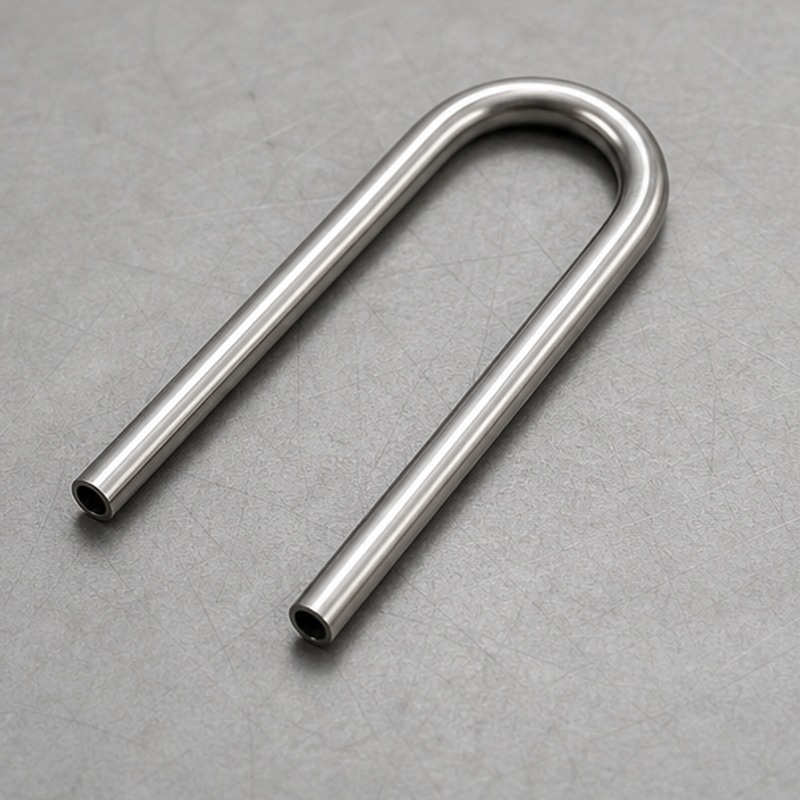
When an engineer specifies 316 miniature tubing, they are typically looking for a combination of corrosion resistance, mechanical strength, and dimensional precision in small-diameter forms. This article reviews the material properties, manufacturing tolerances, and practical applications of 316 stainless steel capillary tubing, providing procurement professionals and design engineers with the technical data needed for informed material selection.
Chemical Composition and Mechanical Properties of 316 Stainless Steel
Type 316 stainless steel is an austenitic alloy with a nominal composition of 16–18% chromium, 10–14% nickel, and 2–3% molybdenum. The molybdenum addition significantly improves pitting and crevice corrosion resistance compared to Type 304. Typical carbon content is ≤0.08%, with 316L variants limiting carbon to ≤0.03% for improved weldability. Mechanical properties for annealed 316 miniature tubing include a tensile strength of 515–620 MPa, yield strength (0.2% offset) of 205–310 MPa, and elongation of 40–50% in 50 mm. Maximum service temperature in continuous service is approximately 870°C, with intermittent exposure up to 925°C. These values make 316 suitable for fluid handling in medical devices, analytical instruments, and industrial sensor assemblies.
Dimensional Specifications and Tolerance Classes for Capillary Tubing
316 miniature tubing is commonly available in outer diameters from 0.5 mm to 12.7 mm, with wall thicknesses ranging from 0.05 mm to 2.0 mm. Standard drawing tolerances for capillary tubes are ±0.025 mm to ±0.05 mm on OD, depending on the drawing pass and final anneal condition. Wall thickness tolerances typically follow a percentage basis — ±10% for wall ≤0.25 mm and ±8% for thicker walls. Length tolerances for cut-to-length pieces are ±0.5 mm for lengths under 100 mm and ±1.0 mm for longer sections. The table below summarizes typical dimensional ranges and tolerances for drawn 316 capillary tubing.
| Parameter | Range | Standard Tolerance |
|---|---|---|
| Outer Diameter | 0.5 mm – 12.7 mm | ±0.025 mm to ±0.05 mm |
| Wall Thickness | 0.05 mm – 2.0 mm | ±10% (wall ≤0.25 mm), ±8% (wall >0.25 mm) |
| Length (cut pieces) | 5 mm – 6000 mm | ±0.5 mm (<100 mm), ±1.0 mm (≥100 mm) |
| Ovality | — | ≤0.03 mm for OD ≤3.0 mm |
Seamless vs Welded: Which Manufacturing Route to Choose
Seamless 316 miniature tubing is produced by piercing a solid billet followed by cold drawing, which yields a uniform microstructure and no weld seam. This route is preferred for high-pressure applications, medical implants, and analytical columns where internal surface integrity is critical. Welded tubing starts from 316 strip that is formed and longitudinally welded, then cold drawn to reduce diameter and wall. For capillary sizes below 3.0 mm OD, seamless is more common due to the difficulty of maintaining weld consistency at small dimensions. Welded 316 tubing can be cost-effective for larger capillary sizes (≥6.0 mm OD) where the weld zone can be fully recrystallized during subsequent annealing. The choice depends on pressure requirements, internal cleanliness, and budget.
Cold Drawing Process and Its Effect on Mechanical Properties
Cold drawing is the primary manufacturing step for achieving tight tolerances in 316 miniature tubing. A tube blank is pulled through a die with a mandrel to reduce OD and wall simultaneously. Each drawing pass reduces cross-sectional area by 20–40%, work-hardening the material. Intermediate annealing at 1010–1120°C restores ductility and removes residual stresses. Final annealing is typically performed in a controlled atmosphere (bright anneal) to maintain a clean surface. The number of drawing passes depends on the target dimensions: a reduction from 6.0 mm OD to 1.0 mm OD may require 5–8 passes with interpass annealing. The final tube exhibits a fine-grained austenitic structure with consistent mechanical properties along the length.
Straightening, Cutting, and Surface Finish
After drawing and annealing, 316 capillary tubing is straightened using rotary straighteners or two-plane roller straighteners to achieve a camber of ≤0.5 mm per meter. Cutting is performed with abrasive wheels, laser, or mechanical shear depending on end-use requirements. For medical devices, laser cutting produces burr-free ends with minimal heat-affected zone. Surface finish is typically specified as bright annealed (Ra 0.4–0.8 µm) or pickled (Ra 0.8–1.6 µm). For applications requiring low particle shedding, electropolishing can reduce Ra to 0.2 µm or better. Internal surface cleanliness is verified by solvent flush and gravimetric analysis per ASTM A632 or customer-specific protocols.
Corrosion Resistance of 316 in Miniature Tubing Applications
The molybdenum content in 316 miniature tubing provides resistance to chlorides, acids, and alkaline solutions. In medical device applications, 316 resists corrosion from body fluids, saline, and sterilization cycles (autoclaving, ethylene oxide). For analytical instrumentation, 316 is compatible with common solvents, diluted acids, and bases up to pH 10 at ambient temperatures. Pitting resistance equivalent number (PREN) for 316 is approximately 24–26, compared to 19–21 for 304. In chloride environments above 1000 ppm, 316 may still experience localized corrosion at elevated temperatures; for such conditions, 316L or higher alloys should be considered. The table below compares corrosion rates in typical media.
| Medium | Temperature | Corrosion Rate (mm/year) |
|---|---|---|
| 0.1 M NaCl | 25°C | <0.01 |
| 10% H2SO4 | 50°C | 0.05–0.15 |
| Seawater (natural) | Ambient | <0.02 (no crevices) |
| 5% NaOH | 60°C | <0.01 |
Quality Control and Inspection Protocol
Inspection of 316 miniature tubing typically includes dimensional verification using laser micrometers or air gauges, surface defect detection via eddy current or dye penetrant, and mechanical testing per ASTM A1016. For medical-grade tubing, additional requirements include internal cleanliness (particulate count), endotoxin testing, and certificate of compliance referencing ASTM A269 or ASTM A632. Hydrostatic testing is performed for pressure-rated tubing, with test pressures calculated per ASME B31.3. Dimensional sampling plans follow AQL levels per customer specification, typically AQL 1.0 for critical dimensions. Each lot is traceable to the original melt source.
Industry-Specific Applications for 316 Miniature Tubing
In medical devices, 316 miniature tubing is used for hypodermic needles, catheter shafts, guidewires, and biopsy instruments. The combination of strength, corrosion resistance, and biocompatibility makes it a standard material for single-use and reusable devices. In analytical instrumentation, 316 capillary tubing serves as fluidic lines for HPLC, gas chromatography, and mass spectrometry, where inertness to mobile phases and low dead volume are critical. Industrial applications include pneumatic controls, fuel injection systems, and sensor probes for chemical processing. The ability to hold tight tolerances on OD and ID allows reliable sealing with compression fittings and ferrule connections.
For more information about 316 miniature tubing, contact Healsmed’s engineering team with your material grade, drawing, tolerance requirements, and quantity. Submit inquiries through the Healsmed website for prompt technical review and quotation.
Conclusion
316 miniature tubing offers a balanced combination of corrosion resistance, mechanical strength, and dimensional precision that meets the requirements of demanding medical, analytical, and industrial applications. Understanding the material’s chemical composition, mechanical properties, and manufacturing tolerances allows engineers to specify the correct tube for their design. Cold drawing, annealing, and finishing processes directly influence the final tube performance, making supplier capability a critical factor in procurement decisions.
When evaluating suppliers, request documentation of actual chemical analysis, mechanical test results, and dimensional inspection reports. Seamless construction is generally recommended for capillary sizes below 3.0 mm OD, while welded options may be viable for larger diameters with appropriate post-weld processing. Proper specification of surface finish and internal cleanliness ensures that the tubing performs as intended in the target environment.
For consistent quality in 316 miniature tubing, work with a supplier experienced in medical-grade and instrumentation-grade capillary products. Healsmed provides custom drawing, cutting, and finishing services to meet OEM specifications across multiple industries.

Healsmed
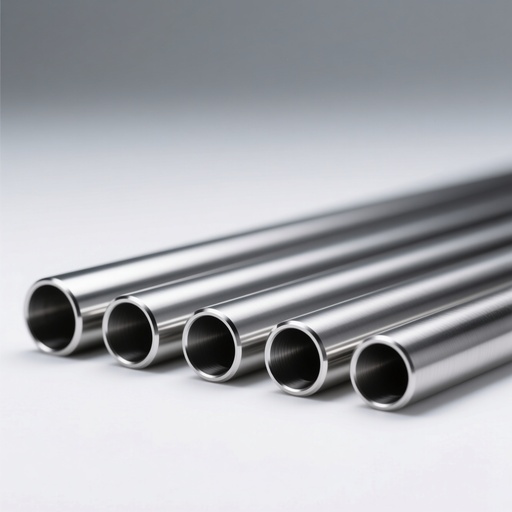
Leading Stainless Steel Capillary Tube Factory. 1,400+ standard sizes IN STOCK & ready to ship worldwide! High precision, factory-direct price.