316 Stainless Steel Capillary Tube: Material Properties, Manufacturing Tolerances, and Application Guide
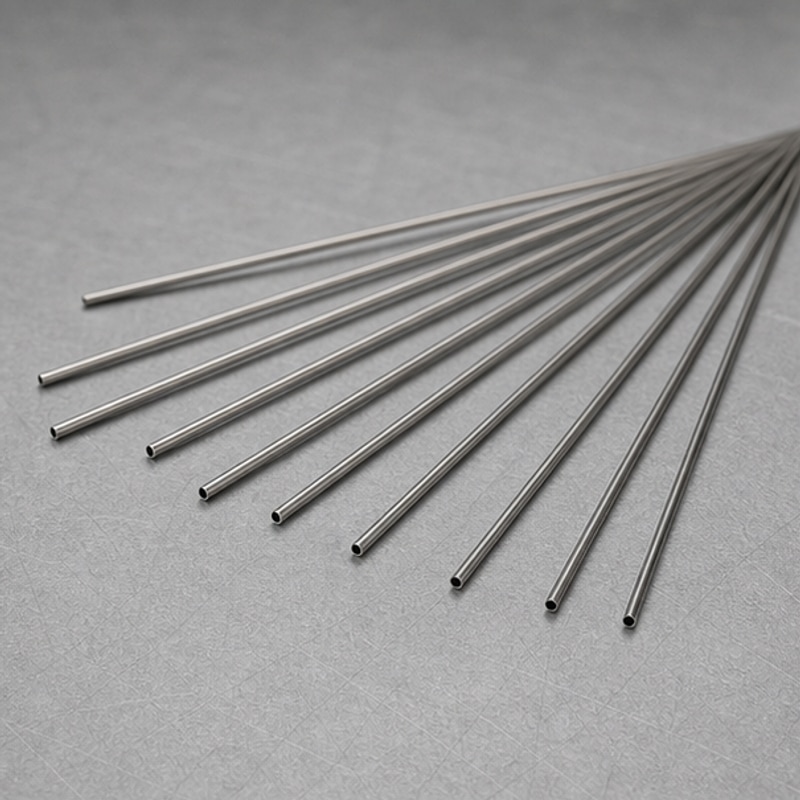
When specifying a 316 stainless steel capillary tube for precision fluid handling, gas chromatography, or medical device assemblies, the material choice directly impacts long-term performance under corrosive or sterile environments. 316 stainless steel capillary tube offers improved pitting resistance over 304 due to its molybdenum content, making it a preferred selection for applications involving chlorides, saline, or chemical reagents. This guide covers the technical parameters that procurement engineers and design teams need to evaluate: chemical composition, mechanical limits, dimensional tolerances, manufacturing methods, and application-specific considerations.
Chemical Composition and Mechanical Properties of 316 Stainless Steel Capillary Tube
Type 316 austenitic stainless steel contains 16–18% chromium, 10–14% nickel, and 2–3% molybdenum. The addition of molybdenum significantly improves resistance to chloride-induced pitting and crevice corrosion compared to 304. Carbon content is typically ≤0.08% for standard 316, with 316L (≤0.03% C) available when welding is required to minimize carbide precipitation. Typical mechanical properties for drawn capillary tube in the annealed condition include a tensile strength of 515–690 MPa, yield strength (0.2% offset) of 205–310 MPa, and elongation of 40–60% in 50 mm. Hardness ranges from 150 to 200 HV. Maximum continuous service temperature is approximately 870°C in oxidizing atmospheres, with intermittent use up to 925°C.
| Element | ASTM A269 / A213 Standard (wt%) |
|---|---|
| Chromium (Cr) | 16.0 – 18.0 |
| Nickel (Ni) | 10.0 – 14.0 |
| Molybdenum (Mo) | 2.00 – 3.00 |
| Carbon (C) | ≤ 0.08 |
| Manganese (Mn) | ≤ 2.00 |
| Silicon (Si) | ≤ 0.75 |
| Phosphorus (P) | ≤ 0.045 |
| Sulfur (S) | ≤ 0.030 |
Dimensional Specifications and Tolerance Classes for Capillary Tubing
316 stainless steel capillary tube is typically available in outer diameters from 0.5 mm to 12.7 mm, with wall thicknesses ranging from 0.05 mm to 2.0 mm. Dimensional tolerances depend on the drawing process and final annealing pass. Standard commercial tolerances for OD are ±0.05 mm for sizes under 6.35 mm, and ±0.08 mm for larger diameters. Precision drawn capillary can achieve ±0.025 mm on OD when specified. Wall thickness tolerances are generally ±10% of nominal. Length tolerances for cut pieces are ±0.5 mm for standard cuts, with tighter tolerances available for critical assemblies. Ovality is held within 50% of the diameter tolerance for most drawn products. Straightness is typically 1 mm per 1000 mm, but can be improved to 0.5 mm per 1000 mm with additional straightening passes.
| Parameter | Standard Range | Precision Option |
|---|---|---|
| Outer Diameter (OD) | 0.5 – 12.7 mm | ±0.025 mm |
| Wall Thickness | 0.05 – 2.0 mm | ±0.005 mm |
| Length (cut pieces) | ±0.5 mm | ±0.1 mm |
| Straightness | 1 mm/m | 0.5 mm/m |
| Ovality | ≤ 50% of OD tolerance | ≤ 30% of OD tolerance |
Seamless vs Welded 316 Stainless Steel Capillary Tube: Manufacturing Route
Seamless capillary tube is produced from solid round bar stock through a series of cold drawing operations. This method yields a uniform wall structure with no longitudinal weld seam, which is critical for high-pressure or vacuum applications where weld integrity cannot be guaranteed. Welded capillary tube starts from strip or sheet that is formed and longitudinally welded using TIG or laser. For small diameters below 3 mm, seamless drawing is the dominant method because weld bead removal becomes impractical. Welded tubing is more economical for larger diameters and thin walls, but the weld zone may exhibit different corrosion resistance or mechanical properties unless full solution annealing is performed. For medical implantable devices or analytical columns, seamless 316 capillary is typically specified.
Cold Drawing, Annealing, Straightening, and Cutting Process
Manufacturing 316 stainless steel capillary tube involves several controlled steps. Cold drawing reduces the diameter and wall thickness through a die, increasing tensile strength and hardness while reducing ductility. Multiple passes are required with intermediate annealing at 1010–1120°C followed by rapid cooling to restore corrosion resistance and softness. After final drawing, straightening is performed using rotary or roller straighteners to meet straightness requirements. Cutting is done by abrasive saw, shear, or laser depending on length tolerance and end quality. Deburring is essential for capillary applications to prevent particle entrapment or flow disruption. Surface finish after drawing is typically a bright annealed or pickled finish, with average roughness (Ra) of 0.4–0.8 µm achievable with controlled die conditions.
Corrosion Resistance and Surface Cleanliness Considerations
316 stainless steel capillary tube offers excellent resistance to a wide range of corrosive media including organic acids, salt solutions, and alkaline environments. Pitting resistance equivalent number (PREN) for 316 is approximately 24–28, compared to 19–22 for 304. For applications involving chloride concentrations above 1000 ppm or temperatures above 40°C, 316L is recommended to minimize sensitization. Internal cleanliness is critical for capillary used in chromatography or medical fluid delivery. Tubing can be supplied in a clean condition with degreasing, ultrasonic cleaning, and inert gas purging. Electropolishing is available to achieve a passive, low-friction internal surface with Ra below 0.2 µm. For pharmaceutical or bioprocess applications, tubing should meet ASTM A270 or ASME BPE surface finish standards.
Industry-Specific Applications for 316 Stainless Steel Capillary Tube
In medical devices, 316 capillary is used for catheter shafts, biopsy needles, and minimally invasive surgical instruments due to its biocompatibility and corrosion resistance. Analytical instrumentation applications include gas chromatography columns, liquid chromatography transfer lines, and sample loops where consistent internal diameter is critical. Industrial OEMs use 316 capillary for pneumatic controls, hydraulic sensing lines, fuel injection components, and heat exchanger coils. In chemical processing, it serves as sampling lines and reagent delivery tubes where exposure to chlorides or sulfuric compounds is expected. The combination of mechanical strength, formability, and corrosion resistance makes 316 a reliable choice for environments where 304 would fail prematurely.
Quality Control and Inspection Protocol for Capillary Tubing
Incoming material verification includes chemical composition analysis via optical emission spectrometry (OES) and mechanical testing per ASTM A1016. Dimensional inspection uses laser micrometers, air gauges, or coordinate measuring machines (CMM) for critical dimensions. Surface defects are detected by eddy current testing or dye penetrant inspection for seamless tubing. Hydrostatic or pneumatic pressure testing is performed when required by the application. For medical or high-purity applications, particulate count and surface cleanliness are verified by rinse testing per ISO 16232 or equivalent. Each production lot is traceable from melt to finished tube. Certificates of conformance and material test reports (MTRs) are provided with each shipment.
For more information about 316 stainless steel capillary tube, contact Healsmed’s engineering team with your material grade, drawing, tolerance requirements, and quantity. Submit inquiries through the Healsmed website for prompt technical review and quotation.
Conclusion
316 stainless steel capillary tube provides a balanced combination of corrosion resistance, mechanical properties, and manufacturability for demanding applications across medical, analytical, and industrial sectors. Understanding the relationship between chemical composition, drawing parameters, and final dimensional tolerances allows procurement engineers to specify tubing that meets both performance and budget requirements. Seamless construction remains the standard for critical applications, while welded options offer cost savings for less demanding uses.
When evaluating suppliers, verify that dimensional tolerances are measured under controlled conditions and that material certifications match the specified grade. Surface finish and internal cleanliness should be confirmed for applications involving sensitive fluids or biological contact. By matching the material properties of 316 capillary tube to the actual operating environment, engineers can avoid premature corrosion failures and ensure reliable long-term performance.

Healsmed
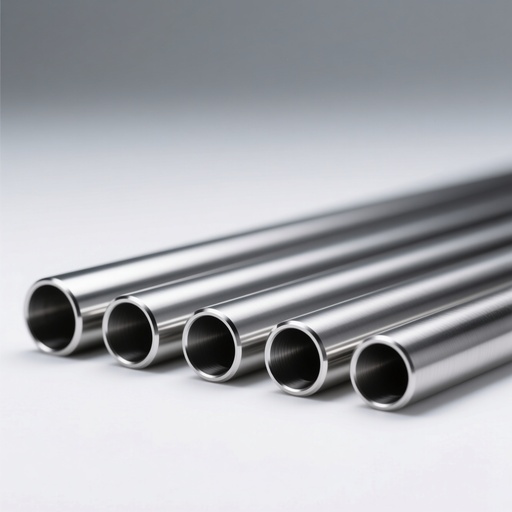
Leading Stainless Steel Capillary Tube Factory. 1,400+ standard sizes IN STOCK & ready to ship worldwide! High precision, factory-direct price.