316 Stainless Steel Capillary Tubing: Material Properties, Manufacturing Tolerances, and Application Guide
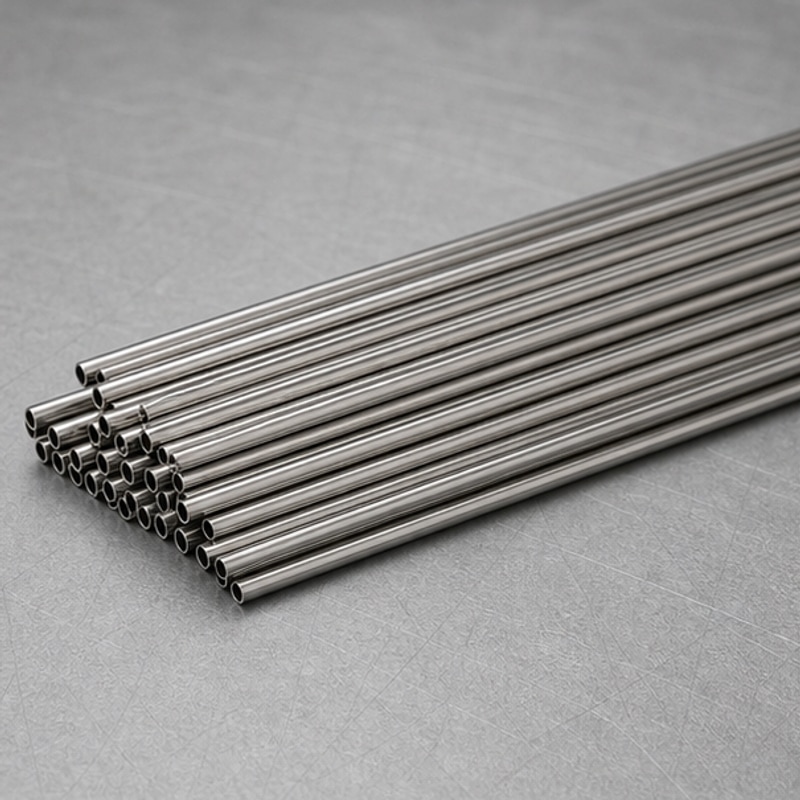
When selecting 316 stainless steel capillary tubing for precision fluid handling, sensor protection, or analytical instrumentation, engineers must evaluate material properties, dimensional consistency, and manufacturing process control. 316 stainless steel capillary tubing offers a combination of corrosion resistance, mechanical strength, and fabricability that makes it a preferred choice across medical device, chemical processing, and industrial OEM applications. This article provides a technical overview of the material grade, manufacturing methods, tolerance classes, and application considerations to support informed procurement decisions.
Chemical Composition and Mechanical Properties of 316 Stainless Steel
316 stainless steel is an austenitic grade alloyed with molybdenum to improve pitting and crevice corrosion resistance. The nominal composition per ASTM A269 and ASTM A213 includes: chromium 16.0–18.0%, nickel 10.0–14.0%, molybdenum 2.0–3.0%, carbon ≤ 0.08%, manganese ≤ 2.0%, silicon ≤ 0.75%, phosphorus ≤ 0.045%, sulfur ≤ 0.030%, and iron balance. The molybdenum content is the key differentiator from 304, providing enhanced resistance to chlorides and reducing environments. Typical mechanical properties in the annealed condition include tensile strength 515 MPa minimum, yield strength 205 MPa minimum, and elongation 35% minimum. Hardness typically ranges 80–95 HRB. Maximum service temperature in continuous service is approximately 870°C, though for capillary tube applications, operating temperatures are usually well below 400°C.
| Property | Value (Annealed) | Test Standard |
|---|---|---|
| Tensile Strength | ≥ 515 MPa | ASTM E8 |
| Yield Strength (0.2% offset) | ≥ 205 MPa | ASTM E8 |
| Elongation in 50 mm | ≥ 35% | ASTM E8 |
| Hardness | ≤ 95 HRB | ASTM E18 |
Dimensional Specifications and Tolerance Classes for Capillary Tubes
316 stainless steel capillary tubing is commonly available in outside diameters ranging from 0.5 mm to 12.7 mm, with wall thicknesses from 0.05 mm to 2.0 mm. Tolerance is a function of the drawing process and the final anneal. Standard commercial tolerances for drawn capillary tubing are ±0.05 mm on OD for sizes up to 6.0 mm, and ±0.08 mm for larger diameters. Precision-drawn tubing can achieve ±0.025 mm on OD. Wall thickness tolerances are typically ±10% of nominal. For applications requiring tight ID control, such as chromatography or drug delivery catheters, specifying ID tolerance directly is recommended, as ID variation is influenced by wall eccentricity.
| OD Range (mm) | Commercial Tolerance (mm) | Precision Tolerance (mm) |
|---|---|---|
| 0.5 – 3.0 | ±0.05 | ±0.025 |
| 3.0 – 6.0 | ±0.05 | ±0.025 |
| 6.0 – 12.7 | ±0.08 | ±0.05 |
Seamless vs Welded: Which Manufacturing Route to Choose
Seamless 316 stainless steel capillary tubing is produced by piercing a solid billet followed by cold drawing. It offers uniform wall structure, no weld seam, and is preferred for high-pressure or vacuum applications where leak integrity is critical. Welded tubing starts from strip that is formed and longitudinally welded, then cold drawn to reduce dimensions. For small-diameter capillary tubes, welded and drawn tubing can achieve mechanical properties similar to seamless, but the weld zone may exhibit slightly different corrosion behavior or hardness. In practice, for OD under 6 mm and wall under 0.5 mm, seamless is more common due to manufacturing constraints. Welded tubing is cost-effective for larger diameters or where the weld can be fully recrystallized during annealing.
Cold Drawing, Annealing, and Straightening Process
Cold drawing is the primary method for reducing tube diameter and wall thickness to capillary dimensions. A lubricated tube is pulled through a die and over a mandrel to achieve the desired OD and ID. Multiple passes with intermediate annealing are required to restore ductility and remove work hardening. Annealing is performed in a controlled atmosphere (typically hydrogen or argon) at 1040–1120°C, followed by rapid cooling to prevent carbide precipitation and maintain corrosion resistance. After annealing, straightening is done using a two-roll or multi-roll straightener to meet straightness tolerances of 0.5 mm per meter or better. Cutting is performed using abrasive wheels, tube cutters, or laser cutting for clean, burr-free ends. Each step must be carefully controlled to avoid surface defects, scratches, or contamination.
Corrosion Resistance and Surface Finish Considerations
316 stainless steel provides good resistance to a wide range of corrosive media, including organic acids, dilute sulfuric acid, and chloride-containing environments up to approximately 1000 ppm chlorides at ambient temperature. For capillary tubing used in biomedical or analytical applications, surface finish is often specified as bright annealed (BA) or electropolished. BA finish is produced by annealing in a protective atmosphere, resulting in a clean, oxide-free surface with typical roughness Ra ≤ 0.4 µm. Electropolishing further reduces surface roughness (Ra ≤ 0.2 µm) and removes a thin layer of metal, improving corrosion resistance and reducing particle entrapment. For applications requiring high internal cleanliness, such as HPLC or gas chromatography, specifying internal surface finish and passivation is critical.
Industry-Specific Applications for 316 Stainless Steel Capillary Tubing
In medical devices, 316 capillary tubing is used for drug delivery catheters, biopsy needles, and endoscopic instruments where biocompatibility, corrosion resistance, and dimensional precision are required. In analytical instrumentation, it serves as transfer lines for gas chromatography, liquid chromatography, and mass spectrometry, where inertness and tight ID control are essential. Industrial applications include pneumatic controls, hydraulic sensing lines, and chemical injection systems. The molybdenum content in 316 provides additional resistance to pitting in chloride-containing fluids, making it suitable for marine and pharmaceutical environments. For high-purity applications, low-carbon grade 316L is often specified to avoid sensitization during welding.
Quality Control and Inspection Protocol
Incoming material is verified by chemical analysis (OES or combustion) and mechanical testing. Dimensional inspection includes OD measurement using laser micrometers or air gauges, wall thickness using ultrasonic or mechanical methods, and straightness using a dial indicator. Surface defects are checked by visual inspection under magnification or eddy current testing for longitudinal flaws. For critical applications, helium leak testing or hydrostatic pressure testing may be specified. Certifications per ASTM A269 or ASTM A213 should include heat traceability, mechanical properties, and corrosion test results if required. Buyers should request a mill test report (MTR) for each lot and verify that the tubing meets the specified grade and condition.
For more information about 316 stainless steel capillary tubing, contact Healsmed’s engineering team with your material grade, drawing, tolerance requirements, and quantity. Submit inquiries through the Healsmed website for prompt technical review and quotation.
Conclusion
316 stainless steel capillary tubing offers a well-established balance of corrosion resistance, mechanical strength, and manufacturability for demanding applications in medical, analytical, and industrial sectors. Understanding the material’s chemical composition, mechanical properties, and the influence of cold drawing, annealing, and straightening on final dimensions is essential for selecting the right product. Tolerance classes, surface finish options, and the choice between seamless and welded tubing must be aligned with the specific application requirements.
Procurement engineers should specify grade (316 or 316L), dimensional tolerances, surface finish, and any required testing or certification at the inquiry stage. Working with a supplier that maintains tight process control and provides full traceability reduces the risk of non-conformance and ensures consistent performance. Healsmed supplies 316 stainless steel capillary tubing in a range of sizes and tolerances, supported by engineering review of each application.

Healsmed
Leading Stainless Steel Capillary Tube Factory. 1,400+ standard sizes IN STOCK & ready to ship worldwide! High precision, factory-direct price.