316 SS Capillary Tube: Material Properties, Manufacturing Tolerances, and Application Guide
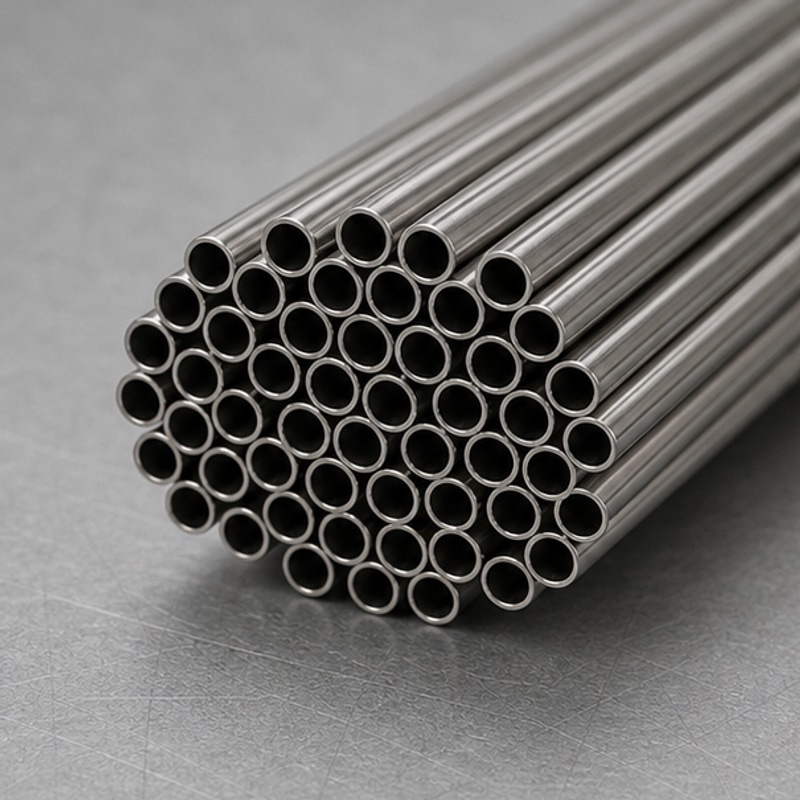
When engineers specify a 316 SS capillary tube for fluid handling, pneumatic control, or sensor interface, they are selecting a material that balances corrosion resistance with mechanical reliability. This article reviews the metallurgical characteristics of grade 316 stainless steel, the dimensional tolerances achievable through cold drawing, and the practical considerations for procurement in medical device, analytical instrumentation, and industrial OEM applications. The focus is on technical data relevant to capillary tube selection and specification.
Chemical Composition and Mechanical Properties of 316 Stainless Steel
Grade 316 stainless steel is an austenitic alloy with molybdenum addition that improves pitting and crevice corrosion resistance compared to 304. The typical chemical composition ranges for 316 SS capillary tube are as follows:
| Element | Weight % (UNS S31600) |
|---|---|
| Carbon | ≤ 0.08 |
| Manganese | ≤ 2.00 |
| Silicon | ≤ 1.00 |
| Phosphorus | ≤ 0.045 |
| Sulfur | ≤ 0.030 |
| Nickel | 10.0 – 14.0 |
| Chromium | 16.0 – 18.0 |
| Molybdenum | 2.0 – 3.0 |
| Iron | Balance |
Mechanical properties for annealed 316 SS capillary tubing typically include tensile strength of 515 MPa (75 ksi) minimum, yield strength of 205 MPa (30 ksi) minimum, and elongation of 40% minimum in 50 mm. These values ensure the tubing can withstand forming and flaring operations without cracking, while maintaining ductility for bending in tight instrument layouts.
Dimensional Specifications and Tolerance Classes for Capillary Tubes
Capillary tube dimensions commonly range from 0.5 mm to 12.7 mm outside diameter (OD) and 0.05 mm to 2.0 mm wall thickness. For 316 SS capillary tube, standard tolerance classes are defined by the drawing process and end use:
| Parameter | Typical Tolerance | Application |
|---|---|---|
| OD (drawn) | ±0.025 mm to ±0.05 mm | Precision instruments, HPLC |
| OD (annealed) | ±0.05 mm to ±0.10 mm | General fluid transfer |
| Wall thickness | ±10% of nominal | Pressure-rated assemblies |
| Length (cut) | ±0.5 mm | Automated assembly lines |
Engineers should specify whether the tube requires hard-drawn or annealed condition, as this affects both tolerance and straightness. For applications such as gas chromatography columns or micro-valve components, tighter tolerances on OD and ovality are critical for sealing and flow consistency.
Corrosion Resistance of 316 SS in Capillary Applications
The molybdenum content in 316 SS capillary tube provides enhanced resistance to chlorides and acidic environments compared to 304. In saline or pharmaceutical cleaning solutions, 316 exhibits a pitting resistance equivalent number (PREN) of approximately 24–26, versus 18–20 for 304. This makes 316 suitable for medical device components exposed to body fluids, analytical instruments handling buffer solutions, and industrial processes using brackish water or mild chemical reagents. Maximum service temperature for continuous use in air is approximately 870°C (1600°F), though for capillary tubes in oxidizing environments, 425°C (800°F) is a more practical limit due to wall thinness and potential sensitization.
Manufacturing Process: Cold Drawing, Annealing, Straightening, and Cutting
Production of 316 SS capillary tube begins with hot-rolled or extruded mother tube. Cold drawing reduces the OD and wall to final dimensions through a series of die passes. Between passes, the tube is annealed at 1040–1120°C (1900–2050°F) in a controlled atmosphere to restore ductility and remove residual stresses. After final drawing, straightening is performed using rotary straighteners or multi-roll levelers to achieve a straightness of 0.5 mm per meter or better. Cutting is done by abrasive wheel, laser, or mechanical shear depending on length accuracy requirements. For seamless capillary tube, the starting material is a pierced billet; for welded tube, strip is formed and longitudinally welded before drawing. Seamless is preferred for high-pressure or critical cleanliness applications, while welded-and-drawn can be cost-effective for non-critical uses where weld integrity is verified.
Surface Finish and Internal Cleanliness Requirements
For medical and analytical applications, 316 SS capillary tube often requires a surface finish of 0.8 µm Ra or better on the ID and OD. Electropolishing after drawing removes micro-burrs and reduces surface area for bacterial adhesion. Internal cleanliness is verified by flushing with isopropyl alcohol and measuring particulate count per ASTM F312. For oxygen service or ultra-pure fluid systems, degreasing and passivation per ASTM A967 are standard. Engineers should specify the required finish and cleanliness level in the procurement document to avoid rework or rejection.
Industry-Specific Applications for 316 SS Capillary Tube
In medical devices, 316 SS capillary tube is used for catheter shafts, drug delivery cannulae, and biopsy needles where biocompatibility and corrosion resistance are required. Analytical instrumentation applications include HPLC columns, gas chromatography transfer lines, and sample loops. Industrial OEMs use 316 capillary for pneumatic controls, lubrication lines, and heat exchanger coils. The combination of mechanical strength and corrosion resistance makes 316 a default choice for environments where 304 would be marginal, such as in coastal installations or food processing equipment with periodic caustic cleaning.
Quality Control and Inspection Protocol
Standard inspection for 316 SS capillary tube includes dimensional measurement with micrometer or laser gauge, eddy current or ultrasonic testing for defects, and pressure testing per ASTM A1016 or ASTM A213. Chemical composition is verified by optical emission spectrometry or X-ray fluorescence. For medical-grade tubing, lot traceability from melt to finished tube is required. A typical inspection plan includes 100% OD/ID gauge check, 10% wall thickness measurement, and burst test on samples. Engineers should request a material test report (MTR) with each shipment to confirm grade and mechanical properties.
Procurement Checklist for 316 SS Capillary Tube
When specifying 316 SS capillary tube, include the following in your inquiry: OD and wall dimensions with tolerances, length and cut tolerance, condition (annealed or hard-drawn), surface finish requirement (Ra value), internal cleanliness level, and any applicable standard (ASTM A269, ASTM A213, or customer-specific). Also specify whether seamless or welded-and-drawn is acceptable. For high-volume OEM orders, discuss drawing reduction ratio and annealing schedule to ensure consistent mechanical properties across production lots.
For more information about 316 SS capillary tube, contact Healsmed’s engineering team with your material grade, drawing, tolerance requirements, and quantity. Submit inquiries through the Healsmed website for prompt technical review and quotation.
Conclusion
316 SS capillary tube offers a reliable combination of corrosion resistance, mechanical properties, and dimensional precision for demanding engineering applications. Understanding the chemical composition, tolerance classes, and manufacturing process helps procurement and design engineers specify the right product the first time. The molybdenum addition in 316 provides a measurable advantage in chloride-bearing environments, making it a standard choice for medical, analytical, and industrial capillary applications.
When sourcing 316 SS capillary tube, focus on the dimensional tolerances, surface finish, and material certification that match your specific use case. A clear technical specification reduces lead time and avoids costly mismatches in material or geometry. Healsmed supplies 316 SS capillary tubing with documented traceability and consistent drawing practices to meet OEM and project requirements.

Healsmed
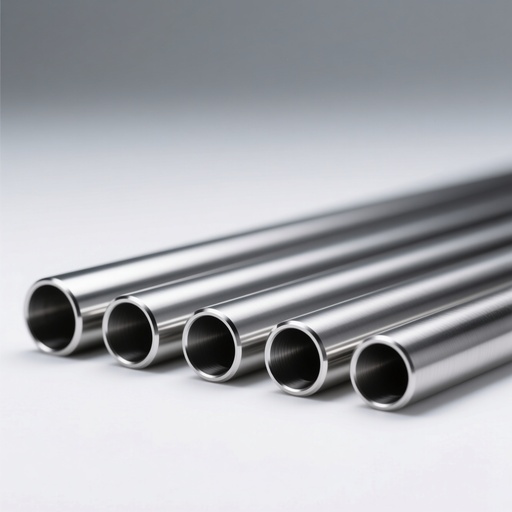
Leading Stainless Steel Capillary Tube Factory. 1,400+ standard sizes IN STOCK & ready to ship worldwide! High precision, factory-direct price.