316 SS Capillary Tubing: Material Properties, Manufacturing Tolerances, and Application Guide
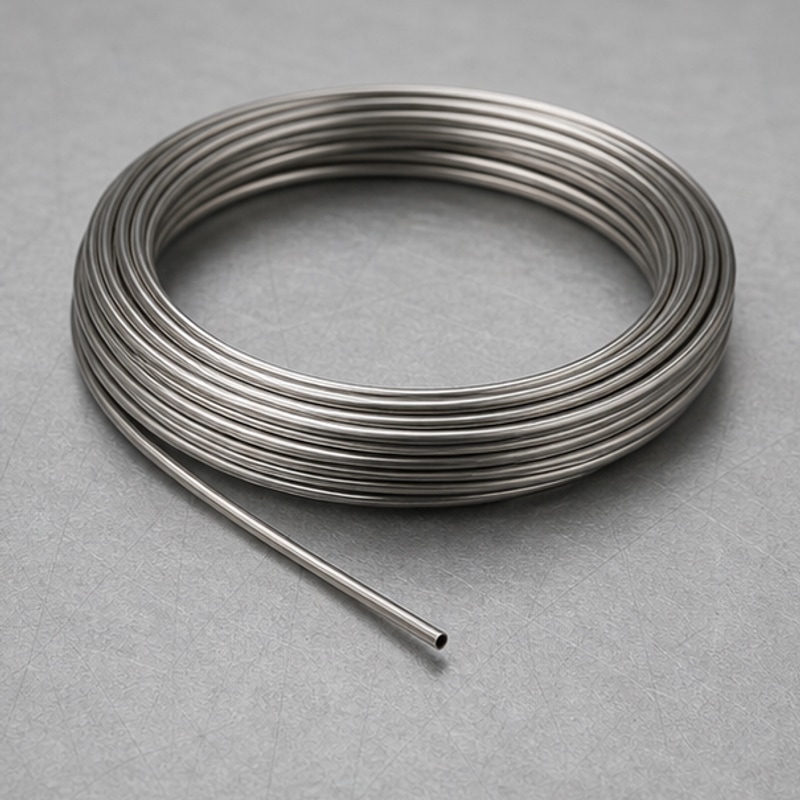
When design engineers specify 316 SS capillary tubing, they are typically selecting a material that must balance corrosion resistance, mechanical strength, and dimensional precision in a small-diameter form factor. 316 stainless steel capillary tubing is widely used in medical devices, analytical instrumentation, and industrial fluid handling where the tube must resist pitting in chloride-containing environments while maintaining tight tolerances. This article provides a technical overview of 316 SS capillary tubing, covering material properties, manufacturing methods, tolerance classes, and application-specific considerations for procurement professionals.
Chemical Composition and Mechanical Properties of 316 SS Capillary Tubing
Type 316 stainless steel is an austenitic grade alloyed with molybdenum (2.0–3.0% by weight) to improve resistance to chloride-induced pitting and crevice corrosion. The typical chemical composition per ASTM A269 and A213 includes: chromium 16.0–18.0%, nickel 10.0–14.0%, molybdenum 2.0–3.0%, carbon ≤0.08%, manganese ≤2.0%, silicon ≤0.75%, phosphorus ≤0.045%, sulfur ≤0.030%, and iron balance. For 316L (low-carbon variant), carbon is limited to ≤0.03% to minimize sensitization during welding. Mechanical properties for annealed 316 capillary tubing typically include tensile strength ≥515 MPa (75 ksi), yield strength (0.2% offset) ≥205 MPa (30 ksi), and elongation in 2 inches ≥35%. These values ensure the tubing can withstand moderate internal pressures and bending during assembly without cracking.
Dimensional Specifications and Tolerance Classes for Capillary Tubes
316 SS capillary tubing is manufactured over a wide dimensional range. Common outer diameters (OD) span from 0.5 mm to 12.7 mm, with wall thicknesses from 0.05 mm to 2.0 mm. The achievable tolerance depends on the number of cold drawing passes and the final annealing step. Standard commercial tolerances for drawn capillary tubing are ±0.05 mm on OD for sizes above 3.0 mm, and ±0.025 mm for smaller diameters. For applications requiring tighter control, precision tolerances of ±0.0125 mm on OD can be negotiated with the manufacturer. Wall thickness tolerances typically follow ASTM A269 guidelines, with ±10% of nominal wall for thin-wall tubes. The table below summarizes typical tolerance classes.
| OD Range (mm) | Commercial Tolerance (±mm) | Precision Tolerance (±mm) |
|---|---|---|
| 0.5 – 2.0 | 0.025 | 0.0125 |
| 2.0 – 5.0 | 0.050 | 0.025 |
| 5.0 – 12.7 | 0.050 | 0.038 |
Cold Drawing, Annealing, and Straightening: The Manufacturing Process
316 SS capillary tubing is produced through a sequence of cold drawing, intermediate annealing, straightening, and cutting. Cold drawing reduces the tube diameter and wall thickness by pulling the tube through a die and over a mandrel. Each drawing pass reduces the cross-section by 15–25%, and multiple passes are required to reach capillary dimensions. Between passes, the tube is annealed at 1040–1120°C in a controlled atmosphere furnace to restore ductility and remove work hardening. After final drawing, the tubing is straightened using rotary straighteners or roller-leveling machines to achieve a camber of less than 0.5 mm per meter. Cutting is performed with abrasive saws or laser systems, with end squareness typically held within 0.1 mm. For medical-grade applications, the tube may undergo electropolishing after straightening to improve surface finish and remove microburrs.
Seamless vs Welded 316 SS Capillary Tubing: Manufacturing Route Selection
Both seamless and welded manufacturing routes are available for 316 SS capillary tubing, and the choice depends on the application’s pressure rating, cost sensitivity, and dimensional requirements. Seamless tubing is produced from a solid billet via extrusion and subsequent cold drawing; it offers uniform wall thickness and no weld seam, making it preferred for high-pressure fluidic systems and medical implants. Welded tubing is formed from strip that is rolled and longitudinally welded, then cold drawn to size. For capillary dimensions, welded tubing can achieve equivalent mechanical properties after full annealing and can be more cost-effective for non-critical applications. However, the weld zone may exhibit slight hardness variations, and if the tube is used in a corrosive environment, the weld must be properly passivated. For most analytical instrumentation and general industrial uses, seamless 316 SS capillary tubing remains the standard because of its reliability in leak-tight assemblies.
Corrosion Resistance and Service Temperature Limits
The primary advantage of 316 SS over 304 is its enhanced resistance to pitting in chloride environments. In capillary tubing applications, this is critical when the tube contacts saline solutions, body fluids in medical devices, or process chemicals in analytical instruments. The pitting resistance equivalent number (PREN) for 316 is typically 24–28, compared to 19–22 for 304. Maximum service temperature in continuous service is approximately 870°C in oxidizing atmospheres, though for capillary tubing used in high-temperature sensors or furnace probes, the 316L variant is recommended to avoid carbide precipitation above 425°C. In intermittent service, 316 can withstand up to 925°C, but prolonged exposure above 800°C may lead to scaling. For cryogenic applications, 316 retains good impact toughness down to -196°C, making it suitable for liquid nitrogen handling lines.
Surface Finish and Internal Cleanliness Requirements
For many capillary tubing applications, internal surface finish is as important as dimensional accuracy. In chromatography columns or microfluidic devices, internal roughness can cause sample carryover or flow irregularities. Standard drawn capillary tubing has an internal surface roughness (Ra) of 0.4–0.8 µm. For higher-purity applications, electropolishing can reduce Ra to 0.2 µm or lower. Internal cleanliness is verified by flushing with solvents and measuring particulate counts per ISO 4406 or ASTM F312-06. Medical-grade capillary tubing often requires a cleanroom packaging environment and certification of cleanliness levels. Buyers should specify surface finish and cleanliness requirements in their procurement documents, as standard mill finishes may not meet the demands of analytical or medical applications.
Industry-Specific Applications for 316 SS Capillary Tubing
316 SS capillary tubing serves diverse industries with specific performance demands. In medical devices, it is used in catheters, biopsy needles, and endoscopic instruments where biocompatibility and corrosion resistance to bodily fluids are essential. Analytical instrumentation applications include gas chromatography columns, liquid chromatography flow paths, and mass spectrometer inlet lines, where the tube must not leach metal ions into the sample. Industrial OEMs use 316 SS capillary tubing for pneumatic logic controls, hydraulic sensing lines, and chemical injection systems in pharmaceutical and petrochemical plants. In each case, the tube must meet the dimensional tolerances and surface finish specified by the system designer. The table below lists typical applications and corresponding tubing sizes.
| Application | Typical OD (mm) | Wall (mm) | Key Requirement |
|---|---|---|---|
| Medical catheter components | 0.5 – 2.0 | 0.05 – 0.2 | Biocompatibility, smooth surface |
| Gas chromatography columns | 0.25 – 0.53 | 0.05 – 0.1 | Inertness, tight ID tolerance |
| Hydraulic sensing lines | 3.0 – 6.0 | 0.5 – 1.0 | Pressure rating, leak tightness |
| Chemical injection probes | 1.0 – 3.0 | 0.2 – 0.5 | Corrosion resistance, clean ID |
Quality Control and Inspection Protocol for Capillary Tubing
Standard quality control for 316 SS capillary tubing includes dimensional verification using laser micrometers or air gauging, tensile testing per ASTM E8, and hardness testing (typically Rockwell B 95 max for annealed condition). For seamless tubing, ultrasonic or eddy current testing is performed to detect longitudinal and transverse defects. Chemical composition is verified by optical emission spectroscopy or combustion analysis. When specified, hydrostatic pressure testing or air-under-water leak testing can be conducted for tubing intended for pressurized systems. Dimensional inspection records should be provided with each lot, including OD, ID, ovality, and wall thickness measurements at both ends of the tube. Buyers should request a material test report (MTR) per EN 10204 Type 3.1 or 3.2 to confirm traceability from melt to finished product.
For more information about 316 SS capillary tubing, contact Healsmed’s engineering team with your material grade, drawing, tolerance requirements, and quantity. Submit inquiries through the Healsmed website for prompt technical review and quotation.
Conclusion
316 SS capillary tubing offers a reliable combination of corrosion resistance, mechanical properties, and dimensional precision for demanding applications in medical, analytical, and industrial environments. Understanding the material specifications, manufacturing process, and tolerance capabilities is essential for selecting the right tube for a given application. Seamless tubing remains the standard for high-integrity systems, while welded options can be considered for cost-sensitive, non-critical uses.
Procurement professionals should pay close attention to tolerance classes, surface finish requirements, and inspection documentation when sourcing 316 SS capillary tubing. By specifying clear requirements and working with a manufacturer experienced in cold drawing small-diameter tubes, buyers can ensure consistent quality and performance in their end products.

Healsmed
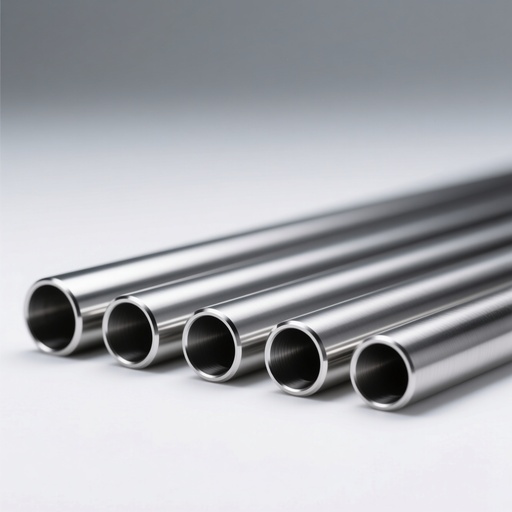
Leading Stainless Steel Capillary Tube Factory. 1,400+ standard sizes IN STOCK & ready to ship worldwide! High precision, factory-direct price.