316 Seamless Capillary Tube: Material Properties, Manufacturing Tolerances, and Application Guide
When specifying 316 seamless capillary tube for precision fluid handling or sensor applications, engineers must evaluate material properties, manufacturing tolerances, and corrosion resistance to ensure long-term reliability. This article provides a technical overview of 316 seamless capillary tube, covering its metallurgical characteristics, dimensional capabilities, and practical procurement considerations for OEMs in medical devices, analytical instrumentation, and industrial systems.
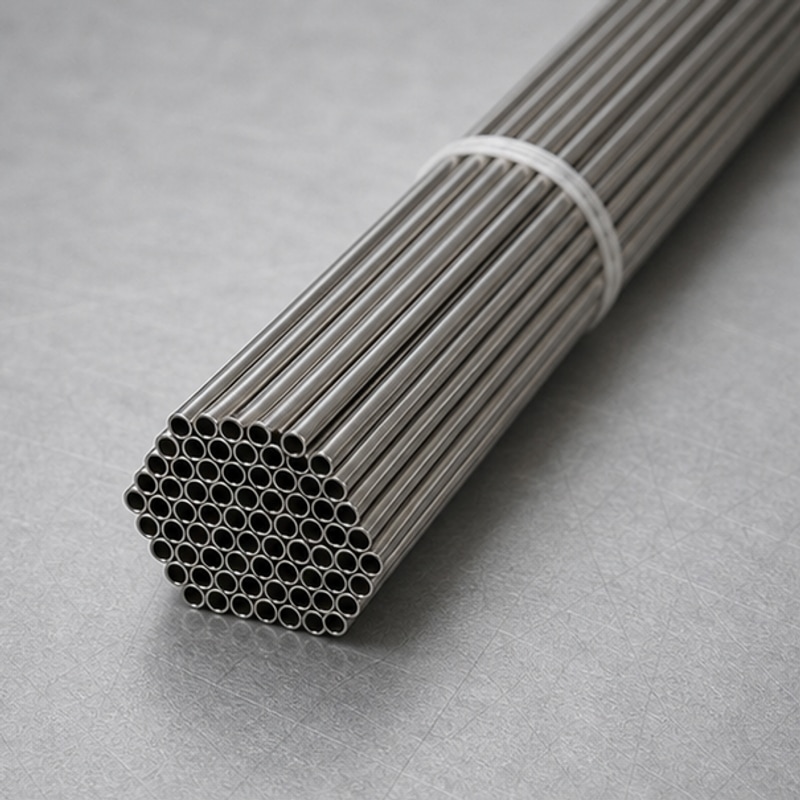
Understanding 316 Seamless Capillary Tube: What Buyers Actually Mean
In procurement specifications, “316 seamless capillary tube” refers to a cold-drawn, weld-free austenitic stainless steel tube with an outer diameter typically between 0.5 mm and 12.7 mm and wall thicknesses from 0.05 mm to 2.0 mm. The seamless designation is not a marketing term—it indicates that the tube was formed from a solid billet through hot extrusion followed by cold drawing, eliminating any longitudinal weld seam. This distinction matters for applications requiring consistent mechanical strength, corrosion resistance, and pressure integrity across the entire tube circumference.
Chemical Composition and Mechanical Properties of 316 Stainless Steel
The 316 grade is defined by its molybdenum content (2.0–3.0 wt%), which enhances pitting and crevice corrosion resistance compared to 304 stainless steel. The typical chemical composition per ASTM A269 and A213 is shown below.
| Element | Composition Range (wt%) |
|---|---|
| Carbon | ≤ 0.08 |
| Manganese | ≤ 2.00 |
| Phosphorus | ≤ 0.045 |
| Sulfur | ≤ 0.030 |
| Silicon | ≤ 0.75 |
| Chromium | 16.0 – 18.0 |
| Nickel | 10.0 – 14.0 |
| Molybdenum | 2.0 – 3.0 |
| Iron | Balance |
Mechanical properties for annealed 316 seamless capillary tube typically include a tensile strength of 515 MPa minimum, yield strength of 205 MPa minimum, and elongation of 40% in 2 inches. These values provide sufficient ductility for bending and flaring during assembly while maintaining structural integrity under internal pressure.
Seamless vs. Welded: Why the Manufacturing Route Matters for Capillary Tubing
For capillary dimensions, the choice between seamless and welded tubing has direct consequences on performance. Seamless 316 capillary tube is produced by cold drawing a hollow shell through a series of dies and mandrels, resulting in a uniform grain structure oriented along the tube axis. This orientation provides consistent mechanical properties in both the longitudinal and hoop directions. Welded tubing, by contrast, introduces a fusion zone where the microstructure differs from the base metal. In small-diameter capillary applications—where wall thickness may be 0.1 mm or less—the weld zone can represent a significant portion of the cross-section, creating a potential site for preferential corrosion or fatigue crack initiation. Seamless construction eliminates this concern entirely. For pressure-rated systems, seamless tubing also avoids the need for weld seam flattening or post-weld heat treatment, simplifying qualification testing.
Dimensional Specifications and Tolerance Classes
316 seamless capillary tube is available in a wide range of dimensions. Common outer diameters include 0.5 mm, 0.8 mm, 1.0 mm, 1.6 mm, 2.0 mm, 3.0 mm, 4.0 mm, 6.0 mm, and up to 12.7 mm. Wall thicknesses range from 0.05 mm to 2.0 mm, depending on the OD and drawing capability. Dimensional tolerances depend on the drawing process and final annealing step. Standard commercial tolerances for cold-drawn capillary tubing are typically ±0.05 mm on OD and ±0.05 mm on wall thickness. For precision applications—such as HPLC columns or gas chromatography—tighter tolerances of ±0.025 mm on OD and ±0.025 mm on wall can be specified. The table below summarizes typical tolerance classes.
| Parameter | Standard Tolerance | Precision Tolerance |
|---|---|---|
| Outer Diameter (OD) | ±0.05 mm | ±0.025 mm |
| Wall Thickness | ±0.05 mm | ±0.025 mm |
| Length (cut-to-length) | ±0.5 mm | ±0.1 mm |
| Straightness | 1 mm/m | 0.5 mm/m |
Buyers should note that tighter tolerances increase manufacturing cost and lead time. For many applications, standard tolerances are sufficient, provided the supplier maintains consistent process control.
Corrosion Resistance and Surface Finish Considerations
The molybdenum content in 316 stainless steel provides improved resistance to chloride-induced pitting and crevice corrosion compared to 304. In capillary tubing, the internal surface finish is often as critical as the external finish. For medical devices or analytical instruments, internal surface roughness (Ra) values of 0.4 µm or better may be required to minimize fluid retention and prevent contamination. Seamless tubing, drawn over a mandrel, can achieve smooth internal surfaces without the weld bead that welded tubing may exhibit. For applications involving aggressive media—such as saline, blood, or chemical reagents—316 seamless capillary tube offers a reliable combination of general corrosion resistance and localized attack resistance. Maximum service temperature in continuous service is approximately 870°C in oxidizing atmospheres, though for most capillary applications, operating temperatures are well below 400°C.
Industry-Specific Applications for 316 Seamless Capillary Tube
Medical device manufacturers use 316 seamless capillary tube for biopsy needles, fluid delivery catheters, and minimally invasive surgical instruments where dimensional consistency and biocompatibility are required. In analytical instrumentation, these tubes serve as sample loops, transfer lines, and columns for gas and liquid chromatography. Industrial OEMs specify 316 seamless capillary for pneumatic controls, hydraulic sensing lines, and chemical injection systems. The absence of a weld seam simplifies cleaning and passivation, which is particularly important for applications requiring FDA or USP Class VI compliance. For high-pressure applications—such as HPLC systems operating above 1000 bar—seamless tubing provides the burst pressure margin that welded tubing cannot guarantee at small diameters.
Quality Control and Inspection Protocol
Reputable suppliers of 316 seamless capillary tube perform a series of inspections to verify material and dimensional conformance. Chemical composition is verified via optical emission spectrometry or combustion analysis. Mechanical properties are confirmed through tensile testing on representative samples. Dimensional inspection uses laser micrometers, air gauges, or mechanical micrometers, with statistical process control data provided on request. For critical applications, eddy current testing or hydrostatic pressure testing may be specified to detect surface or subsurface defects. Buyers should request a material test report (MTR) per ASTM A269 or A213, which includes heat number, chemical analysis, and mechanical test results. Visual inspection for surface defects such as scratches, pits, or die marks is also standard.
Procurement Checklist for 316 Seamless Capillary Tube
When sourcing 316 seamless capillary tube, confirm the following with your supplier: exact OD and wall dimensions with tolerance requirements; temper condition (annealed, half-hard, or full-hard); surface finish specification (internal and external); straightness requirement; cut length and end condition (square cut, deburred, or chamfered); and any special testing requirements. Specify whether the tubing must comply with ASTM A269 (general service) or ASTM A213 (boiler and superheater tubes). For medical applications, verify that the material meets FDA biocompatibility guidelines and that the supplier can provide process validation documentation. Finally, request a sample length for dimensional verification before committing to a production order.
For more information about 316 seamless capillary tube, contact Healsmed’s engineering team with your material grade, drawing, tolerance requirements, and quantity. Submit inquiries through the Healsmed website for prompt technical review and quotation.
Conclusion
316 seamless capillary tube offers a reliable solution for applications requiring consistent mechanical properties, corrosion resistance, and dimensional precision. The seamless manufacturing route eliminates weld-related variability, making it the preferred choice for medical, analytical, and industrial systems where failure is not an option. By understanding the material’s chemical composition, mechanical limits, and tolerance capabilities, engineers can specify tubing that meets application requirements without over-specifying cost.
Selecting the right supplier involves verifying process control, inspection protocols, and material traceability. With careful specification and qualified sourcing, 316 seamless capillary tube provides long-term performance in demanding environments.

Healsmed
Leading Stainless Steel Capillary Tube Factory. 1,400+ standard sizes IN STOCK & ready to ship worldwide! High precision, factory-direct price.