310S Miniature Tubing: Material Properties, Manufacturing Tolerances, and Application Guide
310S miniature tubing is a specialized product category within precision stainless steel capillary tubing, selected primarily for applications involving sustained high-temperature exposure or cyclic thermal stress. Engineers specifying 310S miniature tubing do so for its oxidation resistance and creep strength at temperatures exceeding most standard austenitic grades. This article provides a technical overview of the material properties, manufacturing tolerances, inspection protocols, and application considerations for 310S miniature tubing, based on practical industry standards rather than promotional claims.
Understanding 310S Miniature Tubing: What Buyers Actually Mean
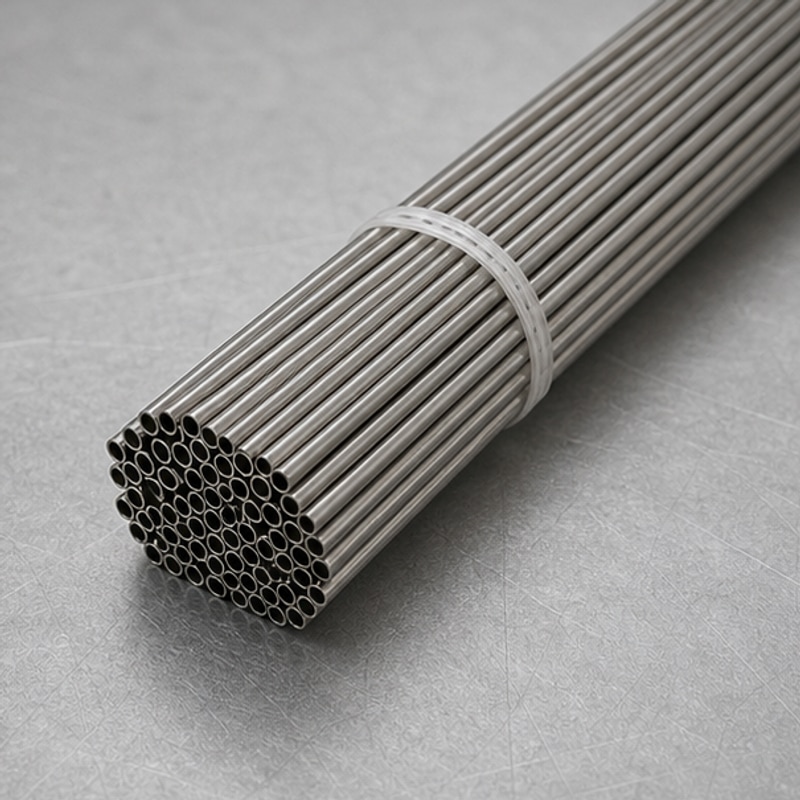
When procurement or engineering teams specify 310S miniature tubing, they typically refer to small-diameter tubes with an outer diameter (OD) between 0.5 mm and 12.7 mm and wall thicknesses from 0.05 mm to 2.0 mm, manufactured from UNS S31008 (310S) stainless steel. The “S” suffix denotes a low-carbon variant of 310, which minimizes carbide precipitation during welding and high-temperature service. Unlike general-purpose 304 or 316L capillary tubes, 310S miniature tubing is not chosen for ambient corrosion resistance alone; it is selected for applications where the tubing will operate above 800°C (1472°F) and must resist scaling and spalling. Buyers should verify that the material conforms to ASTM A213 (seamless) or ASTM A269 (welded) specifications, depending on the manufacturing route.
Chemical Composition and Mechanical Properties of 310S
310S stainless steel is an austenitic alloy with a higher chromium and nickel content than 304 or 316L. The typical chemical composition ranges (weight percent) are shown in Table 1 below. These levels provide a stable austenitic structure and promote a protective chromium oxide layer at elevated temperatures.
| Element | Composition Range (wt%) |
|---|---|
| Carbon (C) | 0.08 max |
| Manganese (Mn) | 2.00 max |
| Silicon (Si) | 1.50 max |
| Phosphorus (P) | 0.045 max |
| Sulfur (S) | 0.030 max |
| Chromium (Cr) | 24.0 – 26.0 |
| Nickel (Ni) | 19.0 – 22.0 |
| Molybdenum (Mo) | 0.75 max |
| Iron (Fe) | Balance |
Mechanical properties for 310S miniature tubing in the annealed condition typically include a tensile strength of 515–690 MPa (75–100 ksi), yield strength (0.2% offset) of 205–310 MPa (30–45 ksi), and elongation in 50 mm of 40% minimum. These values are specified per ASTM A213. The alloy retains significant strength up to 1150°C (2100°F), with maximum continuous service temperature around 1100°C (2012°F) in oxidizing atmospheres. Creep and rupture strength data should be reviewed for cyclic or load-bearing applications.
310S vs 310: Key Differences for High-Temperature Applications
Standard 310 (UNS S31000) has a carbon content up to 0.25%, while 310S limits carbon to 0.08% maximum. The reduced carbon in 310S minimizes sensitization—the formation of chromium carbides at grain boundaries—during welding or prolonged exposure in the 500–800°C range. For miniature tubing applications involving welded joints (e.g., thermocouple sheaths or furnace probes), 310S is the preferred grade to avoid intergranular corrosion and loss of ductility. In non-welded applications where maximum creep strength is required, standard 310 may be acceptable, but 310S offers better long-term stability. Engineers should also note that 310S is not a direct substitute for 316L in chloride-containing environments; its pitting resistance equivalent number (PREN) is lower.
Dimensional Specifications and Tolerance Classes
310S miniature tubing is available in a range of standard dimensions. Typical OD offerings span 0.5 mm to 12.7 mm, with wall thicknesses from 0.05 mm to 2.0 mm. Dimensional tolerances depend on the drawing process and the final application. Cold drawing can achieve OD tolerances of ±0.025 mm for precision applications, while standard commercial tolerances are ±0.05 mm. Wall thickness tolerances are typically ±10% of nominal. Table 2 summarizes common tolerance classes.
| Parameter | Precision Class | Commercial Class |
|---|---|---|
| Outer Diameter | ±0.025 mm | ±0.05 mm |
| Wall Thickness | ±0.05 mm or ±10% | ±0.10 mm or ±15% |
| Length (cut) | ±0.5 mm | +1.0 / -0.0 mm |
| Straightness | 0.5 mm/m | 1.0 mm/m |
For applications requiring tight internal diameters (e.g., fluid delivery in analytical instruments), specify both ID and OD tolerances. Straightness is critical for capillary tubes used in long, unsupported runs.
Seamless vs Welded: Which Manufacturing Route to Choose
310S miniature tubing can be produced via seamless or welded-and-drawn processes. Seamless tubing is formed by piercing a solid billet and drawing through dies, resulting in a uniform wall structure with no weld seam. This route is preferred for high-pressure applications, cyclic thermal loading, or when internal cleanliness is paramount (e.g., medical device components). Welded tubing starts from a strip that is formed and longitudinally welded, then cold drawn to reduce dimensions and refine the weld zone. For 310S, welded tubing is cost-effective for larger diameters and moderate wall thicknesses, but the weld area must be fully recrystallized through annealing to restore corrosion resistance and ductility. For miniature sizes below 3 mm OD, seamless is more common due to the difficulty of maintaining weld integrity at such scales.
Manufacturing Process: Cold Drawing, Annealing, Straightening, and Cutting
The production of 310S miniature tubing involves several controlled steps. Cold drawing reduces the tube’s cross-section through a series of dies, with intermediate annealing to relieve work hardening. Annealing for 310S is performed at 1040–1150°C (1900–2100°F), followed by rapid cooling to prevent carbide precipitation. After drawing, the tubing is straightened using roller or rotary straighteners to meet straightness tolerances. Cutting is typically done with abrasive wheels or CNC cutting lathes, with deburring as required. For capillary tubing, internal surface finish and cleanliness are critical; some applications require electropolishing or acid passivation to remove microburrs and reduce surface roughness to Ra ≤ 0.4 µm.
Industry-Specific Applications for 310S Miniature Tubing
310S miniature tubing serves distinct roles across industries. In analytical instrumentation, it is used as sample transfer lines for gas chromatography and mass spectrometry where the tubing must withstand repeated heating cycles without oxidation or outgassing. In industrial furnace construction, 310S capillary tubes serve as thermocouple sheaths, heater element supports, and gas injection lines. Medical device applications include surgical probes and biopsy needles where sterilization at high temperatures is required. The alloy’s resistance to sulfur-containing gases also makes it suitable for petrochemical sampling systems. Engineers should verify that the chosen tubing meets applicable standards (e.g., ASTM A213 for seamless, ASTM A269 for welded) and that the surface finish is appropriate for the intended fluid or gas contact.
Quality Control and Inspection Protocol
Incoming inspection of 310S miniature tubing typically includes dimensional verification using laser micrometers or air gauges, surface finish measurement with profilometers, and positive material identification (PMI) via X-ray fluorescence (XRF) to confirm grade chemistry. For critical applications, eddy current or ultrasonic testing may be performed to detect surface or subsurface defects. Hydrostatic or pneumatic pressure testing is specified for tubes intended for high-pressure service. Documentation should include a mill test certificate (MTC) per EN 10204 3.1 or 3.2, listing chemical analysis, mechanical properties, and heat treatment details. For 310S, the MTC should also confirm the low carbon content (≤0.08%) to validate the “S” designation.
For more information about 310S miniature tubing, contact Healsmed’s engineering team with your material grade, drawing, tolerance requirements, and quantity. Submit inquiries through the Healsmed website for prompt technical review and quotation.
Conclusion
310S miniature tubing offers a combination of high-temperature oxidation resistance and mechanical strength that is not available from standard 304 or 316L grades. Its low carbon content makes it suitable for welded assemblies in furnace and instrumentation applications. Dimensional tolerances, surface finish, and manufacturing route (seamless vs welded) must be matched to the specific end-use requirements.
When sourcing 310S miniature tubing, engineers should prioritize verified chemical composition, documented mechanical properties, and consistent dimensional control. Healsmed supplies 310S capillary tubing in dimensions from 0.5 mm to 12.7 mm OD, with tolerances tailored to precision applications. Proper material selection and specification clarity reduce the risk of field failures and extend service life in demanding thermal environments.

Healsmed
Leading Stainless Steel Capillary Tube Factory. 1,400+ standard sizes IN STOCK & ready to ship worldwide! High precision, factory-direct price.