310S Small Diameter Tubing: Material Properties, Manufacturing Tolerances, and Application Guide
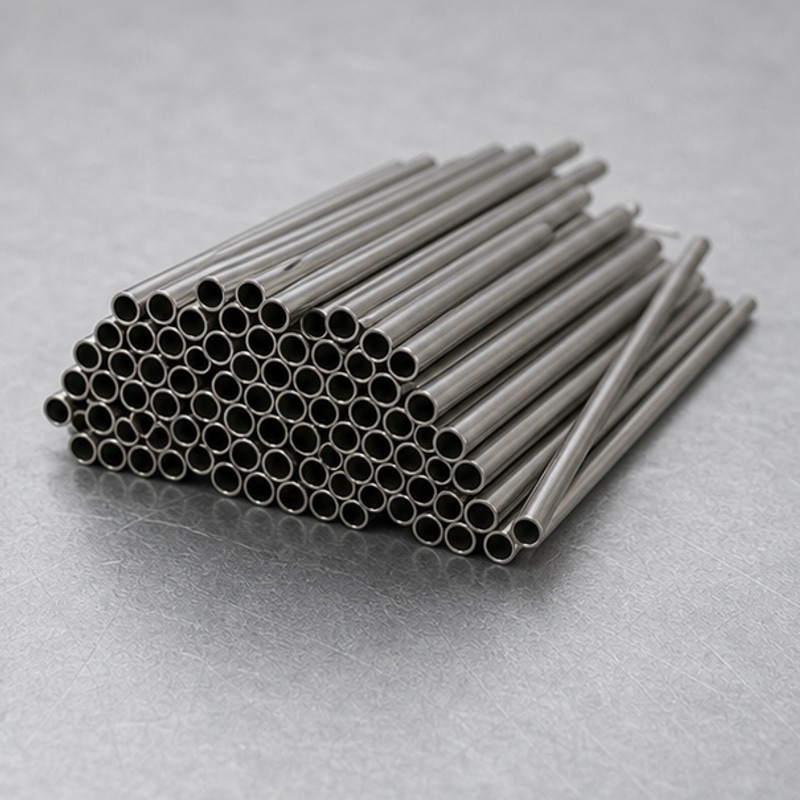
310S small diameter tubing is a high-alloy austenitic stainless steel capillary tube engineered for extreme high-temperature and corrosive environments where standard 304 or 316L grades fail prematurely. This article provides a technical reference for engineers and procurement professionals evaluating 310S small diameter tubing for medical devices, analytical instrumentation, and industrial OEM applications. We cover material properties, manufacturing tolerances, process routes, and application-specific considerations to support informed material selection.
Chemical Composition and Mechanical Properties of 310S
310S is a low-carbon version of 310 stainless steel, with a maximum carbon content of 0.08% to minimize carbide precipitation during welding and sustained high-temperature exposure. The nominal composition includes 24.0–26.0% chromium and 19.0–22.0% nickel, with silicon and manganese additions for oxidation resistance. Typical mechanical properties for 310S small diameter tubing in the annealed condition include a tensile strength of 515 MPa (75 ksi) minimum, yield strength of 205 MPa (30 ksi) minimum, and elongation of 40% in 50 mm. These values ensure ductility during cold drawing and reliability in service.
| Element | Composition Range (%) |
|---|---|
| Chromium | 24.0 – 26.0 |
| Nickel | 19.0 – 22.0 |
| Carbon | 0.08 max |
| Manganese | 2.00 max |
| Silicon | 1.50 max |
| Phosphorus | 0.045 max |
| Sulfur | 0.030 max |
310S vs 310: Practical Differences for Capillary Tubing
While standard 310 has a carbon content up to 0.25%, 310S small diameter tubing benefits from the reduced carbon level, which improves weldability and reduces the risk of intergranular corrosion in the 800–1500°F (427–816°C) sensitization range. For capillary tubing applications involving welded joints or prolonged service above 1000°F (538°C), 310S is the preferred grade. The difference in carbon content does not significantly alter room-temperature mechanical properties, but it directly impacts long-term performance in cyclic thermal environments.
Dimensional Specifications and Tolerance Classes
310S small diameter tubing is typically available in outer diameters (OD) ranging from 0.5 mm to 12.7 mm, with wall thicknesses from 0.05 mm to 2.0 mm. Tolerance expectations depend on the drawing sequence and final processing. Standard commercial tolerances are ±0.05 mm on OD for tubes under 6.35 mm, and ±0.075 mm for larger diameters. Precision-grade tolerances of ±0.025 mm on OD can be achieved through additional cold drawing passes and careful die control. Wall thickness tolerances typically follow ASTM A269 or A213 specifications, with ±10% of nominal wall considered standard.
| OD Range (mm) | Standard Tolerance (mm) | Precision Tolerance (mm) |
|---|---|---|
| 0.5 – 3.0 | ±0.05 | ±0.025 |
| 3.0 – 6.35 | ±0.05 | ±0.025 |
| 6.35 – 12.7 | ±0.075 | ±0.05 |
Seamless vs Welded: Which Manufacturing Route to Choose
For 310S small diameter tubing, both seamless and welded manufacturing routes are available. Seamless tubing is produced by rotary piercing and cold drawing, offering uniform wall distribution and no weld seam, which is critical for high-pressure or cyclic thermal applications. Welded tubing, formed from strip and longitudinally welded, is more economical and suitable for less demanding service. For capillary tubes under 3.0 mm OD, seamless is the dominant route due to the impracticality of welding at such small diameters. For larger capillary dimensions, welded and drawn (W&D) tubing can meet similar dimensional tolerances if the weld zone is properly cold worked and annealed.
Cold Drawing, Annealing, Straightening, and Cutting
The manufacturing of 310S small diameter tubing involves several controlled steps. Cold drawing reduces the tube cross-section through a series of dies, each pass achieving a reduction of 10–30% depending on the alloy’s work-hardening rate. Intermediate annealing at 1900–2100°F (1038–1149°C) followed by rapid cooling restores ductility and removes residual stress. Straightening is performed using rotary or roller straighteners to meet straightness tolerances of 0.5 mm per meter for precision applications. Cutting to length is done by abrasive sawing or CNC tube cutting, with end deburring specified per customer requirements.
Corrosion Resistance and Maximum Service Temperature
310S small diameter tubing exhibits excellent oxidation resistance up to 2000°F (1093°C) in continuous service and 1900°F (1038°C) in intermittent service. The high chromium and nickel content provides resistance to sulfidation, carburization, and scaling in industrial furnace atmospheres. In aqueous environments, 310S offers good resistance to nitric acid, organic acids, and alkaline solutions, but is not recommended for chloride-rich environments where pitting or stress corrosion cracking may occur. For capillary tubing in analytical instrumentation handling aggressive chemicals, 310S may be chosen over 316L when operating temperatures exceed 500°F (260°C).
Quality Control and Inspection Protocol
Standard inspection for 310S small diameter tubing includes dimensional verification using laser micrometers and air gauges, visual inspection for surface defects, and eddy current or hydrostatic testing for leak integrity. For high-reliability applications, additional checks such as ultrasonic wall measurement, tensile testing, flattening tests, and intergranular corrosion testing per ASTM A262 can be specified. Certifications typically include mill test reports (MTRs) per EN 10204 Type 3.1 or 3.2. Buyers should verify that the material chemistry and mechanical properties align with ASTM A213 (seamless) or A269 (general service) standards.
Industry-Specific Applications for 310S Small Diameter Tubing
In medical device manufacturing, 310S small diameter tubing is used in components for high-temperature sterilization equipment and biopsy instruments requiring oxidation resistance. Analytical instrumentation applications include gas chromatography columns and thermal analysis probes where temperature cycling up to 1000°C occurs. Industrial OEM uses include thermocouple sheaths, furnace sensor probes, and heat exchanger capillary bundles in petrochemical and power generation systems. The combination of high-temperature strength and corrosion resistance makes 310S a reliable choice when lower grades reach their performance limits.
For more information about 310S small diameter tubing, contact Healsmed’s engineering team with your material grade, drawing, tolerance requirements, and quantity. Submit inquiries through the Healsmed website for prompt technical review and quotation.
Conclusion
310S small diameter tubing offers a specific balance of high-temperature oxidation resistance, mechanical integrity, and corrosion performance that standard austenitic grades cannot match above 500°C. Engineers specifying capillary tubing for demanding thermal environments should consider the reduced carbon content of 310S over standard 310, particularly when welding or cyclic service is involved.
Dimensional tolerances, surface finish, and inspection requirements must be clearly defined at the procurement stage to ensure the tubing meets the intended application. With proper specification and manufacturing controls, 310S small diameter tubing delivers consistent performance in medical, analytical, and industrial systems where reliability at elevated temperatures is non-negotiable.

Healsmed
Leading Stainless Steel Capillary Tube Factory. 1,400+ standard sizes IN STOCK & ready to ship worldwide! High precision, factory-direct price.